What does taking apigenin do?
Apigenin represents a standardized plant-derived flavonoid bioactive that is powerful as an antioxidant, is a regulator of cellular stability, and relaxes neural pathways in a manner that does not induce clinical sedation by modulating GABAergic neural pathways. This high-purity compound, a low-molecular-weight aglycone polyphenol naturally occurring in a variety of botanical sources like chamomile (Matricaria chamomilla) and parsley (Petroselinum crispum), is a valuable formulation ingredient for clean label functional beverages, dietary supplements, and cosmeceuticals for formulation developers and nutraceutical manufacturers.
Primary Phytochemical Characteristics of Apigenin Powder
Knowledge of the molecular profile of apigenin powder is crucial for procurement managers or research teams who are choosing botanical raw materials. Apigenin is a chemical compound that is classified as 4',5,7-trihydroxyflavone (C15H10O5) and is part of the flavone subgroup of flavonoids. It has a unique chemical structure, which provides certain functional benefits in different industrial processes.
Lipophilic Aglycone Structure:
In comparison to glycosylated flavonoids linked to carbohydrate groups, apigenin, as an aglycone, can be introduced in non-aqueous-based carrier matrices, as it has a lower molecular mass (270.24 g/mol), which allows it to penetrate membranes more easily.
Thermal & Crystalline Stability:
Apigenin powder has excellent heat resistance, with a high melting point range of 345℃ – 350℃, which maintains the structural stability of the product in the commercial heat tableting and hot-melt extrusion process.
Radical-Scavenging Capacity:
Apigenin has high antioxidant activity, being able to scavenge free radicals and to keep the redox equilibrium in the cell, owing to the three hydroxyl groups at the C-4', C-5, and C-7 positions.
Physiological Mechanisms & Systemic Actions of Taking Apigenin
In studying the effects of apigenin at the cellular level, researchers and product developers are interested in the wide array of non-therapeutic bioactivities. Apigenin does not affect physiological pathways synthetically; it works with the existing physiological pathways to achieve systemic balance.
GABA Receptor Modulation & Neuro-Relaxation
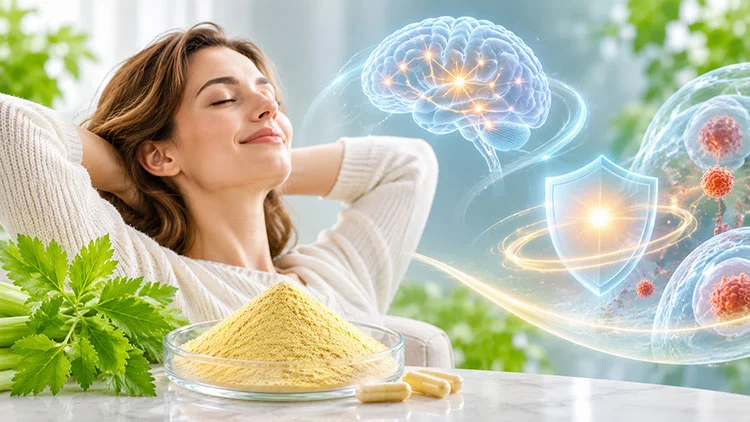
Apigenin is a low-affinity positive allosteric modulator at central GABA receptors, thus supporting calming neural responses. It has a selective affinity for the benzodiazepine binding pockets, without inducing motor dysfunction or physical dependence, and is used as a functional component in relaxing formulae for use at night, but not for sleep.
Down-Regulation of Pro-Inflammatory Mediators
Cellular models demonstrated that apigenin reduces oxidative stress through the action of blocking the activity of important inflammatory enzymes such as cyclooxygenase-2 (COX-2) and inducible nitric oxide synthase (iNOS). When ambient environmental stressors (AES) activate nuclear factor-kappa B (NF-κB) signaling activity, the effects of taking apigenin are involved in the sequestration of tissue homeostasis.
Advanced Formulation Techniques for Taking Apigenin Products
Although apigenin is very functional, it is slightly soluble in water at room temperature (~0.001 mg/mL). When formulating finished consumer products that contain apigenin, contract manufacturers need to be able to leverage special ingredient technology to achieve the highest bioavailability.
Lipid-Based Delivery Systems (SEDDS/SMEDDS):
A self-emulsifying oil formulation and medium-chain triglyceride (MCT) dispersion can dramatically improve oral absorption and dispersion in the gastrointestinal tract of apigenin powder.
Cyclodextrin Encapsulation Complexation:
Increased aqueous solubility of apigenin by up to 100-fold when bound in the hydroxypropyl-β-cyclodextrin ring is perfect for clear functional beverage stick-packs.
Micronization & Particle Size Reduction:
The uniform particle size of the blend in bulk, obtained by passing through jet milling with an 80-100 mesh particle pass rate, is responsible for blend homogeneity and the prevention of sedimentation of the blend in suspension liquids.
Recommended Dosing Factors & Commercial Processing Limits
Calculating the best intake parameters for taking apigenin is largely dependent on the delivery method, the target consumer population, and regulatory guidelines that have been set up for dietary supplements.
Dietary Supplement Inclusion Rates:
Typical oral doses of apigenin are between 50 mg and 200 mg per dose, and are usually packaged with other beneficial components, such as L-theanine or magnesium.
Topical Cosmeceutical Concentrations:
During the formulation of skin serum and scalp tonic, apigenin can be included in the formulation at rates of 0.1% – 1.0% on a weight basis, dissolved in a glycolic or ethano-lipid base, which takes advantage of its photoprotective profile.
Safety & Regulatory Compliance:
The standardized extract of apigenin has been demonstrated to have no toxic accumulation at typical commercial use and is GRAS (Generally Recognized as Safe) for food and beverage use.
Commercial Applications of Taking Apigenin Across Industries
Apigenin powder's versatility in its commercial applications has made it a fast-growing global market product in several sectors.
Night-Time Lifestyle Capsules:
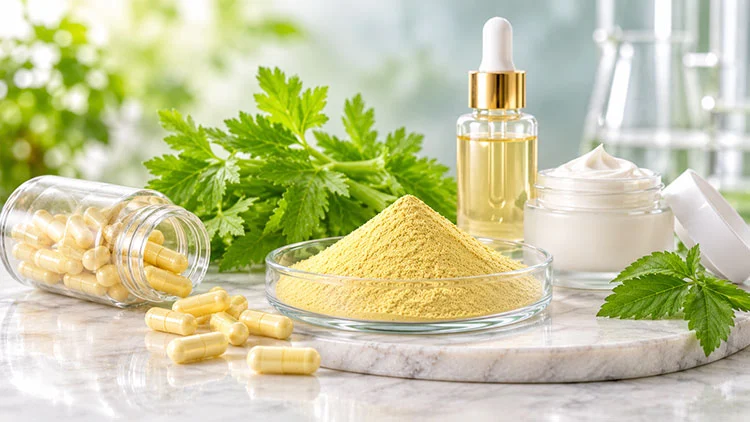
Apigenin capsules can be used in combination with other ingredients such as L-theanine, glycine, or lemon balm to make a key component in any nutritional supplement for the nighttime featuring a clean label.
Nutricosmetic Scalp & Hair Serums:
When applied topically, apigenin can regulate the balance of the scalp micro-environment, promote blood supply to hair roots, and condition hair follicles in special hair integrity lines.
Ready-To-Mix Functional Drinks:
Apigenin is used in dispersible complexation products, such as evening botanical teas, wellness stick-packs, and functional beverage concentrates.
What does taking apigenin do?
To conclude, apigenin is a scientifically proven plant-based flavone with proven antioxidant activity in cells, modulation of $GABA_A$ neuro-pathways for calm relaxation, and excellent thermal stability in dietary, beverage, and cosmeceutical matrix applications. High-purity apigenin powder is a clean raw material with a stable formulation ideal for B2B brand owners and contract manufacturers to capitalize on the increasing global demand for high-quality botanical wellness products.
To source Parsley Extract Apigenin of high quality, you may get directly into contact by simply mailing to info@scigroundbio.com, or you may fill in your requirements by filling the form at the bottom of our site.
FAQ
Q1: What does taking apigenin do for evening relaxation routines?
Apigenin gently activates the GABA_A receptor, helping to create a more relaxed mind, without causing any hangover or dependence in the morning.
Q2: What is the difference between taking apigenin from chamomile vs. synthetic options?
The natural apigenin from chamomile or citrus is a non-GMO substance with complete traceability and a clean label, which is preferred by B2B dietary supplement brands over synthetic apigenin.
Q3: Can taking apigenin be combined with other botanical extract ingredients?
Of course, apigenin is combined with various other synergistic compounds, including L-theanine, ashwagandha, and magnesium glycinate, to make multi-active formulations for relaxation and antioxidant benefits.
Q4: How stable is apigenin extract powder during commercial manufacturing?
The molecular structure of apigenin has proven to be very stable to heat; as the extract has an excellent melting point of approximately 345°C-350°C, it remains unaffected during tableting, capsule filling, and the pasteurization process in beverages.
References
1. Ali, F., Rahul, Naz, F., Jyoti, S., & Siddique, Y. H. (2017). Health functionality of apigenin: A review. International Journal of Food Properties, 20(1), 1197-1238.
2. Salehi, B., Venditti, A., Sharifi-Rad, M., Kręgiel, D., Sharifi-Rad, J., Durazzo, A., Lucarini, M., Santini, A., Souto, E. B., Novellino, E., & Antolak, H. (2019). The therapeutic potential of apigenin. International Journal of Molecular Sciences, 20(6), 1305.
3. Shankar, E., Shukla, S., & Gupta, S. (2017). Plant flavone apigenin: An emerging agent for cellular health and wellness. Phytochemistry Letters, 20, 410-422.
4. Zhang, J., Liu, D., Huang, Y., Gao, Y., & Qian, S. (2021). Biopharmaceutical classification and solubilization strategies for apigenin in food and nutraceutical applications. Journal of Agricultural and Food Chemistry, 69(34), 9721-9735.
You may like