Pea protein powder vs whey
Both Pea Protein Powder and whey protein powder have unique functional, nutritional, and technological properties that enable commercial protein product formulators to choose the best protein source for their product depending on the product requirements and target diet.
For sports nutrition, functional beverages, and dietary supplements, B2B manufacturers often look at pea protein powder vs whey to find the right ingredients for their needs. Whey protein has been the mainstay of the dairy protein market for its fast absorption rate and complete amino acid profile, but in recent years, new developments in the botanical processing sector have given rise to highly competitive and sustainable protein powders like pea protein powder vs whey. The technical distinction between pea protein powder and whey in terms of processing behavior, sensory, and stability properties allows industrial formulators to create optimal consumer products.
Processing Behavior and Solubility Parameters
Comparing pea protein powder with whey during industrial production should involve looking at the behavior of each protein powder during mixing and thermal processing.
Thermal stability: Pea protein can be used in the UHT pasteurization process and high-temperature extrusion process, as it is highly stable under heat.
Dispersibility: Whey protein can easily be dispersed in a wide pH range in aqueous solutions, while the high-purity pea protein isolate has to be processed to achieve an optimized size distribution of the particles and a minimal amount of emulsifier for the same smoothness of a ready-to-drink dispersion.
Formula Viscosity Contribution: Pea protein can offer a slightly higher viscosity build than whey, for formulators to work with in plant-based dairy matrices.
Nutritional Profile and Amino Acid Optimization
The dietary properties of pea protein powder and whey reveal certain physiological effects and formulation approaches.
Branched-Chain Amino Acids: Whey has a slight advantage with leucine; pea protein has a significant amount of lysine, arginine, and BCAAs that can be enhanced by creative protein mixes made from various plants.
Unlike whey (which is a derivative of milk and therefore cannot be hypoallergenic), allergenic Pea protein is naturally free from major food allergens like dairy, soy, and gluten.
Advanced ultrafiltration and enzymatic treatment of yellow field peas to produce pea protein isolates with a high protein digestibility-corrected amino acid score (PDAAS) equal to traditional dairy protein fractions.
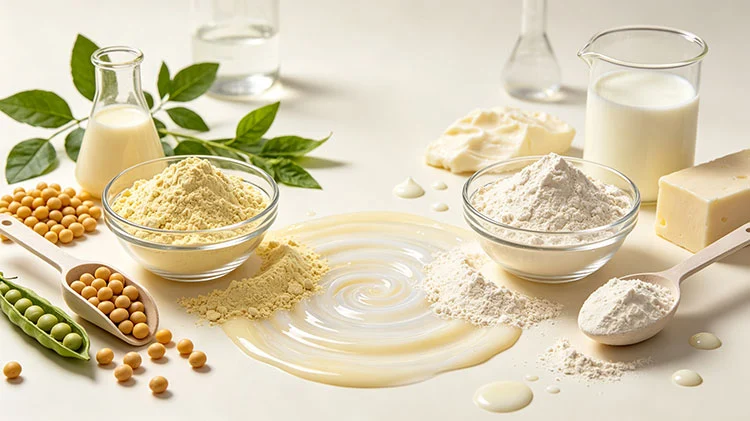
Formulation Techniques and Flavor Masking
The blend of pea protein powder vs whey protein presents unique challenges in terms of managing different sensory properties and interactions.
Off-Note Management: Whey is relatively neutral-tasting as a dairy product, but pea protein can have an earthy taste that needs to be masked in high concentrations with advanced physical extraction or mild botanical flavouring agents.
Hydrocolloid Integration: In liquid beverage applications, the use of pea protein in general is less likely to need other plant gums as a stabilizer than whey.
Dry Powder Blending: The ingredients blend easily with other dry ingredients in sports powder formulations, but when packaging for extended time, attention must be paid to optimizing moisture barriers to prevent pea protein from clumping.
Dosage Guidelines and Inclusion Standards
Developing correct inclusion levels of pea protein powder to whey are vital to ensure that the macronutrients are the same throughout commercial product lines.
For standard beverage applications, beverage formulations of both protein types generally contain 20- 35 g of protein per serving to satisfy the performance expectations of the consumer.
Bakery and Snack Matrix: Pea protein may be used as a 5%-20% by weight structural binding agent in baked bars, while whey is more commonly used as a coating agent or crisping agent.
Regulatory Compliance: Formulators need to make sure that all the dosage levels meet the food safety regulations and are correct for nutritional labeling requirements in the distribution areas of interest.
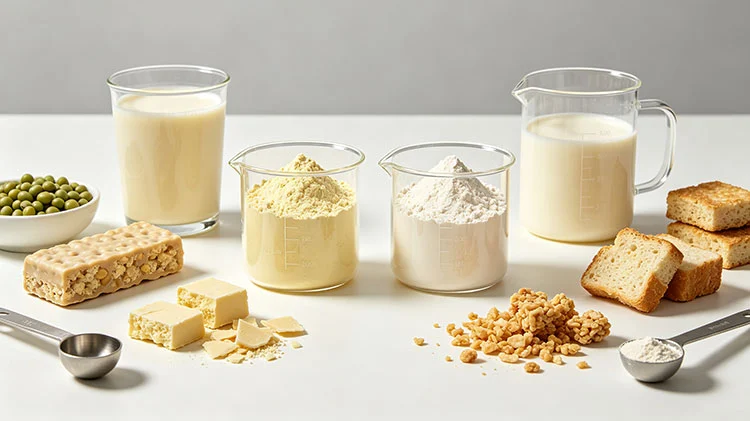
Commercial Sector Integration and Market Applications
Pea protein powder vs whey is used across the food and supplement industry, in a variety of ways.
Whey is still a major component of bodybuilding supplements, and pea protein has become a hotspot in the clean-label, vegan, and plant-based recovery market.
Alternative Dairy: Beverage companies use pea protein as an ingredient to make plant-based milk and yoghurt that can be similar in protein content to dairy products.
Balanced nutritional powders: The formulations combine knowledge of both protein types to meet the nutritional needs of the mass market.
When you are in need of good quality products that are reliable in nature, then you get no better deal than ours. You can reach out to us directly at info@scigroundbio.com or fill in the form at the end of the page, and our prompt team will get in touch with you with packed product information, pricing details, and help you with order placement to fulfill your business goals.
Pea protein powder vs whey
To conclude, industrial businesses can create innovative and high-performance nutrition products, meeting the strict commercial and clean-label standards, by balancing all the technical features of pea protein powder with those of whey protein.
FAQs
Q: How do the amino acid profiles compare when evaluating pea protein powder vs whey?
A: The leucine content in whey is naturally higher than in pea protein powder, and whey has an excellent amino acid profile, whereas high-purity pea protein powder has an excellent amino acid profile but has a low amount of leucine and a very high amount of lysine and BCAAs, sometimes enhanced by complementary plant-based amino acids and/or proteins.
Q: Which ingredient offers better stability during high-temperature thermal processing?
A: About thermostability in the discussion of pea protein powder vs whey, pea protein has better heat stability than some sensitive whey fractions during industrial UHT pasteurization and high-temperature extrusion processes.
Q: Are there allergen differences to consider between pea protein powder vs whey?
A: Yes. One of the key benefits of pea protein powder compared to whey for inclusive product lines is its inherent dairy-, lactose-, and common food allergen-free nature, ideal for hypoallergenic products.
Q: How do formulation techniques differ for texture enhancement in beverages?
A: In the case of applications containing liquids, comparing pea protein powder vs whey shows that pea protein brings its own viscosity and emulsification properties, which may need a slight level of hydrocolloid stabilization in order to achieve an ideal mouthfeel.
References
1. Babault, N., et al. (2020). "Pea proteins oral supplementation promotes muscle thickness gains during resistance training: A double-blind, randomized, placebo-controlled clinical trial vs. Whey protein." Journal of the International Society of Sports Nutrition, 17(1), 3-12.
2. Gorissen, S. H., et al. (2021). "Protein content and amino acid composition of commercially available plant-based protein isolates and their comparison to whey protein." Amino Acids, 53(4), 519-528.
3. EFSA Panel on Nutrition, Novel Foods and Food Allergens. (2022). "Scientific and technical guidance on the safety and nutritional evaluation of botanical protein isolates in food applications." EFSA Journal, 20(8), e7451.
4. Journal of Food Science and Technology. (2023). "Technological functionality and sensory optimization of legume proteins vs. dairy proteins in industrial food applications." JFST Research Reviews, 60(2), 145-158.
You may like