Is wheat protein good for you?
Yes, Wheat Protein can serve as a dietary protein ingredient in the diet for individuals who are able to tolerate wheat and gluten, depending on the formulation of the product, the protein content, and the intended use.
What Is Wheat Protein?
The protein-rich part after processing, which separates the starch and non-protein constituents of wheat, is known as wheat protein. Depending on the grade and production methods, Commercial Wheat Protein Powder may contain one or more of the protein types that cause gluten.
Gliadin and glutenin are distinguished by their structure; their roles and the functionality of wheat proteins are largely dependent on their composition.
Physical form: The final product is typically a fine, dry, mild wheat-like tasting product.
Protein concentration, moisture, particle size, and functional properties may be affected by processing origin (conditions of washing, separation, drying and milling).
Nutritional function: Wheat protein, when used to formulate, provides a source of dietary protein; however, it is not the same as protein provided by other sources, and therefore should be taken into account with other protein sources when formulating a complete protein product.
What Makes Wheat Protein Different?
The most important property of Wheat Protein Powder is its capability to form a protein network after being hydrated and mechanically processed. This results in the ability to have a greater functional role than just protein.
Viscoelasticity: Gluten proteins have the ability to take on extensible and elastic properties, especially in the case of dough-based systems.
Water interaction: When water comes in contact with the protein, it changes its physical state, which may affect dough consistency, dough mixing behavior, and water distribution.
Network formation: Glutenin is highly involved with network strength and elasticity, and gliadin with extensibility and flow.
Thermal behaviour: When wheat protein is heated in the presence of water, the structure changes, affecting the firmness and dimensional properties of the final products.
Inter-ingredient interactions: Other formulation ingredients such as salt, starch, enzymes, water level, and others may affect the development of the gluten network.
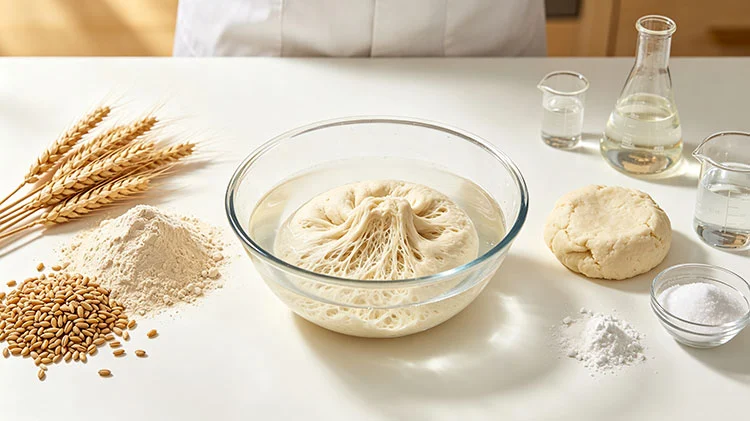
Is Wheat Protein Suitable for Food Manufacturing?
Wheat Protein Powder is the ideal choice for B2B manufacturers who need a protein boost and special processing properties.
For bakery products: It can act as a dough conditioner that aids in dough structure, extensibility, and elasticity in bread and bakery products.
Pasta and noodles: It may affect the cohesiveness of the dough and the finished product.
Protein-enriched foods: Can boost the protein content of certain formulations of cereals and processed foods.
Plant-based foods: Wheat protein may be a useful binding and structure provider to some meat alternatives.
Dry formulations: It comes in powder form, which can be incorporated into other dry formulations as part of a premix or other dry ingredient systems, if particle size compatibility is carefully considered.
How Should Wheat Protein Be Used in Formulation?
No specific recommendations exist for the inclusion level for each product. The dosage will vary according to the use of the ingredient and the formula properties.
Define the formulation goal: Is it to use Wheat Protein Powder primarily as a source of protein, structure and/or texture?
When using wheat protein in combination with other protein ingredients, think about evaluating the whole protein system, not wheat protein.
Adjust water: Adjustments to hydration requirements may be needed as concentrations of protein increase, especially in structured systems such as dough.
Mixing intensity and time have an effect on protein-network development and need to be determined in pilot testing.
Confirm the dosage: Commercial inclusion rate should be based on a trial involving the actual specification for the ingredient and production equipment.
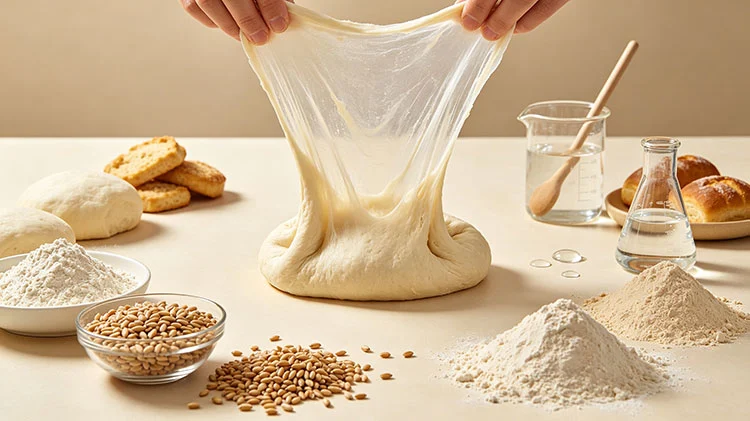
What Affects Wheat Protein Stability?
Wheat Protein Powder is a dry ingredient that may be affected by the environment in its physical handling properties.
Humidity: High moisture levels can cause caking and can decrease the flowability of the powder.
Temperature: As far as possible, the temperature should be stable, and there should be no extended exposure to high temperatures or frequent changes.
Packaging: Appropriate packaging will help prevent moisture and contamination from the environment during storage.
Opening practices: After opening, if not used for necessary production purposes, unnecessary exposure to humid production environments should be avoided.
Quality checks: Moisture, appearance, microbiological, and protein, etc parameters can be monitored by the manufacturer as per their quality system, as agreed.
What Should Formulators Consider Before Selecting Wheat Protein?
Technical and regulatory issues should be considered before commercial use of Wheat Protein Powder for all formulations.
Gluten content: Conventional wheat protein contains gluten in wheat, and should not be used in products that need gluten-free ingredients.
Wheat and gluten requirements: For wheat and gluten, include requirements in ingredient segregation, cleaning, labelling, and production controls, if applicable.
Sensory attributes: In developing wheat-derived products with sensitive or neutral flavour profiles, its wheat-derived flavour should be evaluated.
Spec is: protein level, moisture, particle size, and functional properties should be similar to the desired manufacturing process.
Labeling and ingredient requirements: Labeling and ingredient requirements of finished products should be checked based on the destination market.
You can either call us, email us at info@ scigroundbio.com, or you can just fill in your needs on the form. Our business team is here to react fast and provide a customized solution, competitive deals, and reliable supply to satisfy your business needs.
Is wheat protein good for you?
In the general sense, Wheat Protein Powder is a technically unique protein ingredient due to its nutritional protein properties as well as its gluten properties. The protein-forming capacity of this plant is of special interest for bakery, pasta, noodle, cereal, dry-blend, and certain plant-based food applications due to its cohesive, elastic and extensible nature. The successful use of this depends on the manufacturer's selection of the grade, monitoring hydration and mixing conditions, and considering the inclusion level and allergen and labelling requirements. When the physical, chemical, nutritional and processing attributes of Wheat Protein Powder fit the end-product formulation, it can be a useful formulation tool.
FAQ
Is wheat protein a good source of dietary protein?
Wheat protein can be used in formulated foods for protein and also is a source of dietary protein. Evaluating nutritional contribution should be done in combination with the protein composition of the final product.
Is Wheat Protein Powder suitable for protein-enriched foods?
Yes. May be added to specific bakery products, cereal foods, pasta, noodles, dry mixes, and other products where wheat protein is suitable.
How much Wheat Protein Powder should be used?
There is no standard dose. The degree of inclusion is determined by the product, protein content desired, processing conditions, and functional properties desired.
Can Wheat Protein Powder be used in gluten-free products?
Conventional Wheat Protein Powder has wheat gluten proteins and cannot be used if a gluten-free ingredient is desired.
What are the main functional properties of Wheat Protein Powder?
It has four main functional properties: water interaction, viscoelasticity, cohesion and elasticity, and the formation of a protein network during hydration and/or processing.
References
1. Shewry, P. R., & Belton, P. S. (2024). What do we really understand about wheat gluten structure and functionality? Journal of Cereal Science, 117, 103895.
2. Zhang, M., Jia, R., Ma, M., Yang, T., Sun, Q., & Li, M. (2023). Versatile wheat gluten: Functional properties and application in the food-related industry. Critical Reviews in Food Science and Nutrition, 63(30), 10444–10460.
3. Schopf, M., Wehrli, M. C., Becker, T., Jekle, M., & Scherf, K. A. (2021). Fundamental characterization of wheat gluten. European Food Research and Technology, 247, 985–997.
4. Dai, H., & An, H. (2024). Study on the structural characteristics of wheat gluten enzymatic hydrolysates and their effect on the texturization degree of high-moisture plant-protein extrudates. Journal of Cereal Science, 119, 103974.
5. Shewry, P. R. (2024). Can we increase the use of wheat and other cereals as sources of protein? Journal of Cereal Science, 117, 103899.
6. Hoeller, N., & Scherf, K. A. (2024). Influence of salts on the protein composition and functionality of gluten. Journal of Cereal Science, 118, 103978.
You may like