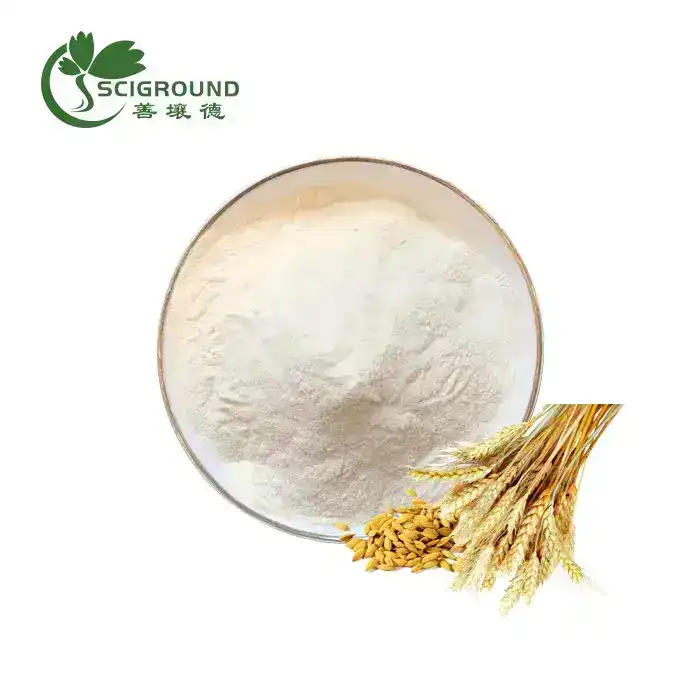
Bulk Wheat Protein Powder
Latin name: Triticum aestivum L.
Part: Seed
Specification: 75-80% Protein
Appearance: Off-white powder
Delivery: 1-2 working days
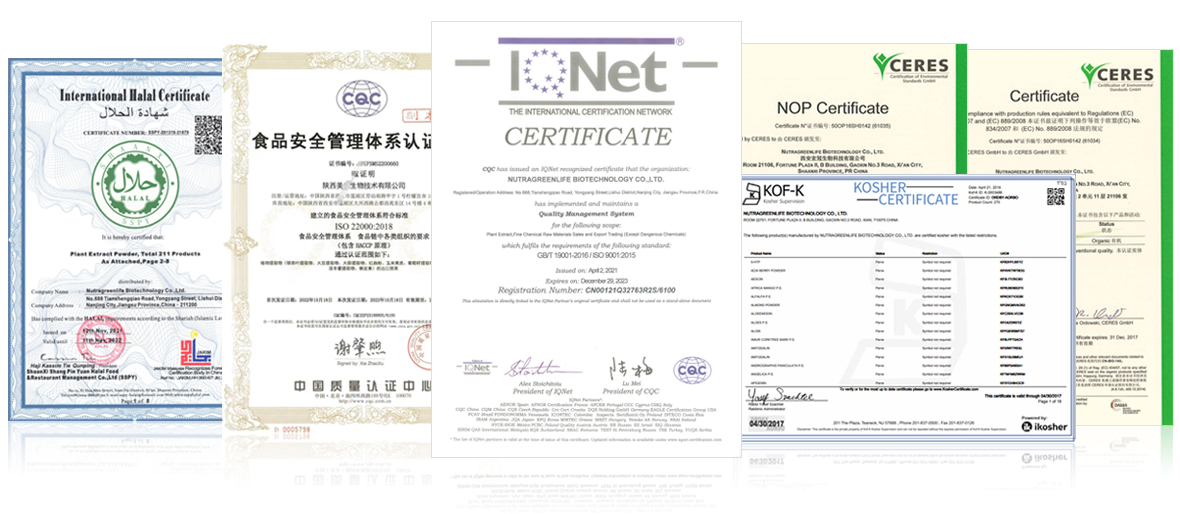
Certification: SC, ISO9001, IS22000, HALAL, KOSHER
Package: 1- 10 kg (aluminum foil); 25kg (paper drum)
Sample: Free Sample Available
MOQ: 1- 5 kg support < br> 15 years’ experience in the natural plant extracts industry
Product Description
What is Bulk Wheat Protein Powder?
Bulk Wheat Protein Powder is a wheat-based concentrated protein ingredient in which a starch- and protein-free fraction is separated from wheat grain, and then the protein fraction is dried and milled to a fine powder. The main proteins are the gluten proteins, principally glutenin and gliadin, which impart the viscoelastic and film-forming properties. These functional traits are unique to wheat protein compared to the majority of plant protein ingredients, and are especially relevant for the wheat protein manufacturers producing products where structure and functional properties are key. It is typically a light cream to light beige powder with a mild cereal-like scent and a mild wheat taste, but may appear and smell different depending on how it is processed and the quality of the raw wheat material. Its proteins interact with water when hydrated and mixed, and they play an important role in the development of dough, its elasticity, cohesiveness, extensibility, and product structure, thus allowing its use in bakery and cereal-based formulations. It can be used as an ingredient in bread and bakery mixes, pasta and noodle systems, cereal formulations, protein-enriched foods, meat-alternative systems, snack products, etc., where a wheat-based protein component is needed in processed food.

Analysis
Item | Specification | Result |
Appearance | Fine, free-flowing powder | Complies |
Color | Cream to light yellow | Complies |
Odor & Taste | Characteristic wheat odor and taste, free from off-odor | Complies |
Protein (N × 6.25, Dry Basis) | ≥ 80.0% | 82.60% |
Moisture | ≤ 10.0% | 7.10% |
Ash (Dry Basis) | ≤ 2.0% | 1.20% |
Crude Fibre (Dry Basis) | ≤ 1.5% | 0.80% |
Crude Fat (Dry Basis) | ≤ 2.0% | 1.10% |
Water Absorption | ≥ 150% | 165% |
Gluten Index | ≥ 20 | 36 |
Particle Size | ≥ 95% through 80 mesh | 98.20% |
pH (10% Suspension) | 5.0 – 7.0 | 6.1 |
Lead (Pb) | ≤ 2.0 mg/kg | 0.31 mg/kg |
Arsenic (As) | ≤ 1.0 mg/kg | 0.18 mg/kg |
Cadmium (Cd) | ≤ 1.0 mg/kg | 0.09 mg/kg |
Mercury (Hg) | ≤ 0.1 mg/kg | 0.012 mg/kg |
Total Plate Count | ≤ 10,000 CFU/g | 1,300 CFU/g |
Yeast & Mold | ≤ 500 CFU/g | 45 CFU/g |
Coliforms | ≤ 10 CFU/g | <10 CFU/g |
E. coli | Absent in 10 g | Not Detected |
Salmonella | Absent in 25 g | Not Detected |
Features
Wheat Protein Powder has a unique functional profile, attributed to the naturally occurring network of gluten proteins, including glutenin and gliadin. Compared to many plant proteins, which are just considered nutritional solids, it is sought after by formulators because of its rheological and structural properties during processing. The gluten proteins have an affinity for and bind water during hydration and form a viscoelastic matrix, which is stronger with mixing or mechanical energy, with the glutenin proteins being more involved in elasticity and network strength and the gliadin proteins in extensibility and flow properties. This balance enables it to affect dough resistance and extensibility, gas-cell retention, and the structure of the baked products in bakery systems. Additionally, the water-binding properties may influence the moisture content of the dough, the amount of water needed to process it, and how the water is distributed within the formulation, so these factors should also be taken into account when determining a production formula. It is typically available in a fine, dry, low bulk density powder that may require a specific particle size for dispersion, hydration, and blending uniformity. The protein fraction consists mostly of storage proteins and has various amino acid profiles, and the functional properties of the protein fraction are greatly affected by protein concentration, moisture, particle size, extraction conditions, and the presence of residual starch or other wheat constituents.
How to Store Properly?
1. Keep the Original Packaging
Keep the package sealed as it comes. Do not unnecessarily break open or transfer the powder to other containers.
2. Store in a Dry Area
Store the product in the warehouse where it is kept clean and dry. High humidity can impact the flowability of powders and can lead to caking.
3. Avoid Heat and Sunlight
Keep out of direct sunlight, steam, heating devices, and heat sources in general. Conditions in the warehouse are preferably stable.
4. Use Pallets or Racks
Do not leave packages on floor surfaces; use clean pallets or appropriate racking. This helps to minimize moisture and dust exposure and physical damage.
5. Prevent Water Exposure
Avoid placing against leaking pipes, condensation, and wet processing areas. If the packaging is damaged or has been exposed to moisture, you should check it before using.
6. Limit Exposure After Opening
When fully opened for production, limit the exposure of the powder to the surrounding environment and close off the material used for a part of the production process if possible.
7. Maintain Allergen Controls
Wheat Protein Powder is made of gluten proteins from wheat. Allergen control should be achieved using suitable segregation, cleaning, and labelling procedures.
8. Manage Inventory by Lot
Record lot numbers and pertinent dates on receipt. FIFO inventory management can help with a smooth inventory rotation and batch traceability.

Recommended Usage
1. Capsules
If the required dosage is within the capacity of the capsules, Wheat Protein Powder may be used in dry-filled capsules. In case of need, screen the powder, and before filling, make a uniform premix with appropriate excipients. It is important to check flowability and bulk density to ensure uniformity of capsule filling.
2. Tablets
Gradually add it during dry blending to ensure even distribution. Flow, moisture, compressibility, and tablet hardness should be considered by formulators. Granulation might be needed if direct compression is not appropriate to ensure powder processing consistency and handling.
3. Liquid Formulations
Add the powder gradually, while stirring continuously. If it does form lumps, it can be a good idea to pre-disperse it in some of the liquid. Due to wheat proteins reacting with water and having the potential to alter the viscosity, the liquid ratio, mixing speed, and hydration time need to be determined by formulation trials.
4. Powdered Products
Pre-blending can enhance the uniformity of the ingredients for nutritional blends, bakery premixes, and other dry products. When planning the mixing sequence and processing time, it is important to take into account differences in particle size and bulk density.
5. Formulation Validation
The appropriate level of inclusion will be determined based on the desired final product and processing methods. Before commercial-scale production, pilot trials need to validate the dispersion, uniformity of the blends, processing performance, and product properties.
FAQ
1. What is Bulk Wheat Protein Powder?
Bulk Wheat Protein Powder is a wheat protein ingredient derived from wheat, mainly consisting of gluten-forming proteins (glutenin/gliani) and supplied as a dry protein powder for food and formulation applications.
2. What are the main functional properties of Wheat Protein Powder?
After hydration, it gives water-binding, cohesive, elastic, and extensible properties, giving it special usefulness in formulations where structure and processing properties are significant.
3. What products can manufacturers formulate with Wheat Protein Powder?
Can be added to bakery products, pasta and noodles, cereal-based food, nutritional powders, protein-enriched food, and some plant-based formulations.
4. How should Wheat Protein Powder be incorporated into formulations?
It can be blended progressively with compatible ingredients in the case of dry products. In the case of liquid systems, if lumps are a potential problem, this can be addressed by adding gradually while stirring.
5. Does Wheat Protein Powder contain gluten?
Yes. Wheat Protein Powder is made with wheat protein (gluten protein). Appropriate wheat and gluten allergy labelling requirements should be taken into account when formulating and labelling final products.
Our Certificate
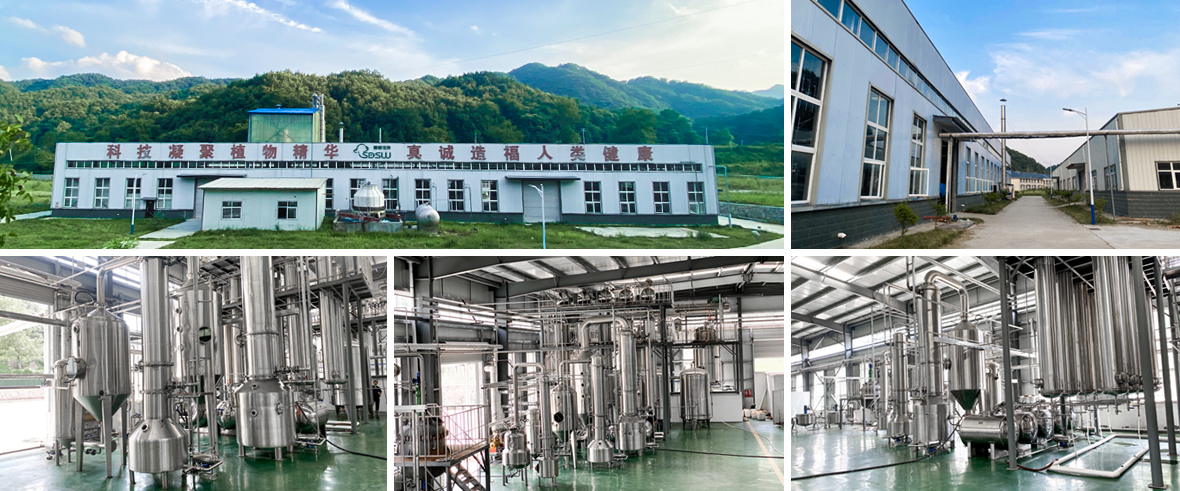
Our Factory
Hot Tags: wheat protein powder,hydrolysed wheat protein,wheat protein suppliers, China, manufacturers, GMP factory, suppliers,quote,pure,factory, wholesale, best, price, buy, for sale, bulk, 100% pure,manufacturer,supplier,distributor,free sample,raw material.
Send Inquiry
You may like