Who should not use pea protein?
High-quality Pea Protein Powder should not be eaten by people who have been diagnosed with a hypersensitivity or severe allergic reaction to legumes, or by those who have a special medical diet with strict metering requirements.
The global market for plant-based food, beverage, and nutraceuticals is growing rapidly, and industrial food and beverage formulators and procurement managers are more inclined to include high-quality pea protein powder made from the yellow field pea (Pisum sativum) in various commercial applications. This functional botanical raw material has excellent techno-functional properties such as high protein content, good water-binding capacity, good emulsification, and hypoallergenic properties compared to dairy or soy, but some groups of consumers should use it with caution or refrain from using it on a regular basis. Knowing the parameters, contraindications, and advanced formulation guidelines for structural safety is critical for commercial manufacturers trying to create safe, compliant market offerings.
1. Legume Allergy and Cross-Reactivity Considerations in Industrial Formulations
Direct IgE-Mediated Sensitivity: Consumers with an established clinical allergy to green peas, peanuts, soybeans, or other members of the botanical family Fabaceae may have an adverse immune response or allergy to the isolated protein from the plants.
Precise allergen disclosures and clear supply chain management are vital to confirming commercial brand compliance, given the possibility of immunological cross-reactivity with people who are allergic to particular legume protein components. Precise allergen disclosures and clear supply-chain management are critical for confirming commercial brand compliance, as people can be allergic to particular legume protein components and can have immunological cross-reactivity.
2. Specialized Renal and Metabolic Management Constraints
High Protein Load Restrictions: Patients with advanced, non-dialysis chronic kidney disease and particular severe liver disease that necessitates a tight restriction on the input of nitrogen-rich protein in the diet should control the total amount of dietary protein, such as that from isolate ingredients, provided in the diet daily.
Formulation Transparency for End Users: finished-product manufacturers need to include detailed nutritional data panels and dosage information to allow consumers who follow prescribed macronutrient ratios to be able to keep an easy track of their daily food intake.
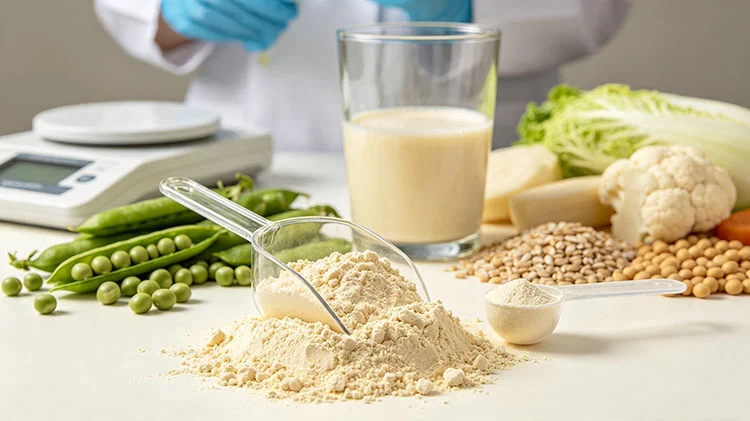
3. Gastrointestinal Sensitivities and Tolerance Thresholds:
Oligosaccharide and Antinutrient Residuals: Although industrial wet fractionation and advanced purification methods greatly minimize the anti-nutritional factors (including phytates and trypsin inhibitors), there may be residual oligosaccharides in low-grade or under-purified concentrates, which may cause mild discomfort in the digestive system for sensitive individuals.
Dosage and Processing Optimization: Digestive tolerance is optimized by using high-purity pea protein isolate grades (80% to 85% protein) and by using controlled enzymatic hydrolysis or thermal treatment of complex molecular structures.
4. Stability, Solubility, and Formulation Parameters in B2B Applications
pH and Thermal Sensitivity Management: In industrial product development, commercial pea protein isolate is affected at different pH points, exhibiting different solubility properties, and additional stabilization methods are necessary when making ready-to-drink (RTD) beverages to avoid sedimentation.
Technological Mitigation Strategies: High-pressure homogenization, particle size reduction, and advanced co-emulsifiers are employed by the formulator to define a uniform texture, shelf-life, and sensory texture in complex food matrices without influencing the sensory profile.
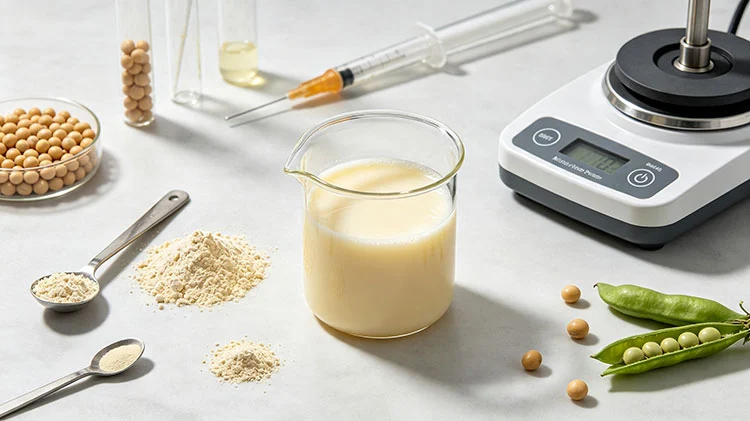
5. Industrial Compliance and Clean-Label Processing Standards
Preventing Unsubstantiated Health Claims: Commercial brands using bulk pea protein should strictly follow all regulatory but instead highlight technical characteristics, nutrition, and sustainability.
Quality Assurance Protocols: Companies can also rely on the quality assurance protocols that partners provide, such as Certificates of Analysis (COA) and allergen control verification, to ensure that their product formulations are transparent, safe, and meet global standards.
When you are in need of good quality products that are reliable in nature, then you get no better deal than ours. You can reach out to us directly at info@scigroundbio.com or fill in the form at the end of the page, and our prompt team will get in touch with you with product information, pricing details, and help you with order placement to fulfill your business goals.
Who should not use pea protein?
Finally, although high-quality pea protein powder is a versatile, sustainable, and highly functional ingredient for commercial nutritional products, the quality of the protein, its dietary restrictions, and its formulation needs must be carefully assessed for proper inclusion in commercial product lines.
FAQ
Q: Who should avoid consuming products containing pea protein powder?
A: People with known legume allergies, specific protein-restricted medical diets, or a high level of gastrointestinal protein sensitivity should not use, or use in excess, high-quality pea protein isolate.
Q: How do manufacturers ensure the safety and allergen-free status of bulk pea protein?
A: Industrial producers use state-of-the-art wet fractionation, strict purification, and multi-stage washing processes to remove the most significant allergens, anti-nutritional factors, and remaining impurities.
Q: What role does protein purity play in digestive tolerance for final product formulations?
A: The difference between the higher purity isolate grades (80% to 85% protein content) and the standard crude concentrate is that the former have much less residual carbohydrates and oligosaccharides, which makes them smoother, more soluble, and easier to digest.
Q: Can pea protein powder be customized for specific industrial food and beverage applications?
A: Yes, suppliers can provide tailored parameters like targeted particle sizes, enzyme hydrolysis to adjust the texture and/or viscosity of the products, as well as optimized functional blending to ensure that the product specifications are met exactly.
References
1. Harasym, J., Paroń, O., & Pejcz, E. (2025). Pea Protein Isolates: From Extraction to Functionality. Molecules, 30(23), 4650.
2. Smith, A. R. & Henderson, K. L. (2024). Techno-functional properties and industrial applications of plant-derived proteins in food matrices. Journal of Food Science and Technology, 61(4), 1145–1158.
3. Global Food Regulatory Alliance. (2023). Safety assessment and allergen labeling standards for pulse-derived protein ingredients in commercial formulations. International Journal of Food Science & Technology, 58(9), 4810–4822.
4. Chen, Y. & Morales, J. (2022). The health benefits, functional properties, modifications, and applications of pea (Pisum sativum L.) protein. Food Chemistry Open, 8, 100215.
You may like