Who should not take kudzu root?
Those who cannot or need to carefully consider taking Kudzu Root Products include those with a sensitivity to an ingredient, those taking certain medicines, pregnant or nursing women, and people advised by their health care providers to limit certain botanical ingredients.
Kudzu Root Safety Considerations for Different Consumer Groups
Kudzu root (Pueraria lobata) is a popular botanical used in supplements, functional foods, and traditional plant-based products. In product development, it is important to note that manufacturers take into account the suitability of the product to the consumer, formulation clarity, and responsible labelling when developing a product with kudzu root powder or kudzu root extract powder.
These are the additional groups that should be taken into account:
People who know that they are sensitive to any of the ingredients
Do not use kudzu root-containing products by people who are sensitive to kudzu root or those with a sensitivity to the botanical components. Carefully read the product label before using products that contain kudzu root.
Persons who are pregnant or breastfeeding.
Because of the lack of data specific to some of the botanical ingredients in these consumer groups, manufacturers often recommend consulting qualified professionals before using.
Individuals taking some medications
People who are prescribed medications or are treating a health condition regularly should discuss whether ingredients are compatible with their health care provider before selecting a botanical supplement.
Kids and young consumers
Most of the products that are marketed as botanicals are geared towards adults, and the manufacturer needs to identify the intended target market based on product positioning and regional needs.
When considering product instructions and communication for B2B manufacturers, these factors are important to consider to develop more responsible communication and instructions.
Kudzu Root Extract Product Formulation and Labeling Considerations
In addition to selecting ingredients for their products, manufacturers must also think about product positioning when formulating products with kudzu root powder or kudzu root extract powder.
Some of the main factors to consider when formulating are:
Clear ingredient information
Kudzu root should be clearly labeled as a botanical ingredient, and servings, composition, and instructions for use should be clearly labeled on product labels.
Appropriate product positioning
Based on market rules, brands should determine the category of the finished product: supplement, beverage, food, or botanical.
Ingredient combination evaluation
When using kudzu root in combination with other plant extracts, vitamins, minerals, or functional ingredients, the overall formulation compatibility should be considered.
Consumer group identification
Product formats might appeal to different segments of consumers, and when explaining to a consumer, it is important to make sure that you are communicating the product's intended user.
These practices enable companies to create products with quality parameters and characteristics that are in line with market expectations.
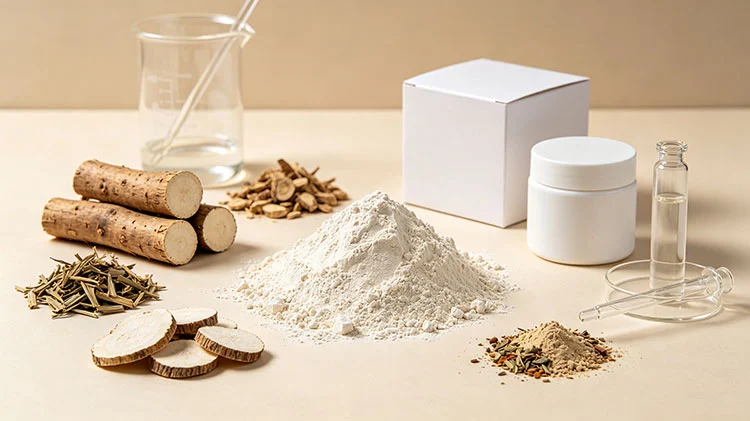
Kudzu Root Dosage Factors and Product Development Guidance
No single usage amount can be recommended for kudzu root products, as it will depend on the specific product, specification, and regional regulations.
Manufacturers generally consider:
Ingredient specification
The concentration characteristics of the Kudzu root powder may differ from those of kudzu root extract powder, which can impact the formulation design.
Finished product format
Different amounts and different production methods might be needed for capsules, tablets, powder for drinking, and blended formulas.
Target market requirements
There are regional differences in regulatory requirements and consumer preferences, which impact product design recommendations.
Quality testing results
Responsible formulation development involves important aspects such as raw material testing, identity verification, and evaluation of raw material batch consistency.
When purchasing in bulk, it can be better to use suppliers that can offer a detailed specification and quality documentation to help improve product development efficiency.
Kudzu Root Powder Stability and Storage Factors
During kudzu root powder manufacturing operations, proper storage management is crucial to ensure that the physical characteristics and quality consistency of kudzu root powder are maintained.
Important factors include:
Humidity management
Moisture may have an impact on powder flowability and processing performance, so the botanical powders should be kept dry.
Temperature control
Maintenance of stable warehouse temperatures is useful to preserve the quality of ingredients for long-term storage.
Packaging protection
Original sealed industrial packaging should be kept whole until the material is ready to be used in production.
Handling procedures
Once opened, manufacturers should ensure that the product is not unnecessarily exposed to air and that the product is correctly closed when stock is left.
These practices help to enhance inventory control for supplement companies, food manufacturers, and ingredient distributors.
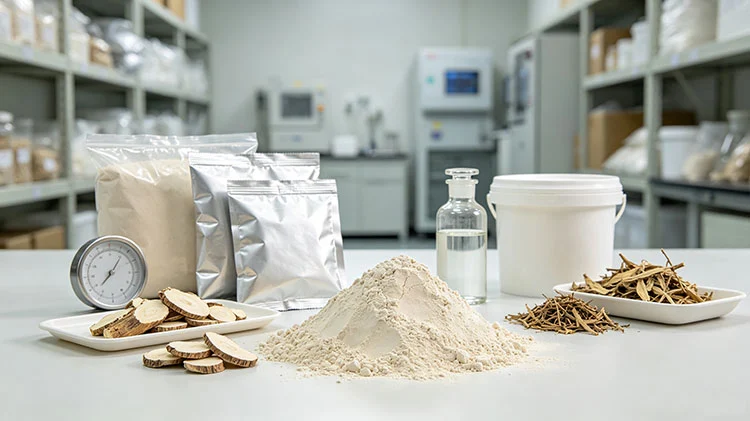
Kudzu Root Ingredient Applications and Responsible Product Development
The root of kudzu is still used as a popular botanical ingredient due to its wide range of uses in several industries. But with responsible product development, manufacturers must consider how it will meet the needs and characteristics of the ingredients.
Common applications include:
Botanical supplement products
Used as a capsule ingredient, tablet ingredient, and powder ingredient.
Functional beverage formulations
Added to ready-to-use drinks and plant-based drink ideas.
Traditional botanical products
Chosen by brands that are creating products that are based on traditional herbs and spices from plants.
Custom formulation projects
Adopted by OEM and PLM that are developing unique botanical product lines.
A mixture of ingredients, quality control systems, and proper product communication will lead to more reliable botanical products on the global market.
Who Should Not Take Kudzu Root: Final Considerations
Usually marketed as botanical ingredients in adult formulations such as supplements, foods, and beverages, the suitability of kudzu root products will depend on the person, product, and conditions. Those who have certain ingredient sensitivities, specific considerations, or questions as to compatibility should carefully read product information. When creating a product with kudzu root powder or kudzu root extract powder, responsible sourcing, correct labelling, and consumer guidance are essential for manufacturers.
Please feel free to reach us at info@scigroundbio.com or complete your requirements at the bottom of the form. One of our professional team members will get back to you with solutions, good prices, and a fast experience to have your production needs fulfilled.
FAQ
1. Who should avoid kudzu root supplements?
People who have been diagnosed as sensitive to kudzu root, those who have dietary restrictions, pregnant women, breastfeeding women, and those taking some medications should be careful before using a product.
2. Can kudzu root extract powder be included in all supplement formulations?
No. The appropriate use of kudzu root extract powder is based on the product design, ingredient mixture, regulatory requirements, and target groups.
3. What should manufacturers consider before using kudzu root powder?
The manufacturers need to consider raw material specifications, raw material quality documents, dosage design, labelling needs, stability testing, and regulations in the target area.
4. Is kudzu root powder suitable for beverage products?
For beverage formulations, kudzu root powder should be taken into account due to the compatibility of the flavor and dispersion properties, processing conditions, and consumer preferences.
References
1. Zhang, Y., Li, X., & Chen, Y. (2021). Phytochemical characteristics and application potential of Pueraria lobata in modern food and botanical industries. Journal of Ethnopharmacology, 268, 113601.
2. Wang, L., Zhang, H., & Liu, J. (2020). Recent progress in the research and utilization of kudzu (Pueraria lobata) resources. Food Chemistry, 331, 127317.
3. National Center for Complementary and Integrative Health. (2022). Botanical Products: Considerations for Safety and Quality Evaluation. National Institutes of Health.
4. European Food Safety Authority. (2021). Scientific guidance on botanical ingredients and their use in food supplements. EFSA Journal, 19(8).
You may like