Which is healthier, pea protein or pumpkin seed protein?
Pea protein and pumpkin seed protein have different nutritional/functional benefits, so it's not necessarily "healthier" to use one over the other, depending on the end goal of the B2B and the nutritional needs of consumers.
Our business activity is the production of botanical extracts and plant-based raw materials, as one of the leading manufacturers in the field, supplying the best raw materials to food and supplement brands all over the world. Comparative evaluation of the different characteristics of diverse botanical proteins is essential for commercial nutritional product formulating and development companies to maximize nutrition and functionality. This technical guide offers a comprehensive comparison between pea protein and pumpkin seed protein from a biochemical profile, processing parameters, to industrial applications, with a B2B focus.
Comparative Amino Acid Profiles and Nutritional Quality
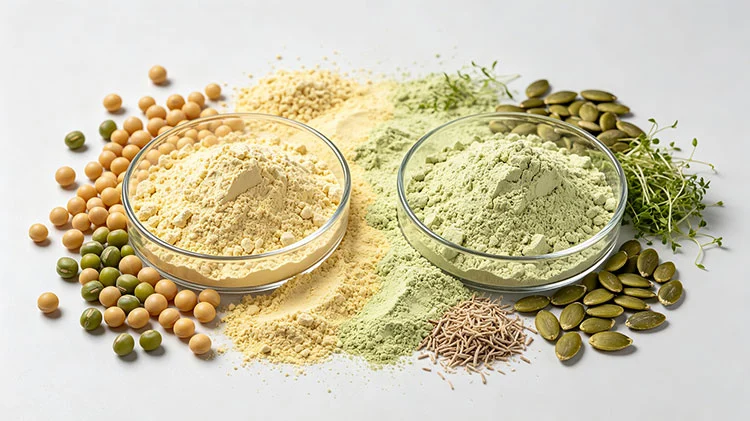
As knowledge of the amino acid content of botanical raw materials is critical to understanding protein quality and the biological efficacy of commercial end products, it is necessary to have this basic understanding. Pea protein as well as pumpkin protein provide rich spectra of essential amino acids but have different profiles.
Lysine and Branched-Chain Abundance: Pea protein is very rich in lysine and thus is especially suitable for supplementation of cereal protein blends, while pumpkin seed protein complements with aromatic amino acids.
Sulphur-Containing Amino Acid Variance: Both sources of protein contain around 20% methionine and cysteine, and this is considered a moderately high level, which is why pea protein and pumpkin seed protein are often mixed to create a full matrix of amino acids in the industrial formulation.
Optimising the Biological Value: Industrial protein blending methods take advantage of the nutritional profile of both proteins in order to improve the protein nutritional value and human assimilation.
Natural Accompanying Dietary Fibers and Plant Sterols: Pea protein usually has more protein per serving but naturally contains more convenient and valued accompanying dietary fibers and plant sterols in pumpkin seed protein.
Techno-Functional Performance and Formulation Techniques
The decision between these botanical ingredients requires an evaluation of the technological properties of these ingredients when used in large-scale manufacturing, mixing, and thermal processing. Commercial food and beverage systems have different structural properties due to each protein powder.
Emulsification and Water Binding: Pumpkin protein has excellent natural oil-binding and emulsifying properties, while pea protein is known for its good water-binding and gel-forming properties.
In the case of Texture and Viscosity Control, pea protein is used to create the firmness of meat analogs, and pumpkin seed protein is more suitable for smoothness and creamy mouthfeel in dairy alternatives and baked goods.
Thermal Extrusion Behavior: Both ingredients have good thermal stability in high-temperature extrusion, enabling the manufacture of TVP that has good bite resistance.
Use of Synergy in Dry Mixes: Standardized formulation and blending of both botanical powders allows to maintain the viscosity of the mixes, avoiding any undesirable thickening when used for instant beverage reconstitution.
Industrial Application Scope Across Commercial Sectors
These ingredients are used in different applications by enterprise brands, which align the various functions of the ingredients to the needs of the consumer and clean label manufacturing standards.
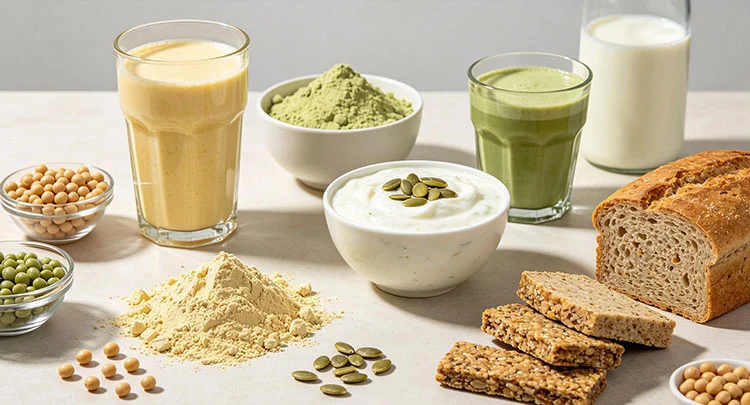
Pea protein is the leading protein source in protein powders for sports nutrition and recovery because of its fast dispersion and neutral taste, and pumpkin seed protein provides high concentrations of micronutrient synergies in special formulations for sports.
Pumpkin seed protein is used in the development of seed-based milks and creamers in addition to pea protein, which is widely used as a neutral base to create vegan yogurts and liquid nutrition drinks.
Proteins add naturally to high-protein baked goods and snack bars; however, baked goods using pumpkin seed protein have a natural nutty flavor, which adds a nice savory and artisan-like flavor to baked goods.
Clean-Label and Allergen-Free Positioning: Both ingredients meet stringent and high standards for non-GMO, gluten-free, and hypoallergenic ingredients, allowing brands to make mass-market products without the need to use common synthetic texturizers.
Dosage Guidelines and Storage Stability Factors
By keeping raw materials at their best and setting up accurate dosage parameters, these conditions guarantee a long shelf life, constant product quality, and efficient operation of the processing line.
Standardized Serving Thresholds: A typical range of 20- 30 g for each serving is usually set for pea protein and pumpkin seed protein in industrial dietary supplement formulations to enable digestive comfort.
For fine powders, moisture and Humidity Management: Bulk storage facilities need to keep relative humidity below 60 percent to avoid caking, microbial growth, and structural damage.
Cool, dark, hermetically sealed storage conditions are necessary for pumpkin seed protein to prevent oxidation, as there may be trace residual plant oils in the protein. Lipid Control: As the pumpkin seed protein contains residual plant oils, it needs to be stored in a cool, dark place with a hermetic seal, as this is necessary to prevent oxidation.
Microbiological Quality Assurance: Each batch is tested for pathogens and heavy metals, and all shipments to factories are subject to rigorous testing to ensure they meet international food safety standards before leaving the factory.
You can contact us directly at info@scigroundbio.com or just fill in your needs in the form. Our group will deliver timely service, good prices, and custom-made solutions to cater to your needs.
Which is healthier, pea protein or pumpkin seed protein?
To wrap up, whether pea protein or pumpkin seed protein is better for your industrial formulation depends entirely on your goals and objectives. For high-protein isolate and amino acid balance, pea protein is the better protein. For micronutrient content and functional emulsification, pumpkin seed protein is the better protein.
FAQ
Q: Which is better for high-protein supplement formulations, pea protein or pumpkin seed protein?
A: Generally, pea protein contains a higher amount of isolated protein per serving, making it perfect for making high-protein shakes, while pumpkin seed protein provides a superior natural mineral synergy.
Q: Can pea protein and pumpkin seed protein be combined in industrial manufacturing?
A: Yes, it's common practice for formulators to combine pea protein and pumpkin seed protein to ensure a complete amino acid profile and to enhance the techno-functional properties, such as texture and viscosity, in a formulation.
Q: What are the storage requirements for bulk pumpkin seed protein compared to pea protein?
A: Both need to be kept in cool, dry, and dark conditions, but pumpkin seed protein must be kept in an extremely controlled environment to prevent the occurrence of lipid oxidation because it contains natural plant oils.
Q: Are both ingredients suitable for clean-label and allergen-free product lines?
A: Absolutely - both botanical ingredients are naturally non-GMO, gluten-free, and hypoallergenic to meet clean label requirements lacking synthetic ingredients.
References
1. Gorissen, S. H., et al. (2020). "Protein content and amino acid composition of commercially available plant-based protein isolates." Amino Acids, 52(12), 1613-1620.
2. Shevkani, K., et al. (2021). "A comparative review on functional, techno-functional, and structural properties of legume and oilseed proteins." Food Chemistry, 345, 128799.
3. Zhao, X., et al. (2022). "Structural characteristics, functional properties, and food applications of pumpkin seed and pea protein isolates." Critical Reviews in Food Science and Nutrition, 62(15), 4120-4138.
4. Malik, M. A., et al. (2023). "Plant-based proteins in modern food systems: Extraction, industrial applications, and stability challenges." Trends in Food Science & Technology, 134, 89-102.
You may like