What is thyme extract good for?
The main attributes of Thyme Extract, appreciated by the company, are its natural antioxidant capabilities, aromatic qualities, and applicability as a vegetable addition to food, supplementation, cosmetic, and industrial utilization. Obtained as the aerial extract of Thymus vulgaris, it includes concentrated bioactive compounds, including thymol, carvacrol, and flavonoids that provide formulation stability, increase flavor, and clean-label product development. It has applications in a wide variety of industries because of its functionality and versatility in varied product matrices.
Thyme Extract in Food Formulations
Natural Flavoring Component
This Thyme Extract is a clear herbal aroma and savory with an ability to be added to sauces, soups, marinades, and ready-to-eat food. The small amounts are able to provide the desired intensity of its flavor through its concentrated profile.
Antioxidant Support
The phenolic contents of the Thyme Extract are used to preserve the quality of products by preventing oxidative processes during storage and processing, especially in oils, dressings, and packaged food.
Clean-Label Applications
With the rising demand for plant-based products among consumers, Thyme Extract can be used as a clean-label natural substitute to artificial flavors and preservatives, facilitating the clean-label positioning.
Stability during Heat Processing.
Well-standardized Thyme Extract retains sensory and functional characteristics at moderate cooking conditions and is therefore applicable in thermal food processing.
Thyme Extract in Dietary Supplements
Capsule and Tablet Integration
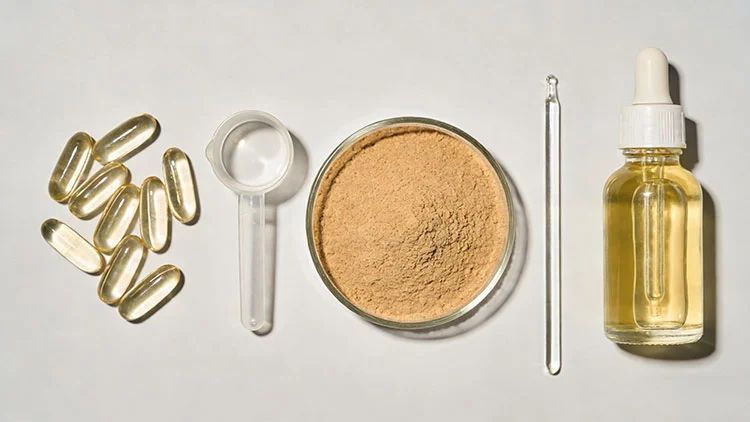
Thyme Extract is available in capsule or tablet form in which it is standardized as a plant-based ingredient in a concentrated form.
Powder and Liquid Blends
Powder and liquid versions of Thyme Extract can both be used in multi-ingredient supplement formulations to allow dosing to be specific and the quality of a batch to be the same.
Formulation Considerations
Active compound concentration and desired contribution of aroma must be looked into in selecting the dosage to be used in order to maintain uniformity in the finished products.
Thyme Extract in Cosmetics and Personal Care
Aromatic Enhancement
Thyme Extract provides a natural fragrance to creams, lotions, and shampoos, and promotes natural fragrances without any synthetic fragrances.
Stability Contribution
Its antioxidant compounds ensure that the formulation maintains integrity, which slows down the process of product degradation with time.
The compatibility with the Botanical Systems.
The extract is well-soluble in other vegetable ingredients in skin and hair preparations, and conforms to multi-ingredient botanical preparations.
Industrial and Specialty Applications
Feed Additive Potential
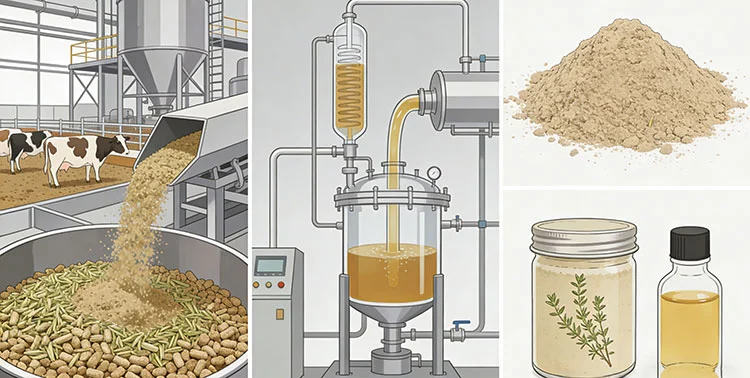
The Thyme Extract can be used in animal feed blends, which gives the feed a focused botanical ingredient that follows the strategies of natural ingredients.
Manufacturing of Functional Ingredients.
It is a standardized botanical raw ingredient that can be used in food, supplements, and personal care systems as a consistent botanical ingredient in a compound ingredient system.
Formulation Flexibility
Thyme Extract is available as a powder or in liquid form and can be modified to suit certain production needs, such as solubility, dosage, and stability considerations.
Formulation Tips and Best Practices
Extraction Standardization
Having homogenous amounts of thymol and carvacrol is essential in achieving homogenous sensory and functional performance.
Dosage Optimization
Make concentrations in such a way that they add desired aroma and functional contribution but are not overwhelming other formulation components.
Storage and Stability
To maintain the active compounds and maximize the shelf life, Store Thyme Extract should be kept in cool, dry, and light-free surroundings.
Compatibility Testing
Assess contact with other food components, particularly in complex foods such as emulsions, beverages, or fortified food to sustain product quality.
Conclusion
To conclude, Thyme Extract is a multifunctional botanical ingredient, as it is a compound that is appreciated in both food, supplement, cosmetic, and industrial sectors due to its odor, antioxidant properties, and formulation flexibility. It has high-density bioactive components, standardizable quality, and fits well into the trends in plant-based products, which is why it is a convenient option among manufacturers that require functional, clean-label, and sustainable ingredient options.
Contact us today to learn more about our products and pricing. You can send an email to info@scigroundbio.com or submit your requirements using the form at the bottom of our website.
FAQ
Q1: How can Thyme Extract be used in food flavoring?
Thyme Extract may be used in sauces, soups, marinades, and seasonings to give an aroma and flavor of herbs. Small amounts are normally adequate owing to its potent profile.
Q2: What forms of Thyme Extract are suitable for dietary supplements?
It may be used in powder form and in liquid form, where it can be encapsulated, placed in tablets, or mixed with other ingredients in multi-ingredient form and controlled content of the active compounds.
Q3: Can Thyme Extract be used in cosmetic products?
Yes, it can be used together with creams, lotions, shampoos, and other personal care products due to its natural smell and the fact that it adds stability to formulation.
Q4: How should Thyme Extract be stored to maintain quality?
Keep in a cool and dry place and in the dark and dry to maintain the phenolic compounds and aromatic integrity of the store.
References
1. Borrás-Linares, I., et al. (2020). Phytochemical characterization of thyme extracts and their potential applications in food and cosmetics. Food Chemistry, 309, 125746.
2. Viuda-Martos, M., et al. (2021). Thymus vulgaris essential oil and extracts: Composition, antioxidant, and functional applications. Trends in Food Science & Technology, 109, 96–108.
3. Mohammadi, S., et al. (2022). Advances in the extraction and stabilization of thyme bioactive compounds for industrial applications. Journal of Food Processing and Preservation, 46(1), e16148.
4. Zgórka, G., & Głowniak, K. (2020). Quality control and standardization strategies for herbal extracts: Focus on Thyme Extract. Journal of Pharmaceutical and Biomedical Analysis, 189, 113471.
You may like