What is the use of bamboo extract?
Bamboo Extract is mainly employed in cosmetic formulations as a high level of bioavailable natural silica and antioxidants to strengthen the structural component of the formulation, whilst also strengthening the keratin of the hair and nails, and fortifying essential minerals in functional foods which are derived from plants.
Extract from bamboo is a sustainable and renewable resource, and since it is rich in organic silica, standardized at 70%, it has become very popular for procurement for industries. Whether it's in a luxury skin care formulation or an innovative material science application, it's a key component for brands that are focused on clean-label, high-performing skin care.
Technical Composition and Functional Properties of Bamboo Extract
To formulate effective bamboo extracts, it is important to understand the molecular composition of the bamboo extract. The extract is not only a compound, but it is a combination of phytochemicals, which determines its usage for industrial purposes.
Natural Silica (Orthosilicic Acid): The most outstanding compound contributing to structure reinforcement. This is the main factor for the widespread use of the "use of bamboo extract" in strengthening applications.
Phenolic Acids and Flavonoids: These are responsible for the secondary use of bamboo extract as an environmental barrier, which is used for neutralizing the oxidative stress in topical and internal use.
The re-constructive properties of the extract are additionally supported by small amounts of protein building blocks that are known as Essential Amino Acids and help to repair damaged surfaces, like the cuticle of a hair or dry skin.
Mineral Electrolytes: Mineral electrolytes with natural potassium and magnesium content allow for the liquid formulations to have a compatible osmotic balance, which provides stability and skin compatibility.
Diverse Industry Applications: Where is Bamboo Extract Used?
The adaptability of this plant species enables it to serve in several different industries, each with a part of its unique chemical makeup.
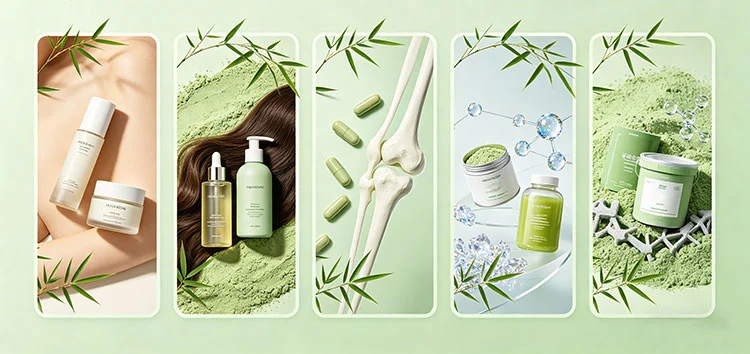
In the cosmetic industry, Bamboo extract is targeted in the "skin-silkening" area in the beauty field. It helps to support the structure of the skin in anti-aging creams, as a natural blurring agent in primers.
Hair & Scalp Care: A must-have in volumising shampoos and hair-thickening serums. The silica attaches itself to the hair shaft, making it thicker and more resistant to mechanical stress.
In the wellness industry, the focus on the use of bamboo extract is on the capsules that provide "beauty from within," also known as nutraceuticals and beauty supplements. It supplies the basic components for the healthy maintenance of connective tissues.
Functional Food and Beverage: It can be used as a natural anti-caking and mineral fortification agent in energy powder and health drinks, which are an alternative to synthetic silicon dioxide.
Industrial Material Enhancement: Apart from biology, the extract is applied in green coatings and biopolymers. The extract is applied to improve the tensile strength of sustainable packaging materials.
Formulation Techniques and Ingredient Synergies
To maximise the use of bamboo, it is important to have a good knowledge of the bamboo's behaviour in various chemical environments. Solubility and interaction are important for the formulation of a product to ensure the activity of the product.
Water Soluble vs Anhydrous Environments: There are several bamboo powders that are water-soluble, but certain high silica powders will require an agent to suspend the powder in the water. If the oil-based serum, it is important that you micronize the extract to prevent the extract from settling in the serum.
The pH Stability Guidelines are: Bamboo extract is most stable in a slightly acidic to neutral range (pH 4.5 – 7.0). If the alkalinity of the solution becomes extreme, there may be precipitation of silica, and consequently, the product may not have the desired functional and visual quality.
Synergic Blending with Vitamin C: When blended with Vitamin C, either Acerola or Vitamin C, bamboo extract and Vitamin C work together to create an excellent antioxidant combination. The silica allows pathways to form in the structure while the Vitamin C helps to stabilise the colour and increase the protective properties of the extract.
Chelating Agent Interactions: If using hard water or specific minerals when formulating, a mild chelator might be necessary to avoid silica precipitation due to chelation with metals.
Dosage Factors and Bioavailability in Manufacturing
A critical technical issue that has an impact on the cost-effectiveness and performance of the final commercial product is the correct dosage.
Typical Use: Bamboo extract is applied to the skin at a concentration of 1-5% in skin care and hair care products. Low amounts are recommended for daily application, and higher amounts are recommended for rinse-off masks/professional applications.
Dietary Inclusion Rates: In the supplement industry, a standardised yield of silica is used to measure the use of bamboo extract. The average daily dose of extract is 100mg to 300mg, which will give a functional dose of elemental silica.
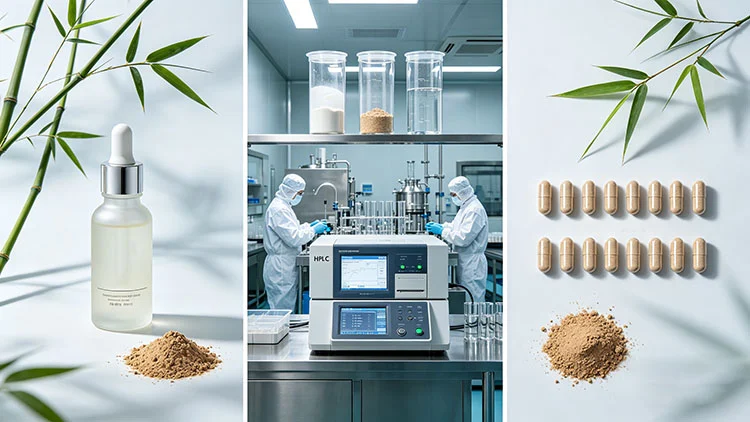
Manufacturers need to be aware that there is a difference between 10:1 ratios and the standard 70% silica extracts. Any formula that contains "use of bamboo extract" will only be as good as the concentration of the active markers in the extract – the concentration must be verified by HPLC.
Safety and Tolerance: It is generally recognized as safe (GRAS) extract of Bamboo. However, in industrial handling, it is in a fine powder form, which necessitates dust control to ensure the safety of the workers and to avoid cross-contamination in a clean room environment.
Future Prospects and Sustainability in Global Markets
Bamboo Extract has been positioned well for long-term growth due to the macro-economic transition towards ‘Bio-based Solutions'.
With the emergence of the "clean label" trend, industries are increasingly using bamboo extract to replace the synthetic silica used as anti-caking agents, thereby boosting the demand for bamboo extract in the world.
The revolution of nanotechnology: New studies on the potential of using nano-emulsions are making silica in bamboo more readily bioavailable than ever – and could pave the way for new and better delivery systems for nutrition and advanced dermatological patches.
Environmental Resilience: Rapid growth of bamboo requires very little water and no pesticides, so it is regarded as one of the most environmentally friendly raw materials. This green pedigree is a big plus in the B2B procurement arm's sales pitch.
Conclusion
To sum up, the employment of bamboo extract is a comprehensive approach to present-day manufacture, presenting a strong structure of high-purity silica and antioxidant capping properties. From use in cosmetics to build strong and resistant hair and skin to its use in food supplements to ensure natural minerals, Bamboo extract is a key and irreplaceable botanical ingredient in industrial day-to-day applications.
Contact us today to learn more about our products and pricing. You can send an email to info@scigroundbio.com or submit your requirements using the form at the bottom of our website.
FAQ
Q1: Can bamboo extract be used in clear liquid formulations?
Of course, good quality bamboo extract that has a good water solubility can be used in clear liquids. Formulators, however, must keep an eye out for the concentration of silica in the solution and also the pH level of the solution, since it may become cloudy and precipitate over a period of time.
Q2: How does the silica in bamboo extract benefit topical skincare?
The natural smoothing effect of the silica in the bamboo extract helps to refine the skin. The silica in the bamboo extract is a natural smoothing agent that helps to smooth the skin. Absorbs excess sebum, gives a matte effect to cosmetics, and helps the maintenance of the integrity of the Extracellular Matrix, which helps the skin's moisture barrier function.
Q3: Is bamboo extract a sustainable alternative to animal-derived collagen boosters?
Absolutely. The use of bamboo extract is a popular vegan-friendly alternative for supporting structural health. Instead of providing external collagen, it provides the natural silica required for the body’s own connective tissue maintenance.
Q4: What is the shelf life of standardized bamboo extract powder?
When stored in a cool, dry environment away from direct sunlight, standardized bamboo extract typically has a shelf life of 24 to 36 months. Proper sealing is essential to prevent the powder from absorbing ambient moisture (hygroscopy).
References
1. Goyal, A., & Sharma, V. (2020). Phytochemical and Pharmacological Profile of Bamboo: A Review. Journal of Herbal Medicine and Toxicology.
2. Lee, H. J., & Kim, J. K. (2021). Assessment of Bamboo (Bambusa vulgaris) Extract as a Natural Source of Silica for Cosmetic Applications. International Journal of Cosmetic Science.
3. Patel, S., & Rauf, A. (2022). The Role of Plant-Derived Silica in Human Nutrition and Connective Tissue Health. Journal of Dietary Supplements and Functional Foods.
4. Wang, L., et al. (2023). Antioxidant Activity and Stability of Bamboo Leaf Extract in Functional Beverage Formulations. Food Chemistry and Technology Research.
You may like