What is salicylic acid powder used for?
Salicylic Acid Powder is a high-purity beta-hydroxy acid (BHA) and a major member of the lipophilic BHA group, used primarily as an exfoliating agent, pH adjuster, and stabilizing booster by commercial product manufacturers in cosmetic, dermo-care, and personal hygiene formulations.
Technical Fundamentals: What is Salicylic Acid Powder Used For in Modern Chemistry?
To understand salicylic acid powder applications, it is necessary to examine its chemical composition and properties in industrial formulations. Salicylic acid powder is a special kind of keratolytic active ingredient and a synthetic or natural 2-hydroxybenzoic acid compound (CAS No. 69-72-7) that promotes dead epidermal cells falling off. Its oil-soluble structure and composition of phenolics allows it to penetrate deeply into the skin lipids, unlike the water-soluble alpha-hydroxy acids (AHAs) that can not.
Keratolytic Exfoliation:
Dissolves intercellular desmosomes to help gently and evenly turn over the stratum corneum in rinse-off and leave-on formulations.
Surface Sebum Management:
Will readily blend with skin surface lipids to remove excess sebum clogging up inside the follicles.
Preservative Boosting Support:
Complements organic acids to reduce the system's pH and thus improve emulsions' secondary preservation systems.
Texture Refinement:
Smoothing – allows smooth peeling off of rough, uneven surfaces of cells at the top layers.
Key Industrial Formulations: What is Salicylic Acid Powder Used For Across Applications?
The range of categories in which salicylic acid powder can be used in an end product can be diversified when enterprise buyers look at what salicylic acid powder is used for in end-product manufacturing. Its crystalline stability is utilized by industrial product developers to create high-performance face, body, and scalp care solutions for retail.
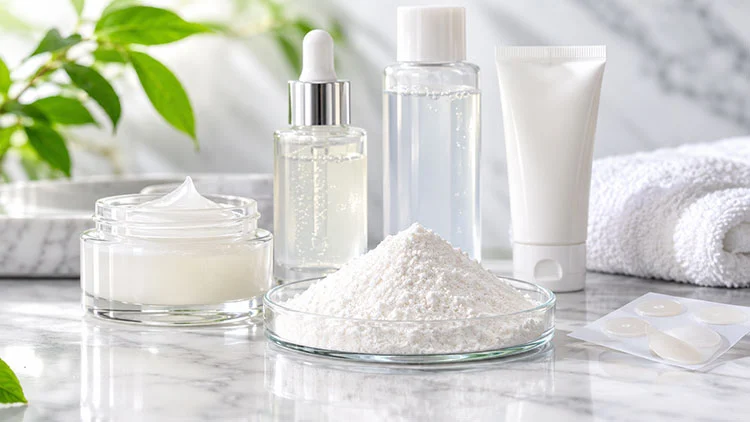
Skincare and Dermo-Cosmetic Systems
Salicylic acid powder is added to skincare products like serums, toners, and skin washes that clarify the skin for high-performing skin care. When neutralised properly, it offers specific rejuvenation of the surface, while maintaining moisture barrier function.
Exfoliating Facial Serums:
Formulated in a glycolic base fluid to keep skin types Oily and Combination clear of spots with a leave-on exfoliating effect.
Clarifying Cleansing Gels:
Delivered on the surface via a surfactant network with daily washing.
Hydrocolloid Blemish Patches:
The active is entrained within a polymer adhesive matrix for slow-release contact in a localized area on the surface.
Scalp Hygiene and Hair Care Products
Salicylic acid powder is incorporated into scalp-care products to dissolve hardened buildup, excess sebum, and styling products, which helps to maintain an optimal environment for hair follicle care.
Anti-Flake Clarifying Shampoos:
Unclogs surface flakes of the scalp and prevents excessive oil production in special hair washing lines.
Leave-On Scalp Tonics:
Designed as a non-greasy fluid that provides all-day refreshment and comfort to the scalp.
Pre-Wash Scalp Scrubs:
In addition, used in combination with a mechanical exfoliant to make dual-action mechanical and chemical scalp purifiers.
Formulating Guidelines: Concentration Limits, Solubility, and Processing Methods
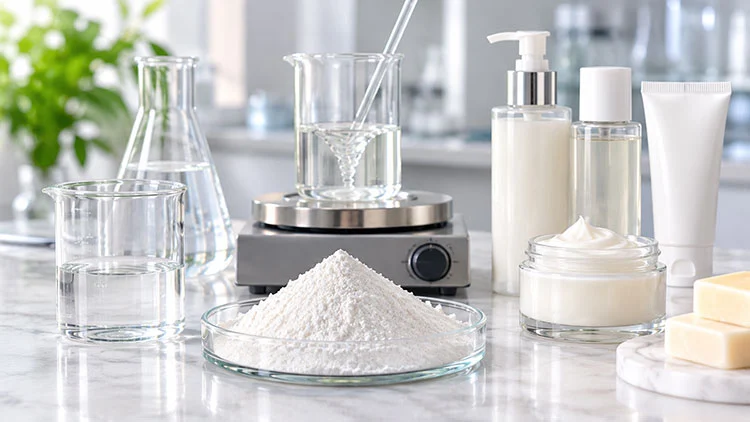
Chemical engineers need to adhere to an exact set of process parameters to gain insight into the practical application of salicylic acid powder for batching. Since the raw salicylic acid powder is not very soluble in water at room temperature (around 2 g/L at 20°C), it is necessary to use specific solubilisation and dosage procedures.
Solubilizer Selection:
Dissolve the crystalline active in glycol solvents (e.g., propanediol, propylene glycol, or ethanol) or a non-ionic surfactant before introducing it to the water phase.
Standard Dosage Ranges:
Include between 0.5% and 2.0% effective level in normal cosmetic leave-on rinses and shampoos (up to local regulation).
Temperature Management:
To speed up the dissolution of the phases, heat the solvent mixture to 40°C–50°C during the preparation of the phases, but do not allow it to be degraded by heat.
Anhydrous Integration:
Directly blend into warm lipid-based products (lipophilic bases, lipid sticks, and synthetic syndet bars) without the use of an aqueous phase.
pH Dependency and Stability Factors for Salicylic Acid Powder Formulations
To assess the technical stability of the finished product, the pH and ionic balance of the finished product need to be precisely controlled in the presence of salicylic acid powder. The effectiveness and innocuity of the free acid form rely directly on the tight pH window during processing.
Best Growth pH range:
Optimise the final batch pH for the active free-acid ratio, while minimising skin discomfort, by adjusting it with buffer systems (e.g. sodium citrate) as the final batch pH is adjusted.
Chelation Requirements:
To eliminate the effects of trace iron contamination that can cause pink/ purple discoloration of formulas, chelating agents such as disodium EDTA are added to formulas.
Precipitation Prevention:
To prevent recrystallization of BHA that has been dissolved in the water phase, avoid sudden temperature changes or over-dilution when adding to the water phase.
To ensure the safety of the lights and containers, use a fan to circulate air.
Keep raw powder and finished liquid batches in amber containers to protect from the effects of oxidative discoloration caused by UV.
Industry Overview: Why Bulk Salicylic Acid Powder Drives B2B Product Innovation
As a multi-functional, clean label raw material, commercial brand owners continually evaluate salicylic acid powder's uses. BHA powder, with its high purity, offers cost-effective flexibility for growth production line and is the basis of beauty and personal care industry in the world.
Scalable Batch Flexibility:
Formulators enjoy complete freedom of customization when using bulk crystalline powder for their formulation, in terms of solvent base, viscosity profile, and delivery format.
Clean-Beauty Compliance:
High purity grades (99.5% and above) meet compendial guidelines for international cosmetics, thus ensuring disclosure of label claims.
Global Market Demand:
Serves consumer interest in the raw materials with scientifically proven, multi-action scrubbing properties for use in daily personal care.
Cost Efficiency:
Raw active powder buying is ideal for ongoing high-volume production runs, allowing bulk purchasing to achieve the best unit economics.
To conclude, salicylic acid powder is a critical, high-purity BHA active for providing excellent surface exfoliation, sebum control, scalp clarity, and formulation stability in personal care and cosmetic applications.
If you have any other questions or would like more information about our products, please reach out for support via this website or by emailing info@scigroundbio.com directly.
FAQ
Q1: What is salicylic acid powder used for in DIY vs. commercial cosmetic manufacturing?
A: In commercial manufacturing, salicylic acid powder is precisely solubilised and buffered at standard levels (0.5% – 2.0%), ensuring product quality and safety in retail. Without lab-grade pH testing equipment and glycol solubilizers, it is not advisable to use it for DIY.
Q2: What is the recommended pH level when formulating with salicylic acid powder?
A: The optimum range for the target pH to achieve the best performance of raw materials and skin compatibility is 3.0 to 4.0. This range ensures a good amount of free acid is available to protect the glass, and surface irritation is minimized.
Q3: How do formulators prevent salicylic acid powder from crystallizing in water-based serums?
A: The powder is pre-dissolved in glycol co-solvents (such as propanediol or dipropylene glycol) or ethanol before blending into the water phase, and the pH is closely monitored throughout the process.
Q4: Can salicylic acid powder be incorporated into waterless or anhydrous formulations?
A: Salicylic acid powder is naturally lipophilic and therefore easily applied to anhydrous balm sticks, oil-based body scrubs, solid syndet bars, and hydrocolloid patch adhesives.
References
1. Arct, J., & Pytkowska, K. (2020). Flavonoids and organic acids as active cosmetic ingredients: Solubility and formulation challenges. Journal of Cosmetic Science, 71(3), 145–158.
2. Cosmetics Europe Advisory Committee. (2021). Guidelines on the safe use of beta-hydroxy acids in cosmetic products. Cosmetics Europe Publications.
3. European Commission Scientific Committee on Consumer Safety (SCCS). (2022). Opinion on Salicylic Acid (CAS No. 69-72-7) in cosmetic products (SCCS/1646/22). European Union.
4. Malik, R., & Zhai, H. (2023). Topically applied keratolytic agents: Chemistry, formulation techniques, and surface skin dynamics. International Journal of Cosmetic Science, 45(2), 201–212.
You may like