What is marigold extract good for?
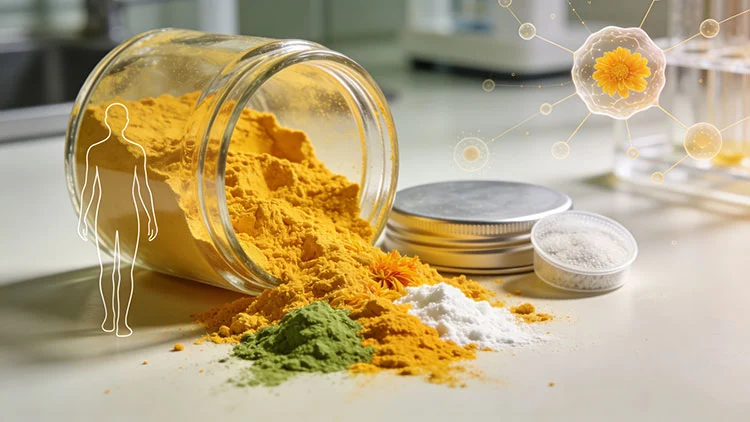
Marigold Extract is mainly considered to be a versatile botanical extract that is made of the flowers of Tagetes erecta, which is commonly grown due to its colorful natural pigments. It is a standardized source of carotenoids, especially the xanthophyll compounds and lutein, and is appropriate in various applications in food, supplements, cosmetics, and animal nutrition. Marigold extract is extracted using a solvent or supercritical fluid technique, then further concentrated, purified, and dried by spray method (a fine powder form of the extract), and of bright yellow to orange color, and capable of being carried to flow freely into most product systems.
Natural Pigment Source in Food and Beverage
Plant-Derived Colorant: Marigold extract powder is a natural yellow-orange drink colorant, powdered drink mix, tea, and any other food product that can be used in place of a synthetic dye.
Blending Versatility: This property enables ease of incorporation into both liquid and powdered formulations, with the ability to have a uniform distribution and uniform color.
Guidelines of Inclusion: It is important to become acquainted with the properties of inclusion since it allows achieving the required pigment visage without altering the product's appearance, which is crucial to the balance of the formulation.
Functional Ingredient in Dietary Supplements
Standardized Botanical Source: Marigold extract powder has the same amount of carotenoids and is therefore used in capsules, tablets, and mixed powders.
Other Botanicals: It can be used in combination with other ingredients without compromising the stability or the color.
Storage and Stability: It is possible to control moisture, temperature, and light exposure to maintain the quality of pigments and extract stability in the long run.
Cosmetic and Personal Care Applications
Botanical Integration: Marigold extract may be introduced to the creams, lotions, and serums as a natural plant ingredient.
Formulation Techniques: To achieve even color and the best stability, solubility, and dispersion in an oil- or water-based system should be taken into consideration.
Processing Improvements: Microencapsulation or pre-dispersion can be used to enhance compatibility and stability in complex cosmetic matrices in the long term.
Animal Nutrition and Feed Applications
Natural Pigment in Feed: The Marigold extract is utilized to give the poultry eggs and livestock skin a yellow to orange tint.
Precise Inclusion: Controlled dosing: The feed products are uniform in terms of color intensity.
Stability Management: The condition of heat, storage, and feed processing is a concern that should be given enough attention in order to maintain pigment retention and consistency in the product.

Industrial Processing and Formulation Techniques
Optimization of Extraction: Supercritical CO2 extraction or ethanol extraction methods are the preferred methods since they retain lutein and xanthophylls and produce a fine, free-flowing powder.
Mixing and Integration: The correct blending techniques will provide homogenization of the formulations that are complicated in nature, so that there is no color difference.
Shelf-Life Optimization: Pigment stability and shelf life of the product are improved by packaging in dry oxygen-impermeable containers and by keeping off light.
Emerging Trends and Research Focus
Pigment Stability Research: The up-to-date research is on the maintenance of carotenoids during processing and storage.
Application Development: Studies on food supplements, cosmetics, and feed applications are still ongoing to come up with new applications of marigold extract as a safe and natural ingredient.
Industrial Interest: With improvements in the field of microencapsulation, extraction performance, and standard operation of the process, the interest among manufacturers in finding plant-based color sources with traceability is growing.
Conclusion
To sum up, the marigold extract powder is a universal botanical material due to its stable carotenoid content, broad range of use, and stable powder form. It is used as a natural colorant, functional botanical, as well as formulation-friendly extract used in food, beverages, supplements, cosmetics, and animal nutrition. It has contributed to its great consistency, ease of use in its various formulations, and its increasing research on the stability of pigments, which has made it a viable and sustainable alternative to product developers in contemporary industrial product development. The natural color of the extract is bright, and the standardized composition is combined with the ability to be used in different types of formulations; therefore, the future of the extract is evident and promising in various industries.
Contact us today to learn more about our products and pricing. You can send an email to info@scigroundbio.com or submit your requirements using the form at the bottom of our website.
FAQ
Q1: What is marigold extract powder commonly used for in food products?
A1: It is primarily applied as a natural colorant in beverages, teas, powdered drink mixes, and other food products that need a yellow-orange pigment of plant origin.
Q2: Can marigold extract powder be used in dietary supplements?
A2: Yes, it has the common occurrence of being a standardized botanical ingredient that is rich in carotenoids and can be found in capsules, tablets, and blended powders.
Q3: How should marigold extract powder be stored to maintain quality?
A3: Is to be stored in a dry and cool, dark and non-moist environment to maintain the stability of the pigments and avoid pigment degradation.
Q4: Is marigold extract suitable for cosmetic formulations?
A4: Yes, it could be used in creams, lotions, and serums as a natural plant colorant, and blending and dispersion have to be done carefully to ensure evenness.
References
1. Li, Y., Zhang, X., & Chen, Q. (2021). Optimization of lutein extraction from marigold petals using supercritical CO2. Journal of Food Science and Technology, 58(5), 1714–1723.
2. Wang, J., Liu, H., & Sun, L. (2020). Stability evaluation of carotenoids in marigold extract powders under various storage conditions. Food Chemistry, 318, 126456.
3. Patel, S., & Goyal, A. (2022). Applications of plant-based pigments in functional foods and nutraceuticals. Trends in Food Science & Technology, 123, 95–106.
4. Chen, F., & He, J. (2021). Advances in natural colorant incorporation for feed and cosmetic industries. Industrial Crops and Products, 164, 113419.
You may like