What is ivy extract used for?
The naturally occurring polyphenolic compounds and saponins in Ivy extract play a key role in making the product versatile for use in various products that focus on respiratory wellness, herbal syrups, functional supplements, cosmetic preparations, and plant-based wellness products.
What Is Ivy Leaf Extract?
The extract, which is generally referred to as an “Ivy extract,” is the extract obtained from the leaves of the climbing evergreen plant Hedera helix, which is often manufactured in the form of powdered extracts, liquid concentrates, and standardized botanical ingredients. Today, the manufacture of ivy extracts for leaf concentrate is directed towards maintaining the active components of the plant (hederacoside C, alpha-hederin) and ensuring the stability of the formulation and consistency of each batch.
Why Ivy Extract Is Popular in Botanical Formulations
The ivy extract would be valuable in the field of nutraceuticals and botanicals for a number of reasons:
High formulation flexibility
Ivy extract may be used in capsules, liquid blends/syrups, gummies, tablets, and topical products.
Water-soluble extract options
There are several manufacturers that have designed the water-soluble extract for ready-to-beverage systems or applications as a liquid.
Excellent blending with herbs.
Ivy leaf extract is often used in conjunction with other botanical extracts, including thyme extract, licorice root extract, elderberry extract, and peppermint oil.
Global consumer recognition
The use of Ivy ingredients in the production of herbal products has a long history in Europe, making the market more familiar with the use of Ivy ingredients.
Ivy Extract in Herbal Syrup Manufacturing
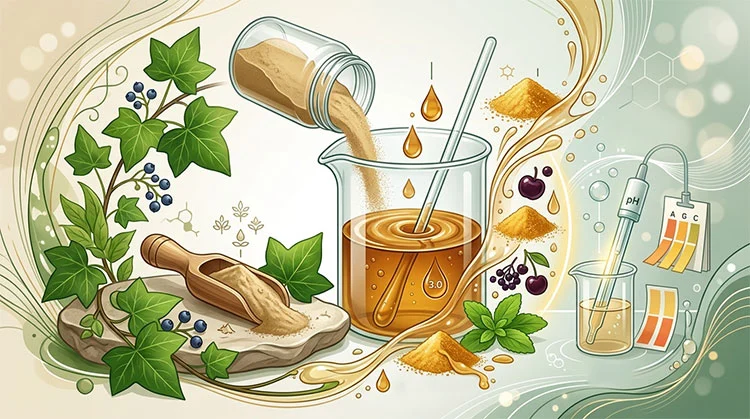
Ivy extract is a popular ingredient for herbal liquids for use in the seasonal wellness market. Many manufacturers will standardize ivy extract to a consistent level of saponins for more uniformity in manufacturing.
Some of the factors that are important when formulating are:
Viscosity management
The extract of liquid ivy can be used to change the thickness of syrups according to the concentration ratios.
Flavor balancing techniques
Ivy extract naturally has a slightly bitter botanical and can be flavored optimally using honey powder, stevia, or fruit concentrates.
pH stability control
The majority of ivy extract liquid products work best in moderately acidic formulations, which will ensure the appearance and maintain the integrity of the ingredients.
Combination Formulas Using Ivy Leaf Extract
Ivy extract is frequently combined with other botanicals to achieve a more wide-ranging positioning of the product.
Some of the most popular combinations are:
A blend of thyme extract and Ivy extract.
Used often in respiratory blends in the botanical market due to the excellent compatibility with liquids.
It is made from Ivy and Elderberry powder. It contains Ivy extract and Elderberry powder.
Frequently found in health drinks during the winter and in chewable products.
The peppermint extract-based Ivy extract. Ivy extract containing peppermint extract.
Familiar with preparing fresh vegetation taste in syrups and lozenges.
Ivy Extract Capsules and Tablets
Capsule and tablet manufacturers appreciate ivy extract as it can be standardized and converted into free-flowing powders that can be used in automated capsule and tablet filling machines.
The benefits of manufacturing are:
The number of particles of a given size.The uniformity of the size distribution.
Enhances the blending efficiency in encapsulation.
For low-moisture-content options, try these:
Can be packaged to provide longer shelf stability.
Compatibility with excipients
In general, extract powders of ivy will mix well with maltodextrin, microcrystalline cellulose, and plant-based carriers.
Recommended Dosage Factors for Ivy Extract Products
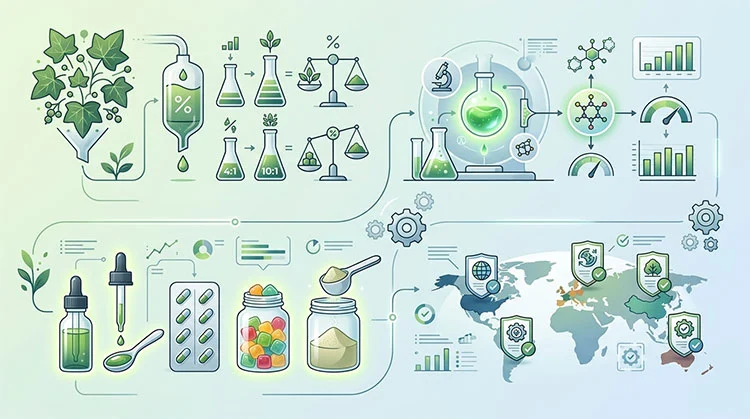
The ratio of ivy extract in the formulations can be different based on the level of standardization, extract ratio, dosage form, and the requirements of the target market.
Manufacturers generally evaluate:
Extract concentration ratios
Like a 4:1, 10:1, botanical extraction specification.
Active compound standardization
Particularly, the consistency of the content of esderaco.
Serving format
Different loading capacities are required for liquids, capsules, gummies, and powders.
Regional compliance requirements
These may vary from country to country depending on export markets.
Heat and Moisture Sensitivity
The stability of the extract of ivy is largely influenced by the process to which it was subjected, as well as by storage conditions.
Production factors that are important are:
When a product is dried after being exposed to a temperature.
Phytochemical consistency can become less if the temperature exceeds.
Humidity control during packaging
Flowability and appearance of powders may be impacted by moisture absorption.
Light-resistant packaging systems
In some botanicals, exposure to the UV may speed degradation.
Shelf-Life Optimization Strategies
The manufacturers of ivy extract products generally use a few stabilization processes to ensure a commercial-quality product:
Nitrogen-flushed packaging
Helps to prevent oxidation while in storage.
Desiccant-assisted container systems
Helps with moisture control of powdered extracts.
Controlled warehouse environments
The consistent temperature results in better quality of ingredients for longer storage.
Ivy Extract in Botanical Skin Care Products
Additionally, ivy extract can be used as an ingredient in cosmetics and personal care products due to its botanical ingredients and suitability for plant-based product ideas.
They are used in cosmetics such as:
Body scrubs and gels.Body scrubs and gels using herbs.
Commonly used in skin care regimens that feature herbs.
Scalp care products
Description: Used to make botanical shampoo and tonic.
A few of the plant-based alternatives for body care are:
Often used in combination with green tea extract and/or ingredients from aloe vera.
Formulation Compatibility in Cosmetic Systems
Formulators of cosmetics test the extract from the ivy for several technical properties:
Water-phase incorporation ability
Suitable for use with emulsified systems.
The resistance of the finished product to changes in colour.
Gel formulation applicable to the following situations:
Fragrance interaction performance
Extracts from plants should be compatible with the essential oil systems.
Growing Demand for Plant-Based Extracts
The botanical ingredients market is continuing to grow worldwide, with manufacturers looking for familiar plant raw materials that can be used for functional products. The positioning strategies of clean label and botanical origin are complementary to this trend and benefit the use of the Ivy extract.
The following are market drivers:
The preference of consumers for herbal ingredients
Plant extracts continue to be valuable products in the well-being sector.
Growth in the varieties of botanical beverages.Increase in types of botanical beverages.
Many of the powdered instant drink systems are now being considered for the use of ivy extracts.
Development of combinations that incorporate herbs.Increase in combinations including herbs.
Multi-ingredient botanical products are still being commercialized.
Standardization Trends in Ivy Extract Supply
Purchasing ingredients with a focus on the following attributes is growing in importance:
The sourcing of the raw materials is made traceable.
In particular, for production to be marketed abroad.
Third-party analytical testing
Used for checking the amounts of active compound present and the purity of the product.
Consistent extraction technology
Essential for the repeatability in manufacturing.
What is ivy extract used for?
The use of Ivy extract is mainly associated with plants as functional ingredients in systems for respiratory wellness, botanical syrups, dietary supplements, cosmetic products, and systems of botanical ingredients, due to its versatility in processing and tolerability. In conclusion, ivy leaf extract is a versatile natural ingredient that offers a range of applications and benefits across various industries, including medicine, cosmetics, food, and nutrition. Ivy leaf extract is a versatile natural ingredient with a wide variety of applications and benefits, making it a valuable resource for companies seeking to harness the natural power of herbs and plants in their products.
Contact us today to learn more about our products and pricing. You can send an email to info@scigroundbio.com or submit your requirements using the form at the bottom of our website.
FAQ
What is ivy leaf extract commonly used for in supplements?
Capsules, syrups, gummies, and botanical liquid formulations for seasonal wellness and herbal formulations are all popular applications for ivy leaf extract. Often used in conjunction with thyme extract, elderberry extract, and peppermint.
Can ivy extract be used in beverage formulations?
Yes. When appropriate, water-soluble ivy extract powders can be added to instant drink mixes and/or botanical beverages and/or functional liquid systems.
What compounds are standardized in ivy extract products?
The ingredients in many commercial extracts of ivy have been standardized so that a specific amount of compounds, such as hederacoside C and related saponins, is present in each batch of extract to ensure consistency and quality control.
How should ivy extract powder be stored?
In general, the powder of Ivy extract is stored in moisture-proof containers, away from heat, humidity, and direct sunlight, so as to keep the powder stable and in good condition.
Is ivy extract compatible with other botanical ingredients?
This is due to the fact that the broad formulation compatibility and the use of ivy extract with other botanical ingredients like thyme extract, licorice root extract, peppermint oil, and elderberry powder are widespread.
References
1. European Medicines Agency. (2021). Assessment report on Hedera helix L., folium. EMA/HMPC Monographs.
2. Holzinger, F., & Chenot, J. F. (2021). Ivy leaf extract for respiratory formulations: A review of botanical applications and tolerability data. Phytomedicine Plus, 1(3), 100036.
3. Mahboubi, M. (2020). Hedera helix as a valuable botanical source: Phytochemistry and industrial applications. Journal of Herbal Medicine, 21, 100344.
4. World Health Organization. (2022). WHO monographs on selected medicinal plants: Hedera helix. Geneva: World Health Organization.
5. Stauss-Grabo, M., Atiye, S., Warnke, A., & Wedemeyer, R. S. (2021). Standardized ivy leaf dry extract in botanical product development. Planta Medica, 87(9-10), 698–706.
You may like