What is in pepper powder?
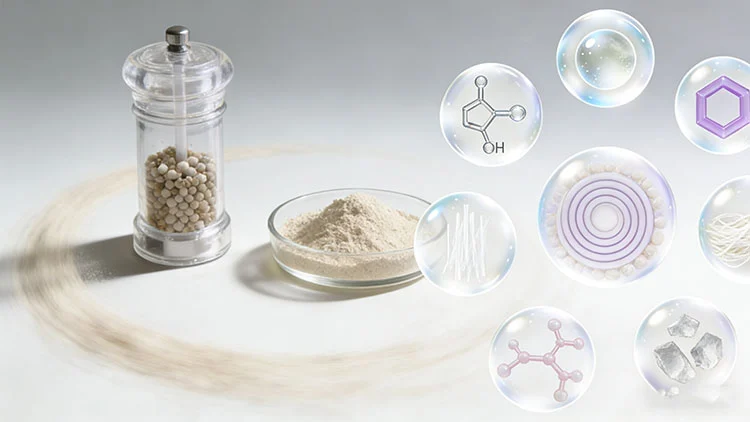
Pepper Powder is an extremely intricate ingredient characterized by its botanical source and processing properties, being mostly made of ground dried pepper fruits that still contain important flavor compounds, aromatic oils, and pungent alkaloids.
Understanding What Is in Pepper Powder: Core Components
Speaking about the content of pepper powder, it should be noted that the key types of constituents characterize the sensory, functional, and formulation of the ingredient in food and industrial use.
Plant Matrix and Dry Matter
Dried Fruit Tissue: The pepper fruit powder is made of dehydrated cells of pepper fruits, as well as fiber, carbohydrates, and cell wall remains.
Free-Flowing Particles: With correct drying and milling, a stable and low-moisture powder that does not cake or harden during blending is formed.
Pungent Alkaloids (e.g., Piperine and Related Compounds)
Piperine Group: These are alkaloid compounds that contribute to the sharp and pungent taste that is typical of pepper powder.
Ratio Variability: These compounds have different contents depending on the species of pepper, maturity during harvest, and methods of extraction or grinding.
Soluble Aromatic Constituents.
Essential Oils: Terpenes and sesquiterpenes are essential aromatic compounds of pepper powder.
Aroma Complexity: These volatile compounds determine the sensory attribute that is perceived when handling the product and its use.
Minor phytochemicals and nutrients: Minor phytochemicals constitute a combination of finer compounds that are simpler to extract.<|human|>Minor Phytochemicals and Nutrients Minor phytochemicals comprise a mix of smaller molecules that are more easily extracted.
Micronutrient Profile: Trace elements include minerals, polyphenols, and organic acids, which make constitutions of pepper powder.
Antioxidant -Associated Molecules: These are not direct agents but help to add to the complexity and stability of ingredients.
How Pepper Powder Is Produced: Raw Materials and Processes?
To know what is in pepper powder, one has to know how the raw fruits are processed into the finished ingredient.
Selection of Raw Pepper
Botanical Sourcing: Raw pepper fruits are sourced from certain cultivars and regions in order to attain flavor and quality specifications.
Harvest Requirements: The ultimate distribution of components is based on the maturity level and after-harvest.
Drying and Stabilization
Controlled Dehydration: Dehydration is also done using hot air or sun drying, which removes moisture to levels that promote shelf stability and preservation of aromatic constituents.
Heat Control: Temperature and time curves affect the retention of volatiles and the stability of alkaloids.
Milling and Grading
Grinding Technology: Mechanical milling is the process of treating dried fruits into powder of controlled particle size distributions.
Sieving and Classification: Fine and coarse fractions are divided according to the requirements in terms of formulation and operational performance.
Quality Control
Specification Testing: Analytical tests are performed to measure moisture, particle size, and constituent profiles so that there is consistency from batch to batch.
Traceability Systems Documentation of source and process parameters: This is used to verify ingredients and adhere to specifications.
Practical Uses: Understanding What Is in Pepper Powder for Formulation
The contents of pepper powder determine the application in various sectors of the industry.
Culinary and Food Manufacturing.
Flavoring Base: Savory Taste Systems are developed with the help of a flavoring base, which contains pungent and volatile profiles.
Blending Ingredient: It is an ingredient used as a conventional part of spice mixes that have a uniform sensory requirement.
Ingredient Development and Blends.
Compound Seasonings: Pepper powder is also mixed with the other spices and botanical extracts to form custom flavor formulas.
Customization Potential: The end-product sensory characteristics can be differentiated by changing grind size and the types of sources of pepper.
Non‑Food and Sensory Uses
Aroma Formulations: pepper powder can be used in the non-food product lines with an aromatic profile where botanical character is required.
Functional Blends: Use in the ingredient library aids product developers in the development of intricate sensory systems.
Formulation Considerations Relating to What Is in Pepper Powder
Certain points of pepper powder composition should be controlled when developing products containing pepper powder.
The Dosage and Intensity Control.
Perceptual Balance: The levels of alkaloid and aroma determine the levels of pungency and aroma intensity and have to be tuned in the recipe.
Standardized Add-In Rates: It is based on comparing rates of ingredient addition to sensory outcomes to provide reproducible outcomes.
Stability and Shelf Life
Oxidation Management: Volatile aromatic compounds are prone to oxidation, packaging and storage should be done in a manner that will avoid exposure to air and light.
Moisture Protection: Low humidity in the storage area keeps the free-flowing properties intact, and the properties are not clumped.
Compositions and Coexistences.
Blend Synergies: The effects of pepper powder and other spices and botanical powders on end sensory profiles depend on the interaction between the two.
Processing Effects: During the manufacturing of a product, heat and mechanical processing can affect a change in the distribution of components and aromatic strength.
Conclusion
Concisely, what is in pepper powder is a complicated combination of dried vegetable substances, spicy alkaloids, volatile aromatic compounds, and low trace phytochemicals, which all characterize the sensory and functional qualities. Understanding the individual ingredients and their response to the choice of raw materials, processing, and formulation can allow the product developer to use pepper powder to its full potential, be it in the culinary, industrial, or sensory realms. Pepper powder is a diverse and ubiquitous ingredient that can be utilized with evident importance across many product lines because of the combination of chemical profile, particle characteristics, and stability behavior.
Contact us today to learn more about our products and pricing. You can send an email to info@scigroundbio.com or submit your requirements using the form at the bottom of our website.
FAQ
Q1: What is pepper powder made from?
Pepper powder is a dried and milled fruit of pepper plants and contains pungent alkaloids, volatile aromatics, and plant matrix elements, making its sensory profile.
Q2: How does the composition of pepper powder affect flavor?
The relative concentration of alkaloids of piperine and volatile oil components in pepper powder determines its pungency and aroma, which affect its response to other ingredients of the formulation.
Q3: What should product developers consider when using pepper powder?
When product developers want to produce sensory consistent results, they should take into account dosage levels, stability during the processing conditions, and interaction with other flavor components.
Q4: How is pepper powder different from whole peppercorns?
Pepper powder is the dried peppercorns in a ground form that provides consistent particle size and convenience of use, where whole peppercorns have to be ground during usage, and may provide variation in particle size.
References
1. Srinivasan, K. (2020). Black Pepper and Its Functional Components: Chemistry and Applications. Journal of Food Science and Technology, 57(3), 745–756.
2. Mahattanatawee, K., & Rouseff, R. L. (2021). Volatile Compounds and Sensory Properties of Black Pepper Essential Oils. Food Chemistry, 337, 127742.
3. Singh, G., & Maurya, S. (2022). Processing Effects on Phytochemical Composition of Ground Spices. Food Research International, 156, 111211.
4. de Figueiredo, R. W., & de Oliveira, R. A. (2023). Quality Control and Standardization in Spice Powder Manufacture. Journal of Food Quality, 46(5), 245–258.
You may like