What is hawthorn extract good for?
Hawthorn extract is a botanical ingredient derived from the leaves, flowers, and fruits of Crataegus species, primarily used in formulation industries for its phytochemical diversity and functional versatility in food, cosmetic, and supplement systems.
Hawthorn Leaf Extract Production and Raw Material Standardization
Hawthorn extract (including hawthorn leaf extract) is obtained through controlled botanical processing designed to preserve natural constituents while ensuring batch consistency.
Raw material sourcing: Selected Crataegus leaves and plant parts are harvested from standardized cultivation zones to ensure uniform phytochemical profiles.
Extraction methods: Common processes include water extraction and hydroalcoholic extraction to optimize flavonoid and polyphenol yield.
Concentration and drying: Vacuum concentration followed by spray drying or vacuum drying produces a stable powdered extract.
Final appearance: Typically a fine powder ranging from light green to brown-green depending on plant part ratio and processing parameters.
Hawthorn Leaf Extract Composition and Active Plant Compounds
The functional profile of hawthorn extract is primarily associated with its naturally occurring phytochemicals.
Flavonoids (e.g., vitexin derivatives): Frequently used as marker compounds in standardization and quality control.
Polyphenols: Contribute to overall antioxidant-related formulation functionality at the ingredient level.
Organic acids and tannins: Support the structural complexity of multi-botanical blends.
Trace plant micronutrients: Enhance compatibility in natural formulation systems.
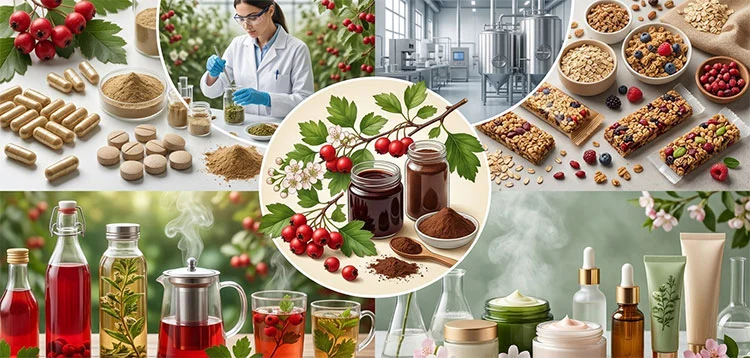
Hawthorn Extract Formulation Applications in Industry Systems
Hawthorn extract is widely used across multiple manufacturing sectors due to its adaptability in formulation design.
Dietary supplement manufacturing: Used in capsules, tablets, and powder blends as part of botanical combination systems for ingredient diversification.
Functional food development: Incorporated into plant-based nutrition bars, herbal powders, and fortified food systems for clean-label positioning.
Beverage formulation industry: Applied in herbal drinks and botanical infusions to support natural flavor complexity.
Cosmetic ingredient systems: Used in creams, lotions, and cleansers for plant-derived formulation enhancement and texture support.
Hawthorn Leaf Extract Stability and Processing Considerations
Formulation performance depends heavily on processing and stability control strategies.
Thermal sensitivity management: Low-temperature drying helps preserve flavonoid integrity.
Solubility behavior: Water-dispersible powder form improves compatibility in both liquid and dry systems.
pH stability range: Performs best in mildly acidic to neutral formulation environments.
Synergistic blending: Compatible with other botanical extracts for multi-ingredient system development.
Hawthorn Extract Product Development and Market Trends
The growing demand for plant-based ingredients has expanded the role of hawthorn extract in modern formulations.
Clean-label product expansion: Increasing use in minimally processed ingredient declarations.
Standardization demand: Manufacturers emphasize consistent flavonoid content and reproducible quality.
Green extraction technologies: Focus on improving efficiency and reducing solvent impact.
Cross-industry adoption: Expanding applications across food, cosmetic, and nutraceutical sectors.
Hawthorn Leaf Extract Usage Factors in Formulation Design
Several technical parameters influence how hawthorn extract is integrated into products.
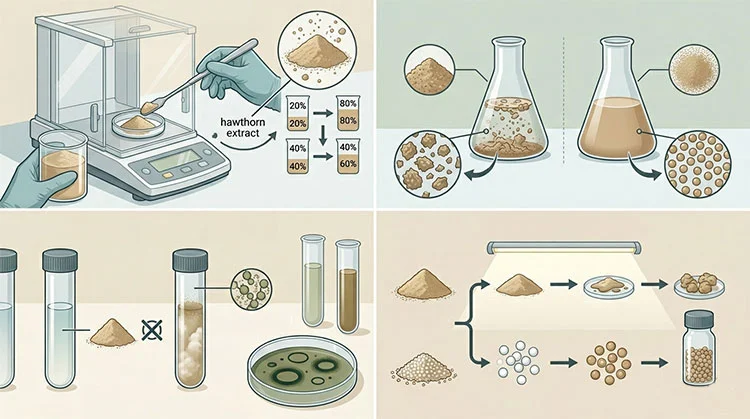
Dosage control in blends: Adjusted based on formulation density and target ingredient balance.
Particle size optimization: Fine powders improve dispersion in liquid systems.
Compatibility testing: Required when combined with high-polyphenol botanical systems.
Carrier selection: Maltodextrin or plant-based carriers may be used for stability improvement.
Conclusion
Hawthorn extract is good for a wide range of industrial formulation purposes, primarily serving as a versatile botanical ingredient used in supplements, food systems, beverages, and cosmetic products. Its value lies in its standardized phytochemical composition, formulation flexibility, and compatibility with modern clean-label product development trends. Rather than acting as a functional endpoint ingredient, it is mainly utilized as a plant-based building component that supports product structure, botanical complexity, and natural positioning across multiple industries.
Contact us today to learn more about our products and pricing. You can send an email to info@scigroundbio.com or submit your requirements using the form at the bottom of our website.
FAQ
1. What is hawthorn leaf extract used for in supplements?
It is used as a botanical component in multi-ingredient supplement systems for formulation diversification and plant-based composition design.
2. Can hawthorn extract be used in beverage formulations?
Yes, hawthorn extract is often used in herbal drinks and botanical beverages to enhance natural ingredient profiles and flavor complexity.
3. What is the difference between hawthorn fruit extract and leaf extract?
Leaf extract typically contains higher proportions of flavonoids and is more commonly used for standardization in industrial ingredient systems, while fruit extract is often used for flavor-oriented applications.
4. Is hawthorn extract stable in cosmetic formulations?
Yes, it is generally stable in emulsions and water-based systems when properly formulated within controlled pH and temperature conditions.
References
1. Zhang, Y., et al. (2021). Phytochemical profiling and quality evaluation of Crataegus species extracts. Journal of Food Composition and Analysis, 96, 103742.
2. European Medicines Agency. (2020). Assessment report on Crataegus monogyna and Crataegus laevigata folium. EMA/HMPC documentation.
3. Wang, L., et al. (2022). Advances in flavonoid extraction and stabilization from medicinal plants. Industrial Crops and Products, 178, 114585.
4. Liu, X., & Chen, J. (2023). Application of botanical extracts in functional food systems: A review. Trends in Food Science & Technology, 131, 1–12.
You may like