What is ginger powder good for?
Ginger powder is most sought after as a general botanical ingredient that acts as a flavor additive, aroma additive, and functionality additive in food, beverage, supplement, and personal care preparations.
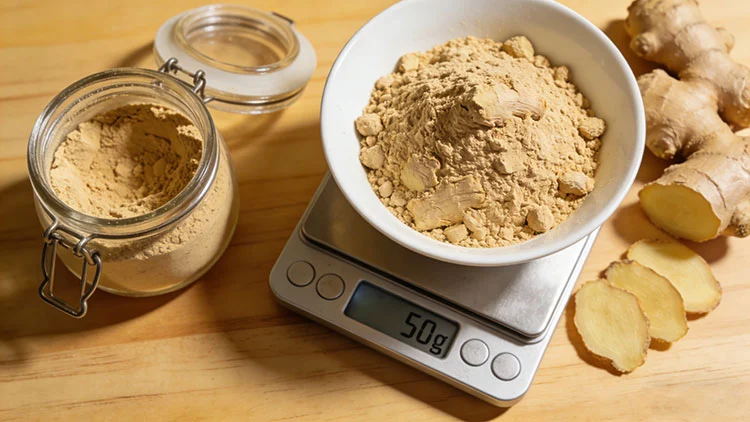
Ginger powder is a derivative of the dried rhizome of Zingiber officinale and is designed to be a fine and homogenous powder, which can be added to various product formats to offer uniform color, flavors, and bioactive stability to meet commercial purposes. Its characteristic pungent flavor and aromatic character, and the standardized composition of the compounds including gingerols and shogaols, make it a crucial raw material in food and industrial applications.
Culinary and Food Applications of Ginger Powder
Spice Blends and Seasonings
The ginger powder is common in spice blends, dry rubs, and marinades. Its fine texture is suitable to enable even dispersion, and also to provide a homogenous flavor profile across processed or cooked products.
Baked Goods and Confectionery.
Ginger powder gives cookies, cakes, and pastries a warm, aromatic taste and a sensory flavor in baked products. It is sometimes used together with other natural spices in order to have a balanced taste.
Beverage Formulations
Powdered beverages, instant teas, and functional beverages are some of the products that contain ginger powder. It is very soluble and can remain stable under mild processing conditions, which makes it applicable in ready-to-mix formula incorporation.
Savory Product Enhancement
Ginger powder is used in soups, sauces, and other condiments that require heat treatment; its pungency and stability of the flavor remain, and the product remains consistent.
Formulation and Dosage Considerations
Optimizing Concentration
Ginger powder is normally applied in low to moderate dosages depending on the product matrix, thus being able to add flavor to the product without overwhelming other ingredients.
Synergistic Pairing of the Ingredients.
It may be mixed with other complementary botanical extracts or natural flavours to provide the desired sensory response both in the savoury and sugary usage.
Particle Size Selection
Fine milling is used to achieve uniform distribution and better solubility, although larger particles may be used to impart visual or tactile attributes in the specialty formulations.
Heat and pH Stability
Adequate consideration of processing temperatures and PH levels helps in preserving volatile compounds and avoiding the destruction of flavor-active compounds.
Nutritional and Functional Perspectives
Bioactive Content
The gingerols, shogaols, and other related phenolic compounds in ginger powder make it pungent in nature and give it its characteristic aroma.
Antioxidants Support in Formulations.
The natural phenolic compounds provide an addition to the weak antioxidant potential, and therefore, ginger powder could be used as an effective botanical in nutritionally-oriented blends.
Nutritional Matrices Compatibility.
Its powdered nature enables it to be easily incorporated into protein powders, meal replacements, and supplement capsules without compromising stability.
Industrial and Manufacturing Applications
Bulk Ingredient Supply
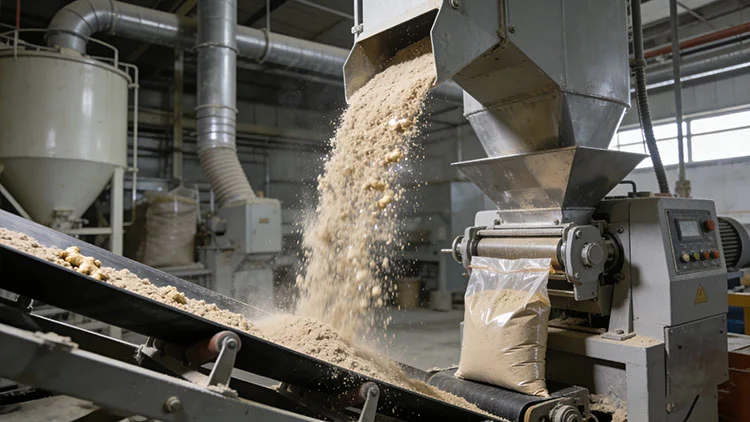
Ginger powder is made in standardized batches that are traceable on source, which subsidize large-scale food, beverage, and supplement production.
OEM/ODM Formulations
Manufacturers have the option of incorporating ginger powder into their own branded products that can be customized in flavor, packaged differently, and blended in functionality to create brand differentiation.
Packaging and Optimizing Shelf-Life.
Storage and transportation of color, aroma, and active compounds are maintained by the use of moisture-resistant, light-protective packaging.
Quality Control Measures
A batch of any product is usually tested to verify the uniformity of the particles, moisture concentration, microbial safety, and level of active components to attain uniformity in their use in industry.
Market Trends and Research Directions
Growing Consumer Interest
The rising production of natural and plant-based ingredients in clean-label and functional products is the reason the use of ginger powder is on the rise.
Product Innovation
Research aims at enhancing the extract standardization, solubility, and heat-stable formulations that can be used in contemporary food and beverage processing.
Sustainable Sourcing Practices.
Ginger rhizomes are currently being sourced in traceable and ethically suitable forms, and this is associated with environmental and quality-sensitive supply chains by manufacturers.
Cross-Industry Potential
In addition to food, ginger powder is also being tested in the personal care, aromatherapy, and special ingredient mix areas, and this shows its flexibility.
Conclusion
Ginger powder is an economical, technically flexible, botanical ingredient that finds its uses in the culinary, beverage, supplement, and personal care sectors. Its uniform bioactive content, solubility, and stability of flavor are useful in product innovation and formulation optimization. Manufacturers can use ginger powder to boost flavor, add functional ingredients, and also as a clean-label positioning ingredient, which guarantees both sensory and technical uniformity to various product lines.
Contact us today to learn more about our products and pricing. You can send an email to info@scigroundbio.com or submit your requirements using the form at the bottom of our website.
FAQ
Q1: What are common forms of ginger powder used in product manufacturing?
A1: Ginger powder is mostly presented in fine, medium, or coarse powdered forms, with the fine powder being more commonly used in beverages and baked goods as it is more soluble and can be dispersed homogeneously.
Q2: How can ginger powder be incorporated into functional beverage products?
A2: It may be used in ready-to-mix formulations, instant drink mixes, and powdered teas, frequently in combination with complementary botanical extracts or natural flavoring agents to preserve its flavor.
Q3: What is the recommended storage for ginger powder to maintain quality?
A3: Store in moisture-free, light-resistant packages at low temperatures to maintain the aroma, color, and stability of active compounds in the long run.
Q4: Can ginger powder be used in private-label OEM/ODM products?
A4: Yes, ginger powder can be used in OEM/ODM products, and the extract can be customized, standardized, and packaged, and the brand can be labelled privately and in various industries.
References
1. Ali, B. H., Blunden, G., Tanira, M. O., & Nemmar, A. (2020). Some phytochemical, pharmacological and toxicological properties of ginger (Zingiber officinale). Food and Chemical Toxicology, 138, 111202.
2. Wang, X., Yang, R., & Shi, Y. (2021). Stability and application of ginger powder in functional beverages. Journal of Food Science and Technology, 58(6), 2374–2383.
3. Singh, G., Kapoor, I. P. S., & Singh, P. (2022). Advances in ginger (Zingiber officinale) powder processing and industrial applications. Trends in Food Science & Technology, 123, 120–133.
4. Maheshwari, R. K., Singh, P., & Goyal, A. (2023). Industrial uses of ginger powder: A review of formulation, standardization, and market trends. Journal of Plant-Based Products, 4(2), 45–58.
You may like