What is ginger extract good for?
The ginger extract has become very popular in the products and formulation sectors due to its diverse functional properties, and is thus a desirable botanical ingredient in a variety of products.
Understanding Ginger Extract in Formulations
In the case of manufactured products, where the question posed by manufacturers when designing products or selecting the ingredient is what ginger extract is good for, they can be referring to how ginger extract will help improve the performance of a formulation and product acceptability. Ginger extract is a product of the Zingiber officinale rhizome through regulated extraction procedures aimed at concentrating phytochemicals of this product. It is not only useful in flavouring, but also has a role to play in stability, sensory profile, and clean-label positioning of modern products.
What Is Ginger Extract Used For in Flavor Systems?
Ginger extract is a natural flavoring choice in flavoring systems, as it has a unique spicy and aromatic profile. It is applied in the food and beverage industry to:
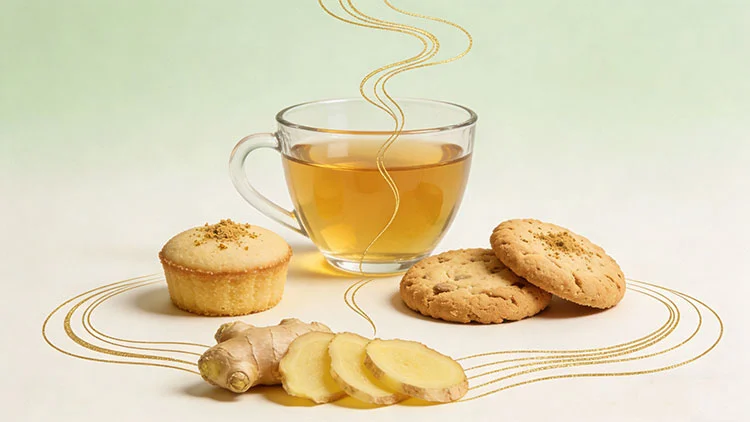
Add Multifaceted Flavor: Adding ginger extract powder or liquid may add multifaceted flavor to teas, beverages, functional foods, and baked goods.
Add Aromatic Top Notes: volatile constituents in ginger extract serve to increase the perception of aroma, and thereby make the end-products more palatable to consumers.
Promote Plant-Based Flavor Solutions: With the increasing customer interest in plant-based recognizable ingredients, ginger extract is a clean-label and natural flavor solution.
These applications indicate the capacity of ginger extract as an active flavor constituent and not a highly limited-minded additive with an exclusive biological assertion.
How Ginger Extract Contributes to Formulation Stability?
Besides the enhancement of flavor, ginger extract is effective in formulation stability in the following ways:
Antioxidant Constituents: Natural phenolic compounds found in ginger extract help in maintaining stability on the shelf as they aid in preserving the integrity of the ingredients even in the given normal storage conditions.
Delivery Form Compatibility: Ginger extract is compatible with dry blends, capsule contents, and beverage systems, and aids in this type of dispersion being uniform.
Heat and pH Stability: During the extraction and processing, ginger extract may maintain characteristic constituents through the normal manufacturing processes, which include pasteurization or baking.
All these properties qualify ginger extract to be an effective ingredient in numerous product systems where ingredient activity during processing is important.
Technical Considerations When Using Ginger Extract
Optimal Usage Levels
Knowledge about the required ginger extract quantities is based on the type of product and the aims of the formulations:
Flavor-Based Products: Inclusion levels of lower to moderate are typically adequate to provide a desirable aromatic effect alone, with the matrix not being overwhelmed by flavor additives.
Powder Blends and Capsules: The uniformity and bulk density have to be taken into consideration when calculating inclusion rates to prevent segregation or settling.
To find the best concentrations that can give them the best sensory performance and workability, manufacturers frequently undertake small-scale trials to determine the best concentrations.
Formulation Tips with Ginger Extract
The following are the factors that professional formulators consider in the case of ginger extract:
Interaction: Ginger extract can be mixed with other botanical extracts; thus, multi-ingredient formulas should be tested against each other.
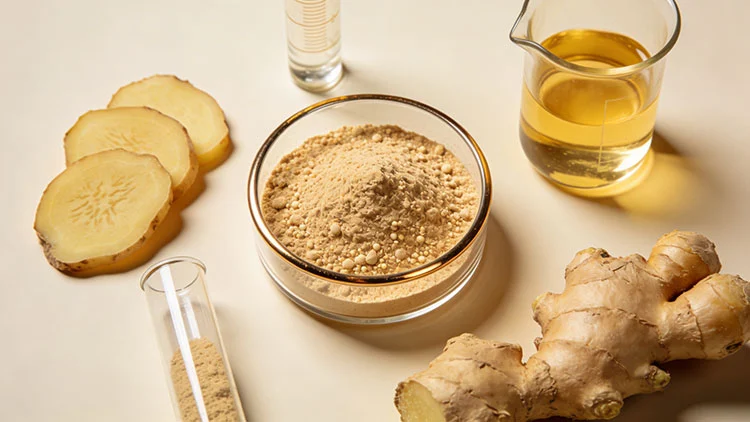
Solubility Properties: Ginger extract powder is easiest to dissolve in a system where it can be hydrated properly; powder can be used in a liquid extract when it is required to dissolve quickly.
Packaging Stability: Moisture and light are some factors that can be avoided to preserve volatile and phenolic constituents in ginger extract.
These types of formulation make sure that ginger extract has a consistent performance in finished products.
Ginger Extract Across Industry Applications
The diversity of ginger extract allows it to be used in several areas of industry:
Food and Beverage Development: Since specialty teas, nutrition drinks, and culinary sauces, ginger extract is added to give a familiar botanical flavor and taste.
Dietary Supplement Ingredient Supply: Dietary Supplement Suppliers are utilizing standardized ginger extracts in capsule, tablet, and powder blends, whereby the value is placed on plant-derived components.
Cosmetic and Personal Care Formulations: Ginger extract is used in sensory-driven products (body scrub, lotions, serums, and others) to add texture and botanical identity to clean-labeled products.
Functional Nutrition Products: Ginger extract promotes the differentiation and positioning of natural ingredients in powdered blends and ready-to-mix products.
In all these industries, ginger extract is valued for adding flavor perception, formulation strength, and ingredient transparency.
Current Industry Status and Future Potential
The environment of botanical ingredient study and practice is also changing. For ginger extract:
Extraction and Standardization Methods have improved, and manufacturers are now able to make powders that have standard phytochemical profiles.
The Green Extraction Technologies are under consideration to enhance efficiency in yield and meet the standards of environmentalism and sustainability.
Transparency in Supply Chains has gained significance, whereby most suppliers are conducting traceability documents and quality specifications, which aid in brand differentiation.
With the continued trend in interest in plant-based ingredients in food, beverage, and personal care, ginger extract is likely to continue being viable as a functional, familiar botanical ingredient.
Conclusion
Conclusively, ginger extract is useful in having a flavor system, helps the formulation to stay stable, strengthens the clean-label approach, and allows flexibility in use in many industries, which renders it useful in contemporary product development.
Contact us today to learn more about our products and pricing. You can send an email to info@scigroundbio.com or submit your requirements using the form at the bottom of our website.
FAQ
Q1: What is ginger extract good for in beverage formulations?
Ginger extract is applied in drinks to add a special flavor and aroma that will support taste and overall use with other botanical or fruit-based ingredients.
Q2: Can ginger extract powder be used in dry blends?
Yes, it is possible to add the ginger extract powder to dry blends like nutrition mixes and supplement powder, where the powder spreads evenly and provides a flavor profile.
Q3: How does ginger extract support product formulation stability?
The natural ginger extract is rich in natural phenolic components, which provide ingredient stability in the usual storage and processing conditions without formulating any biological assertions.
Q4: Why is ginger extract popular in clean‑label formulations?
The plant nature of ginger extract and familiar sources are in harmony with the tastes and preferences of consumers to consume natural and transparent food ingredients, beverages, and personal care products.
References
1. Sharma, R. et al. (2021). Phytochemical profiling and functional assessment of ginger extract in food systems. Journal of Food Science and Technology.
2. Li, J., & Wang, X. (2020). Extraction optimization and characterization of ginger bioactive constituents. Food Chemistry.
3. Nguyen, P. T. et al. (2022). Formulation strategies for plant‑derived extracts in beverage applications. International Journal of Beverage Technology.
4. Kim, S. & Lee, Y. (2023). Quality control and standardization of ginger extract powders for industrial use. Journal of Nutritional Ingredients Research.
You may like