What is buchu leaf extract good for?
The aromatic Buchu leaf extract is an excellent natural flavoring compound for use in food & beverages, and a functional skin conditioning agent for high-end cosmetic formulations. An extract of Agathosma betulina is rich in polyphenols and volatile oils with a particular combination that makes it suitable to improve the sensory and functional characteristics of a wide range of commercial products.
Technical Composition and Standardization of Buchu Leaf Extract
Buchu leaves' medicinal properties in industrial uses can be attributed to their chemical profile. In procurement, it is crucial to know the molecular structure in order to maintain uniformity between the productions.
Volatile Oil Profile: The extract has a high content of diosphenol and isomenthone. The compounds give the characteristic "blackcurrant-mint" fragrance, which is much in demand by perfumers and flavor chemists.
Standardization Ratios: Most of the professional grades of extracts are sold in 4:1 or 10:1 concentration ratios. That way, manufacturers can make a product a certain flavour intensity and/or functional density without adding too much bulk plant material.
The High-quality suppliers use High-Performance Liquid Chromatography (HPLC) and Gas Chromatography-Mass Spectrometry (GC-MS) to confirm the purity of Buchu leaf extract. The methods used guarantee that there are no adulterants and verified active markers present.
Strategic Industry Applications for Buchu Leaf Extract
Buchu leaf extract can be used across multiple sectors, with its versatility offering distinct solutions for product developers with a focus on clean label trends.
Functional Water & Botanical Spirit: Buchu leaf extract is applied to introduce multi-layered flavor in the functional water and botanical spirit market. It can add sweetness that's fruity without added sugars, and is commonly used for contemporary beverage research and development.
Cosmetic Formulations: The extract is a popular ingredient in facial toners, serums, and oil-control lotions, thanks to its skin conditioning properties. It is a natural botanical agent for enhancing clarity on the surface of the skin and a refreshing sensory effect.
Nutraceutical Raw Materials: In the supplement industry, Buchu leaf extract can be used as a traditional botanical in capsules and tinctures. It is used for its historical link with wellness, as long as all the labelling complies with non-therapeutic marketing regulations.
Natural Fragrance Design – Perfumery Houses use the extract as a natural fixative. It offers a ‘sparkling' top note, adding some extra zest to herbaceous and citrus-inspired blends.
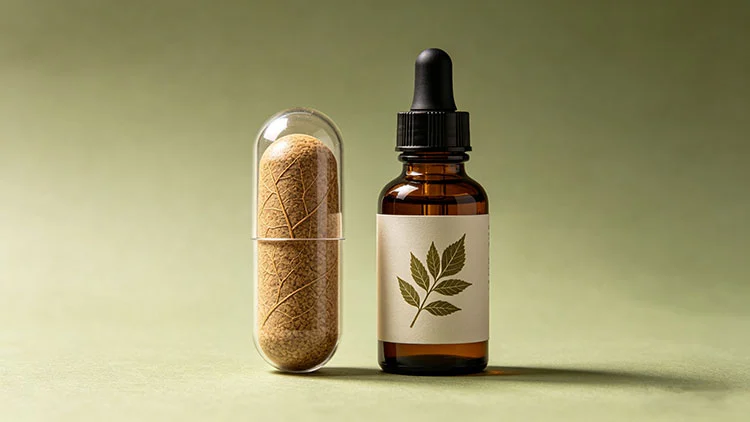
Formulation Techniques and Ingredient Stability
The Buchu leaf extract should be incorporated into a stable commercial product, which demands a thorough knowledge of its solubility and reactive properties.
Solubility: The solubility of Buchu leaf extract may differ based on the solvent used (either water or ethanol). Water-soluble powders are suitable for clear cosmetics, and for anhydrous cosmetic balms, oil-dispersible powders are best.
pH Stability: Buchu leaf extract was found to be stable between a pH range of 4.0 to 6.5. This makes it ideal for most skin care products as well as carbonated soft drinks.
Thermal Processing: In order to avoid degradation of the delicate aromatic compounds of the Buchu, Buchu leaf extract should be added to the manufacturing during the cool down period (after 40°C) and not during the high heat period of the sterilization.
Synergistic Blending: When blended with other botanicals such as Lemon balm or Green tea, the antioxidant activity of Buchu leaf extract can be boosted, thus gaining a more comprehensive preservative support system to the formulation.
Dosage Factors and Regulatory Compliance for Buchu Leaf Extract
This is important for companies aiming to market products with Buchu leaf extract worldwide, as it can help them understand the appropriate dosage and regulatory requirements.
Typical Inclusion Rates: Beverage industry inclusions are 0.05% to 0.2% based on the desired level of inclusion. For functional topical benefits, levels of 1% – 3% are common in cosmetics.
GRAS Status: In the United States, some formulations of Buchu leaf extract are considered Generally Recognized as Safe (GRAS) for applications as natural flavorings, which can help ease the path to market for food and beverage manufacturers.
Labelling Integrity: Manufacturers should not make claims in the labelling for health products, as this may be deemed "YMYL", a claim that does not meet international standards. The extract should be sold as a sensory and conditioning agent and not for any specific treatments.
Traceability Requirements: Customers should look for suppliers with detailed information and documentation, such as Certificates of Analysis (COA) and sustainability certificates, ensuring the Buchu leaf extract comes from an ethical source in South Africa.
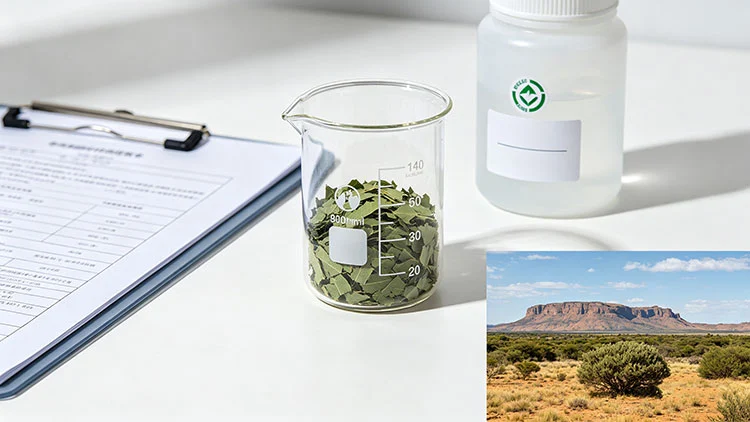
Global Market Trends and Future Prospects
The demand for Buchu leaf extract is expected to rise in the coming years due to consumers' preference for natural and plant-based products over synthetic ones.
Health-Conscious Consumer: With the industry moving towards the "no-sugar-added" and "natural-flavor-only" labels, Buchu leaf extract can provide an advantage to brands targeting health-conscious consumers.
Growth in world interest in indigenous African botanicals: African Botanical Renaissance. One such product that is at the forefront of this trend is the Buchu leaf extract, which is renowned for its unique place of origin and rich phytochemical composition.
The transition towards using plant-based ingredients and biodegradable products in the personal care industry aligns with the use of Buchu leaf extract and supports this.
Technological Advancements: New extraction techniques like CO2 supercritical extraction are making even higher purity possible, thus providing new opportunities for research on the plant's secondary metabolites for pharmaceutical uses.
Conclusion
To conclude, Buchu leaf extract has proven to be an indispensable resource in the modern industry, with its unparalleled value in being a natural flavoring agent and as a functional cosmetic ingredient. Its special chemical composition, confirmed by exhaustive HPLC standardisation, allows manufacturers to guarantee constant quality and a high standard of product in a challenging market. With this knowledge, companies can make the best use of the soothing and aromatic properties of this South African plant to add to their product line while satisfying regulatory standards and ensuring product stability.
Contact us today to learn more about our products and pricing. You can send an email to info@scigroundbio.com or submit your requirements using the form at the bottom of our website.
FAQ
Q1: Is Buchu leaf extract soluble in water for clear beverage formulations?
A: Yes, there are spray-dried Buchu leaf extract powders available for purchase from professional suppliers that are made to be very water-soluble for functional waters and teas to be clear and to have consistent tastes.
Q2: What is the shelf life of bulk Buchu leaf extract?
A: The shelf life of the standardized Buchu leaf extract is usually 24 months when stored in a cool and dry location at a minimum of 15°C (59°F) away from direct sunlight. It is vital that it is properly sealed in order to avoid oxidation of its volatile oils.
Q3: Can Buchu leaf extract be used in oil-based cosmetic serums?
A: Powder is available, but Buchu leaf extract oil-soluble can also be used as an essential oil derivative, which is very compatible with oils and waxes in anhydrous formulations.
Q4: How does Buchu leaf extract compare to other berry-flavored botanicals?
A: A Buchu leaf extract has a unique camphoraceous and minty undertone with its fruity notes, which makes the extract more fruity than the common berry extracts and makes the flavour more "sophisticated" for high-quality products.
References
1. Moolla, A., & Viljoen, A. M. (2020). “Buchu” – Agathosma betulina and Agathosma crenulata (Rutaceae): A review of traditional uses, phytochemistry and biological activities. South African Journal of Botany, 132, 103-112.
2. Street, R. A., & Postma, G. (2021). Traditional South African medicinal plants: A review of their safety and efficacy in the context of modern toxicology. Journal of Ethnopharmacology, 265, 113-134.
3. Sandasi, M., et al. (2022). Application of hyperspectral imaging in the quality control of Buchu (Agathosma betulina). Phytochemistry Letters, 48, 45-52.
4. European Food Safety Authority (EFSA). (2023). Compendium of botanicals reported to contain naturally occurring substances of possible concern for human health when used in food and dietary supplements. EFSA Journal.
You may like