What is baicalin powder used for?
Baicalin powder is a functional ingredient mainly employed in formulation systems as a standardized plant-derived ingredient where botanical flavonoids are required to provide the functional diversity, stability in the formulations, and background antioxidant property in industrial products.
Understanding Baicalin Powder and Its Role in Modern Formulations
Baicalin powder is used in industrial and formulation applications as a highly purified extract of flavone glycoside in the form of a powder obtained from plant sources, most often by extracting the root of Scutellaria species. It finds application across various industries since it provides a stable performance of the raw materials, can be combined with other formulation veins, and is applicable in product differentiation endeavors where the botanical and plant-based ingredients are in the limelight.
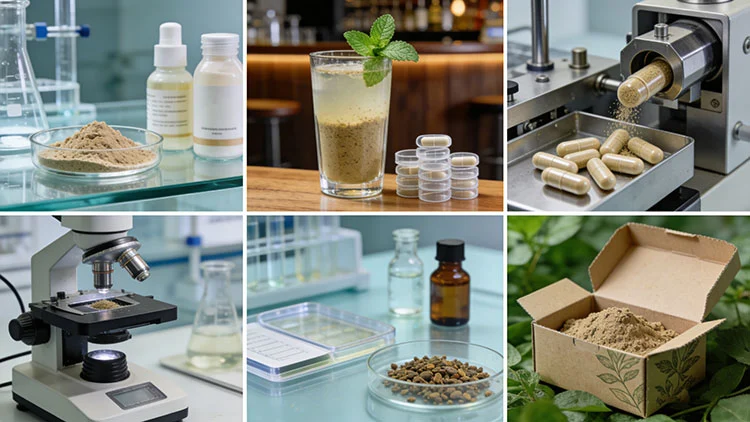
Key Application Domains for Baicalin Powder
Cosmetic and Personal Care Industries
Skin‑Focused Formulations:
Baicalin powder is added to serums, creams, and lotions as a plant-derived botanical ingredient that is used to support the formulation strategies based on the gentle and natural profile.
These systems consist of emulsion and suspension.<|human|>Emulsion and Suspension Systems:
The insolubility of baicalin powder with oils, water phases, and emollients makes it a potential choice in the optimization of the texture and stability of cosmetic products.
Functional Food and Beverage Sector
Fortified Beverage Products:
Baicalin powder is used in powder blends, ready-to-mix formulas, and functional drinks. It is a standardized botanical ingredient that fits the desires of consumers to consume plant-based ingredients.
Powdered Mix Integration:
In the preparation of powdered functional food or supplement, baicalin powder may be added to botanical extracts to increase the ingredient variety.
Nutraceutical and Botanical Extract Markets
Ingredient Blends:
One component in multi-component botanical formulations is bicalin powder, which is favored in the promotion of formulation strategies in nutraceutical products with prior emphasis on plant-based constituents.
Standardization and Control of Quality:
Since baicalin powder can be manufactured with uniform purity and specification, it is applicable in formulations in which the purity of ingredients is a key requirement.
Research and Development Laboratories
Extraction Method Studies:
The extraction efficacy, stability in the presence of processing, and reaction with other natural compounds in complicated systems are studied with the help of baicalin powder.
Formulation Optimization:
Baicalin powder is used as a reference botanical ingredient in R&D, where it is used to screen new formulation methods and ingredient combinations.
Sustainable and Green Product Lines
Eco‑Conscious Product Design:
With the increased interest in sustainability in sourcing renewable and plant-based products, baicalin powder has been chosen as a part of product lines that promote sustainable ingredient profiles.
Clean‑Label Consumer Goods:
Its botanical base confirms brand communication on the idea of natural ingredients, which attracts market segments in search of transparency and simplified ingredient lists.
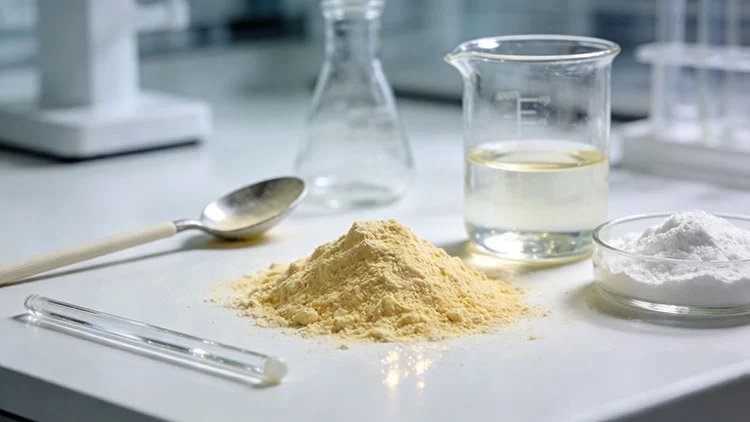
How Baicalin Powder is Used in Formulations?
Incorporation Methods
Dry Blend Integration:
Baicalin powder can be used in dry blending processes, and it can be combined with other powdered ingredients without having to be pre-dissolved.
Liquid Phase Addition:
High-shear mixing and/or other careful dispersion methods are used to ensure even dispersion of baicalin powder in a liquid formulation (or semi-solid) throughout the product.
Formulation Tips
Particle Size Considerations:
The selection of the right particle size of baicalin powder can be used to increase homogenization and sensory characteristics of the end product.
Compatibility Testing:
Initial compatibility tests with critical formulation ingredients can be used to define whether baicalin powder has the physical properties it desires at shelf life.
It is advisable to optimize pH and solubility to determine the best solvent.<|human|>pH and Solubility Optimization:
The formulation phase can modify the pH and solubility state of baicalin powder, particularly in complex mixtures, to affect the distribution and stability of the powder.
Factors Influencing Usage Levels
Product Matrix:
The usage rate selected is determined by the general formulation matrix one, such as foams, gels, and beverages, all of which have a different level of requirement for ingredient concentration.
Manufacturing Process:
The success of integration of the baicalin powder can be influenced by whether the product is exposed to heat, high shear, or long mixing time, which can impact the recommended use range.
Stability and Handling of Baicalin Powder
Storage Conditions
Controlled Environment:
Baicalin powder also needs to be kept in a cool and dry place so that its composition is not altered and to limit the moisture absorption.
Packaging Considerations:
Moisture-resistant and light-protective packaging should be used to ensure that the quality of the products is not impacted by transportation and storage.
Stability in Finished Products
Shelf Life Assessment:
Accelerated stability testing using baicalin as a powder in target formulations can be conducted to point out how the product may change in terms of looks or performance over time.
Interaction Monitoring:
Observation of the contact between baicalin powder and other formulation factors will help foresee the possible physical or chemical alterations that may affect the final product.
Conclusion
Overall, baicalin powder is utilized in a variety of industrial and formulation projects where botanical ingredients derived from plants are required in functional incorporation and formulation stability. Its application in cosmetic products, functional foods, nutraceutical blends, research and development laboratories, and green product lines is indicative of its versatility and flexibility. Baicalin powder facilitates formulation innovation and product differentiation strategies through offering predictable quality, wide compatibility, and connection to the natural ingredient trends in a variety of market segments.
Contact us today to learn more about our products and pricing. You can send an email to info@scigroundbio.com or submit your requirements using the form at the bottom of our website.
FAQ
Q1: What industries commonly use baicalin powder as an ingredient?
Baicalin powder is used in cosmetics, personal care products, functional foods and beverages, nutraceutical blends, research, and product lines that are environmentally oriented.
Q2: How is baicalin powder typically incorporated into cosmetic formulations?
Baicalin powder is spread evenly in the liquid stages of cosmetic preparations via high shear mixing or mixed directly into powder bases to prevent agglomeration in the preparation.
Q3: Can baicalin powder be combined with other botanical extracts?
There is often the use of baicalin powder in multi-component preparations in combination with other botanical extracts to diversify the assortment of plant-based ingredients.
Q4: What formulation factors should be considered when using baicalin powder?
When using baicalin powder in the development of a product, take into consideration particle size, solubility, compatibility with other ingredients, and process conditions, including temperature and pH.
References
1. Li, X., Zhang, Q., & Zhao, H. (2022). Extraction and characterization of plant flavonoids for industrial applications. Journal of Natural Products and Formulation Science, 15(4), 245–259.
2. Chen, Y., Liu, J., & Wang, L. (2021). Stability assessment of botanical extracts in cosmetic emulsions. International Journal of Cosmetic Science, 43(2), 112–123.
3. Singh, P., & Kaur, M. (2020). Approaches to optimizing plant‑derived powders in functional foods. Food Ingredients Research Journal, 7(1), 56–68.
4. Martinez, A., & Torres, R. (2023). Sustainable sourcing and processing of botanical extracts for clean‑label formulations. Journal of Green Formulation, 9(3), 78–94.
You may like