What is aucubin?
Aucubin is a naturally occurring iridoid glycoside that is present in many medicinal and edible plants, and is commonly used as a botanical reference compound and functional ingredient in the development of formulations.
Botanical Origin and Extraction Profile of Aucubin
Aucubin, as aucubin powder, is mainly derived through extraction and purification systems, which are controlled to achieve consistency in the derivation of aucubin through plant materials that have high levels of iridoid glycosides.
Selection of plant sources: The selection has been made based on species like Plantago and Eucommia, which contain aucubin naturally and have stable phytochemical characteristics.
Extraction methods: Made by extraction systems based on water or ethanol that can effectively extract the desired glycosides in their original structure.
Purification procedures: Filtration, concentration, and chromatographic separation were done to minimize non-target plant compounds.
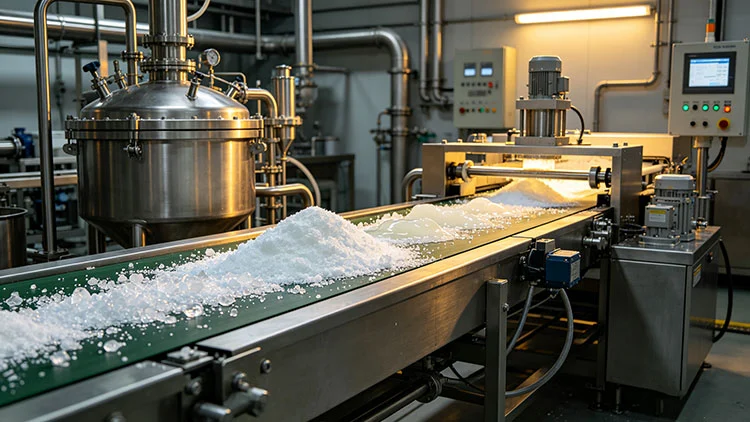
Drying technology: Conversion to the powder form in spray-drying or vacuum drying to guarantee constant handling and storage properties.
Physicochemical Characteristics of Aucubin Powder
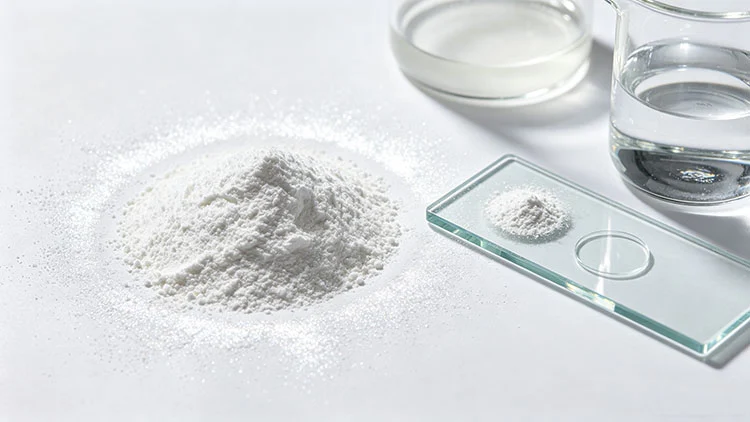
Aucubin powder shows specific physical and chemical performance that justifies its application in formulating systems and conducting research.
Appearances: Generally, a fine white to light in color powder with evenly distributed particles.
Solubility behaviour: Exhibits moderate water compatibility, which is also dependent on the processing conditions and carrier systems.
Stability of molecular structure: Retains glycoside in a regulated temperature and neutral PH.
Hygroscopic nature: Must be packed in a moisture-controlled container to maintain its flowability and not clump together.
Other compatibility range: Compounds with other plant-derived ingredients in multi-ingredient products.
Formulation Considerations for Aucubin Ingredient Systems
When incorporating aucubin powder into industrial formulations, there are a number of technical parameters that affect performance and stability.
Factors of dosage structuring: Modified depending on the overall density of the formulation, the type of intended use, and compatibility with the matrix.
pH sensitivity: Can work in slightly neutral conditions, but extreme acid or alkalinity can influence the stability of the molecules.
Limitations on thermal processing: Exposure to high temperatures should be avoided when producing these compounds in large amounts in order to maintain the integrity of the compound.
Carrier system choice: Maltodextrin or plant fibers are often included to help increase the dispersibility of dry blends.
Blending uniformity: This is needed when uniformity is required in complex formulations, and the blend must be mixed in high shear or staged.
Industrial Applications of Aucubin in Modern Manufacturing
The applications of Aucubin powder cut across various industries that are geared towards innovation and diversification of ingredients based on plants.
Cosmetic formulation systems:
Emulsions and topical blends: Uses. In emulsions and topical blends, as a botanical additive to help maintain formulation diversity.
Design of functional food ingredients:
Added to the plant-based product systems for structural and labeling.
Nutritional product manufacturing:
Used as a capsule and powder blend as a component of botanical multi-component blends.
Phytochemical research use:
Applied in the study of iridoid glycosides in laboratories through the use of it as a reference compound.
Natural product development:
Promotes clean and plant-based innovation.
Stability, Storage, and Processing Guidelines for Aucubin Powder
Aucubin powder needs to be handled properly in order to ensure a consistent quality in industries.
Moisture control conditions: Saved in the low-humidity conditions to prevent structural deterioration.
Packaging systems: Often put in non-porous, light-resistant containers so as to minimize contact with the environment.
Temperature control: It is recommended to store under cool temperatures to ensure that the chemical does not degrade.
Shelf-life factors: Stability depends on the storage conditions, contact with oxygen, and formulation matrix.
Handling of transport: It needs to have controlled transportation to prevent long exposure to heat or humidity during transportation.
Market Position and Development Trends of Aucubin
Aucubin remains a matter of development in the ingredient market as the industry of formulating plant-based products grows.
Clean-label demand: Growing in the utilization of formulations in botanical transparency.
Expansion based on research: Continued research in plant chemical and glycoside behaviour.
Multi-industry flexibility: Ideal in cosmetics, food systems, and ingredient research and development systems.
Sustainable sourcing trends: Advocates the diversification of raw materials in plants based on their strategies.
Conclusion
Aucubin is a natural iridoid glycoside that is a plant product that is commonly processed into standardized powder form to be used in formulation systems, research, and botanical ingredient development. It has a certain value in its organized chemical profile, flexibility in multi-ingredient systems, and compatibility with the current manufacturing processes. By means of the controlled extraction, stable processing, and multiple application possibilities, aucubin remains a topical compound in the plant-based innovation and the design of industrial formulations.
Contact us today to learn more about our products and pricing. You can send an email to info@scigroundbio.com or submit your requirements using the form at the bottom of our website.
FAQ
What is aucubin powder used for in formulation systems?
Aucubin powder is a botanical ingredient applied in cosmetic, food, and research preparations, where it is a multi-component system that involves the incorporation of plant-derived compounds.
How is aucubin powder typically processed for industrial use?
It is extracted, purified, and dried using the ethanol extraction and spray drying process so that it can have similar physical characteristics.
What factors affect aucubin stability in production environments?
The most important factors that affect the aucubin stability throughout processing and storage are temperature, humidity, pH conditions, and exposure to oxygen.
Can aucubin be combined with other plant extracts?
Yes, some botanical formulation systems frequently use aucubin as it can be used in multi-extract formulations.
References
1. Zhang, Y., et al. (2021). Advances in iridoid glycoside analysis from medicinal plants. Journal of Pharmaceutical and Biomedical Analysis, 199, 113987.
2. Lee, H. J., & Kim, J. Y. (2020). Plant-derived glycosides: extraction and stability considerations in formulation science. Industrial Crops and Products, 145, 112092.
3. Wang, X., et al. (2022). Optimization of extraction techniques for bioactive plant compounds. Separation and Purification Technology, 280, 119882.
4. European Medicines Agency (EMA). (2023). Guideline on herbal medicinal products quality assessment. EMA/HMPC/2023/XX.
You may like