What does Epimedium extract do?
Epimedium Extract is a standardized botanical raw material with a high content of active icariin flavonoids and is generally used in B2B formulations of dietary supplements to enhance physical vigor, exercise stamina, and active lifestyle products.
Globally, wellness brands continue to grow their portfolios with botanicals, and botanical formulators and procurement experts are looking for botanicals that are both high purity and standardized to ensure analytical consistency and manufacturing efficiency. Epimedium extract has been proven to have a well-defined profile of chemical markers, diverse blending characteristics, and excellent physical stability in a number of finished product delivery matrices, making it a key ingredient for commercial manufacturing. This technical guide covers the key chemical characteristics, formulation, stability, and B2B applications of Epimedium extract.
Bioactive Standardizations and Icariin Marker Analysis in Epimedium Extract
Commercial formulators can count on precise, quantified active marker profiles for Epimedium extract to ensure that all lots of the final product are chemically identical.
Icariin Content Verification (HPLC):
Icariin Content Verification is a primary bioactive marker that is studied in Epimedium extract. Standardization specifications of HPLC vary from 10% to 98% purity.
Total Flavonoid Profiling:
In addition to the purified icariin isolate, the whole spectrum of flavonoids in Epimedium extract comprises secondary glycosides (epimedin A, B, and C), and spectrophotometric UV analysis of the total flavonoid content ensures the integrity of the natural matrix.
Heavy Metal and Contaminant Screening:
Enterprise-grade Epimedium extract is tested regularly for heavy metal and residual solvent content using ICP-MS and Gas Chromatography (GC) methods, and meets international standards.
Physical Particle Specifications:
100% pass through 80 to 100 mesh, non-detectable microbiological parameters, and moisture content below 5.0% are standard specifications for raw materials.
Advanced Formulation Strategies for Epimedium Extract Matrixes
When using Epimedium extract in supplement production in the industry, functional excipients and process conditions need to be chosen carefully to maintain the stability of the active markers.
Synergistic Botanical Combinations:
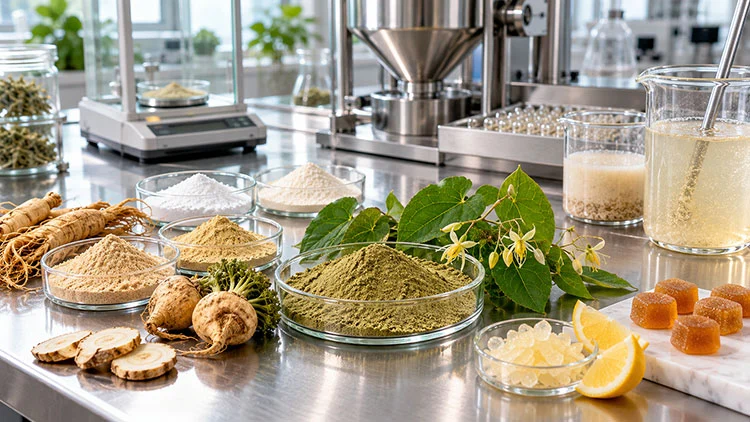
Epimedium extract is often combined with other standardized botanicals (e.g., Panax ginseng and Maca root Lepidium meyenii) for multi-component vigor and vitality formulations.
Excipient and Flowability Engineering:
When fine powders of extracts are being processed on the encapsulation equipment, uniform powder flow and prevention of agglomeration are achieved using excipients and flowability engineering, such as microcrystalline cellulose (MCC) and silicon dioxide.
Solubility Optimization:
Micronized grades of Epimedium extract with non-ionic emulsifiers or cyclodextrin carriers help to ensure uniform dispersion in functional beverage bases.
Organoleptic Masking Techniques:
Chewable formats and functional premixes are based on a balance of natural flavour systems and natural organic acidulants for masking the natural bitter taste of raw flavonoid glycosides.
Recommended Dosing Factors and Inclusion Profiles in Commercial Manufacturing
The rate of inclusion of epimedium extract will vary according to the assay concentration of the raw material, the specifications for delivery format, and the intended daily product usage profile.
Potency-Adjusted Dosing:
A formulation of 10% or 20% icariin raw material usually has a dosage of 250 mg to 500 mg, while a formulation of 50% or 98% raw material of icariin is often less than 100 mg and less than 100 mg.
Delivery Matrix Adaptation:
Serving size varies according to the type of raw material used, whether in multi-dose daily capsules, single-dose functional sachets, or chewable tablets.
Bulk Density Calibration:
The different densities between crude powder and highly purified extracts must be determined by tapping in order to use the appropriate hard-gel capsules (e.g., Size 0 or Size 00).
Stability Optimization and Storage Protocols for Epimedium Extract Bulk Stock
Excessive environmental control measures are essential to keep the flavonoids active and maintain the flowability of the product.
Thermal Degradation Control:
Icariin is thermally stable at normal room temperature, but will be degraded after being dried for a long time at temperatures above 60℃.
Moisture Protection:
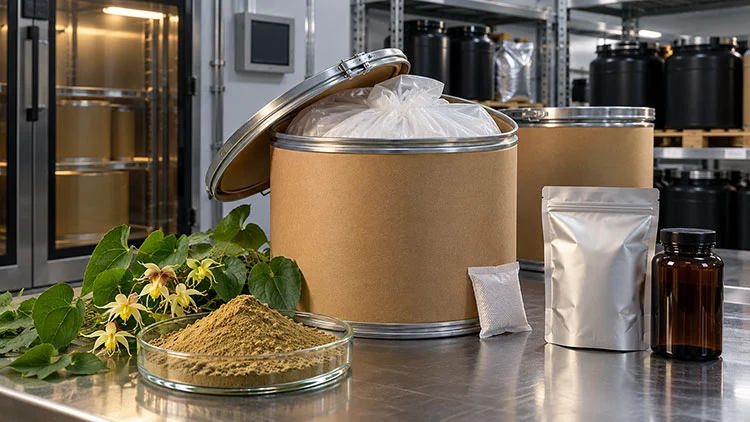
Moderately hygroscopic, so moisture protection is required during storage. The bulk stock is kept in double-packaged (food grade) polyethylene bags in sealed 25kg fiber drums, which contain desiccant packs to avoid clumping.
Oxidation and Light Shield:
Flavonoids are UV light sensitive. Light-impermeable containers should be used for storage of raw materials, and finished goods should be stored in opaque amber bottles or foil packaging.
B2B Industry Applications for Standardized Epimedium Extract
Epimedium extract's adaptability to physical and technical aspects enables its application in various commercial health and personal care fields.
Hard-Shell Capsules and Compressed Tablets:
A form of an active ingredient for daily active life support and physical vigor in traditional dietary supplements.
Sports Nutrition and Pre-Workout Premixes:
Sports nutrition and pre-workout mixes that are incorporated into powdered drink mixes, stick packs, and energy premixes used to prepare for athletic activity.
Gummies and Soft Chews:
Formulated as pectin or gelatin matrices, which form a convenient alternative to the traditional solid dosage forms for the consumer.
What does Epimedium extract do?
Epimedium extract is a standardised, versatile botanical raw material for use in a variety of concepts for physical vigor and active lifestyles for B2B manufacturers worldwide. Using HPLC-verified icariin specs, optimized excipient blends, and controlled storage conditions, brand owners can effectively create stable, scalable finished products that meet the demands of the global market for high-quality botanical ingredients.
In order to obtain a detailed quotation, technical specifications, or to negotiate on bulk procurements, please directly contact our export team at info@scigroundbio.com or fill out your requirement on the form.
FAQ
Q1: What active chemical marker defines the analytical quality of Epimedium extract?
A: The main active flavonol glycoside in Epimedium extract is icariin, which has been chemically standardized (quantitative HPLC testing).
Q2: How does Epimedium extract perform in automated capsule filling equipment?
A: Standardized Epimedium extract (80-100 mesh) has uniform particle size and flowability, and can be further optimized by using silica or microcrystalline cellulose to obtain uniform volumetric filling when capsules are filled.
Q3: What bulk packaging is standard for international commercial shipments of Epimedium extract?
A: 25kg standard packaging for enterprise bulk orders is fiber drums packed with sealed double-layer polyethylene liners to resist ambient moisture, light degradation, and compaction during transport.
Q4: What compliance testing documentation is provided with bulk shipments of Epimedium extract?
A: A batch-specific Certificate of Analysis (COA) will be provided with each commercial batch, which includes active icariin assay percentages, heavy metal screens, residual solvent limits, physical mesh specifications, and microbial analysis.
References
1. Chen, X., & Wang, Y. (2021). Quantification of icariin and related flavonoid glycosides in Epimedium species using high-performance liquid chromatography and mass spectrometry. Journal of Pharmaceutical and Biomedical Analysis, 195, 113840.
2. Zhang, L., Liu, R., & Zhao, H. (2022). Technical advancement in the extraction, purification, and industrial application of bioactive flavonoids from botanical sources. Industrial Crops and Products, 178, 114620.
3. European Food Safety Authority (EFSA). (2020). Scientific opinion on the safety evaluation of standardized plant extracts containing icariin in food supplements. EFSA Journal, 18(4), 6088.
4. National Center for Complementary and Integrative Health (NCCIH). (2023). Herbal Supplements and Botanical Quality Control Frameworks for Manufacturing Compliance. U.S. Department of Health and Human Services.
You may like