What are the side effects of jujube extract?
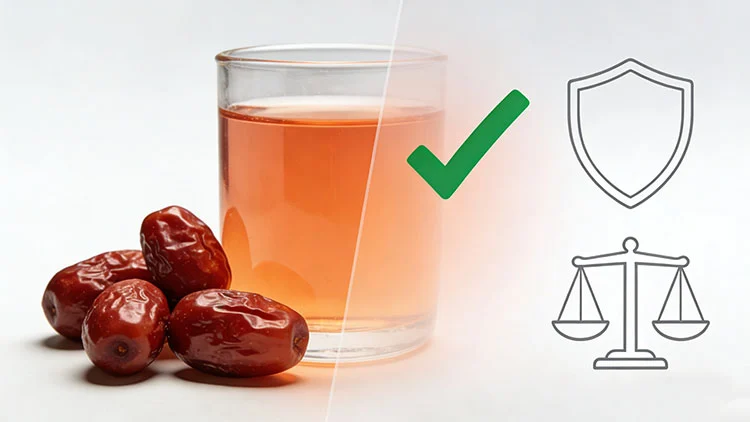
Jujube extract side effects can be regarded as low as long as the substance is taken correctly and obtained through the quality-regulated processes, and there is no existing evidence of common side effects of the substance in the conditions of ordinary use.
Understanding Jujube Extract Safety
Due to increased interest in botanical ingredients in food, beverage, supplement, and cosmetic industries, becoming familiar with the safety profile and any side effects of plant extracts like jujube extract would be of interest to formulators and ingredient professionals. Jujube extract is made using the fruit of Ziziphus jujuba, which has a long history of use as food and a botanical raw material. Even in safety evaluation and scientific data, no unified accounts of serious side effects are found to be reported through controlled studies; however, industry stakeholders must take into consideration dosage and individual variations, and the quality of the product.
What Influences the Side Effects of Jujube Extract?
Extraction Method and Composition
The various extraction techniques, water or ethanol extraction, produce different proportions of bioactive substances, which include polysaccharides, flavonoids, and phenolic substances. These differences affect the general composition of the extract and may even impact the tolerability of a few users. Standardized processing and optimization of extraction facilitate minimization of variability and possible irritation.
Dose Factors
The effects of jujube extract on side effects depend on the level of jujube extract in a formulation. Increased doses of plant extracts can exacerbate mild symptoms of plant extracts that include gastrointestinal discomfort or unspecified transient reactions in sensitive persons. In the process of developing products, formulators usually perform stability and tolerance research to ascertain the right dosage patterns to use in the particular application.
Individual Sensitivities
Although overall use of the jujube fruit can be said to have a long history without significant safety issues associated with the product in the scientific literature, botanical extracts may lead to individual sensitivities or allergies. Plant extracts contain saponins or flavonoids as some of their components that can induce mild reactions in a small proportion of people, especially in the presence of the extract at a strong level. Topical products that are quality-controlled using raw materials and patch testing can be used to identify sensitivities at an early stage.
Commonly Discussed Observations Around Jujube Extract
Though there are no reports of severe adverse reactions, a number of considerations apply to professionals who are involved in the formulation of jujube extract:
Gastrointestinal Tolerance
Several users of botanical extracts might at times report mild digestive effects like bloating or a slight stomach ache, particularly when high doses of botanical powder or extract are taken without taking enough fluids. These are non-specific effects that can occur with a large variety of plant ingredients.
Interaction with Other Botanical Ingredients
When using complex formulations, where there are multiple botanical extracts, these may change the sensory or physiological experience to that of the use of single ingredients. Jujube extract is frequently used together with other plant extracts, and this does not necessarily cause any side effects, but during the formulation and testing, interactions are to be considered to predict the stability or tolerability nuances.
Topical Applications
Jujube extract is generally tolerated well when incorporated in cosmetic or personal care products because it has a low profile and is botanical in nature. Nonetheless, like any natural extract applied to the skin in topical products, there is a probability of slight skin irritation to people with sensitive skin or those likely to develop contact dermatitis. Patch testing in the product development procedure is a normal industry practice to reduce the risk of irritation.
Long-Term Use Considerations
Any concentrated botanical extract is worth taking a closer look at when used over time, with regard to continuity of intake or application. Although the use of jujube fruits as a dietary supplement is of millennia-long tradition with no significant safety issues, one should consider such a form as a consistent extract, with high purity and free of contaminants (including microbial remains or solvent residues).
Risk Mitigation in Industry Applications
In the case of the professionals who add jujube extract to their commercial products, the quality and safety standards can be followed to reduce the possible side effects and ensure the reliability of the product:
Quality Control and Supplier Standards
The collaboration with reputable suppliers whose extracts have a certificate of analysis (COA) and test results on contaminants can ensure the quality of the product and mitigate the risks of impurities or varying composition.
Formulation Testing and Stability Studies
Testing compatibility with other ingredients, stability testing during actual storage conditions, and tolerance tests in the context of actual matrices (food, beverage, topical) will ensure that the final product behaves in a predictable manner and will not add to any unpredictable reactions in consumers.
Labeling and Regulatory Compliance
Easy identification that describes the composition of ingredients, recommended use dosage, and any warning messages to persons with known sensitivities can underpin transparent communication with the final users, and these are per the regulatory needs in overseas markets.
Conclusion
To conclude, the side effect profile of jujube extract is considered to be low in relation to the existing scientific data, as well as the usual distribution of its use. Negative effects have not been extensively reported in controlled research studies, and the long-term history of the ingredient as a food and botanical raw material is favorable to a positive tolerability profile, when proper quality control, dose, and formulation trials are undertaken. However, the personal sensitivities, source characteristics, and interactions with other formulation components ought to be carefully considered when developing the product and using it.
Contact us today to learn more about our products and pricing. You can send an email to info@scigroundbio.com or submit your requirements using the form at the bottom of our website.
FAQ
What are potential side effects of jujube fruit extract in high concentrations?
Overly high levels of jujube fruit extract, like most botanical extracts, can cause mild digestive effects or gastrointestinal reactions in certain human beings, especially when taken in large dosages other than the normal.
Can jujube extract interact with other botanical ingredients in a formulation?
Yes, as an ingredient in combination with other plant extracts, jujube extract can interact in ways that will influence the sensory character or tolerability of the end product, which is why formulation testing and stability tests are necessary.
Is it common to see allergic reactions to jujube extract?
The allergic reactions of jujube extract are not regularly reported, and there is a possibility of individual sensitivities to plant-derived substances. Topical patches and the introduction of topicals into dietary preparations cautiously are good practices.
How do manufacturers minimize side effects when using jujube extract in products?
Manufacturers reduce the risk by choosing high-quality and standardized raw materials, conducting analytical and tolerance tests, and following regulatory requirements for the use level of ingredients and labeling of the products.
References
1. Cai, C., Chi, Y., Du, Y., & Liu, Z. (2021). Effects of jujube (Ziziphus jujuba Mill.) fruit extracts on oxidative stress: A systematic review and meta-analysis of rodent studies.
2. Wu, Z., Zhang, S., Liu, L., Wang, L., & Ban, Z. (2023). The jujube (Ziziphus jujuba Mill.) fruit: a review of current knowledge of fruit composition and bioactive components.
3. Chen, J., Tsim, K. W. K., et al. (2020). A review of edible jujube, the Ziziphus jujuba fruit: evidence and applications. Frontiers in Pharmacology.
4. Steinkamp-Fenske, K. E., et al. (2007). Endothelial responses to phytochemicals from jujube. Journal of Nutritional Biochemistry.
You may like