NMNH VS NMN
Both NMNH and NMN are related NAD+ precursor compounds, but have various structural and functional differences that affect their stability, molecular structure, and potential in advanced ingredient formulations.
NMNH vs NMN: Understanding the Basic Molecular Difference
NMNH (reduced nicotinamide mononucleotide) and NMN (nicotinamide mononucleotide) are both part of the same group of NAD-related molecules, but are in different chemical forms. This difference could impact their study, production, and assessment for ingredient uses.
Key differences include:
Molecular state: NMN is present in an oxidized state, and NMNH is an additional reduced form of NMN with an added hydrogen component.
Chemical structure: They both have a nicotinamide group, ribose sugar, and a phosphate group, but NMNH is different in terms of its electron configuration.
Study background: NMN has been studied in the past, while NMNH is a newer compound that is gaining attention as a result of its different biochemical properties.
Classification of ingredients: Both are emerging nutritional ingredients and need good quality control before entering the market.
The distinction between NMNH and NMN is key for choosing raw materials for research projects, supplement formulations, and functional nutrition product development for ingredient manufacturers.
NMNH vs NMN Powder: Differences in Production and Quality Control
Due to their chemical properties, several technical considerations are different for the manufacturing process in NMNH and NMN powder.
Some of the key production considerations are:
Synthesis methods: The production of NMN is usually done through an enzymatic or chemical method, and for NMNH, an extra reduction step under controlled conditions is needed.
High-quality NMNH and NMN ingredients need to be analyzed and verified by HPLC testing, identity confirmation, and other analytical methods for purity control.
Batch consistency: Commercial suppliers need to have an effective process control system to ensure that there is consistency in the specifications from the different batches.
Contamination control: Testing of raw materials for heavy metals, microorganisms, and other quality parameters should be part of the production process.
When deciding between NMNH powder or NMN powder for B2B, factors such as supplier capability, documentation support, and the regulatory requirements in target markets all come into play, in addition to the molecular characteristics.

NMNH vs NMN: Formulation Applications and Usage Methods
The two, NMNH and NMN, are primarily assessed as specialty components for nutritional and biochemical uses. But depending on their chemical characteristics, formulation methods can be different.
Typical methods for application are:
Capsules: NMNH or NMN powder can be packaged into capsules with appropriate excipients and protective packaging systems.
Powder blends: They can be mixed with other nutritional ingredients to create specific blends by a manufacturer.
Functional nutrition products: Both ingredients are under investigation in high-quality nutrition products where ingredients related to NAD are targeted.
Research uses: NMNH and NMN materials with high purity are employed in research to study the metabolic pathways in cells.
Formulation developers need to consider compatibility, processing temperatures, moisture exposure, and product stability when designing formulations.
NMNH vs NMN Dosage Considerations for Product Development
The amount of NMNH or NMN is dependent on the product form, the specifications of the ingredients, market requirements, and formulation targets. It is not possible to state a universal dosage standard for all commercial products.
The important factors concerning dosage are:
Raw material concentration: Higher purity ingredients – more accurate calculation of active content in finished products.
Serving size design: Serving sizes are decided by the manufacturer, taking into account product positioning and regulatory requirements.
Combination formulas: If used in combination with vitamin(s), mineral(s), or botanical extract(s), the balance of the combination should be taken into consideration.
Regulatory requirements for target markets: There may be regulatory requirements in various regions concerning novel nutritional ingredients.
In the case of formulation development by industry, a company has the tendency to set technical standards for its products before the product launch, such as purity, moisture content, stability performance, and testing procedures.
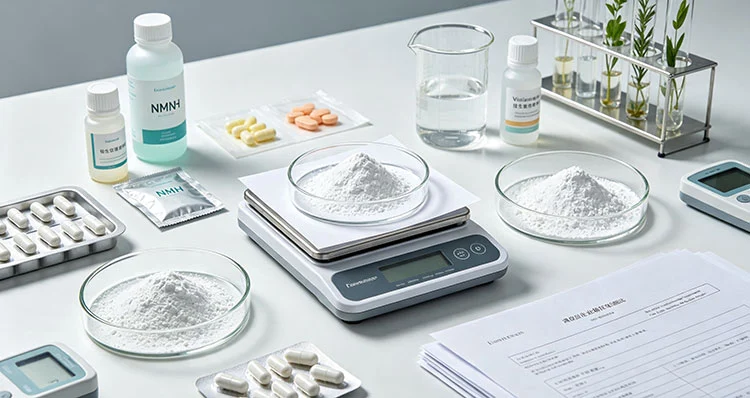
Stability Comparison: NMNH Powder vs NMN Powder
One of the key technical factors to consider is stability while comparing NMNH vs NMN. NMNH may have a reduced chemical state, which could necessitate extra focus during processing and storage.
The more important stability factors are:
Oxidation sensitivity: NMNH could need more protection from oxygen due to the increased sensitivity of reduced molecules to oxidation reactions.
Packaging requirements: Packaging systems that are oxygen-resistant and have a moisture barrier can assist in maintaining the quality of ingredients.
The storage condition: Dry, cool, and controlled conditions are generally preferred for storing powder stability.
Manufacturing handling: During manufacturing process, exposure time, humidity, manufacturing process in the manufacturing process should be monitored.
NMNH powder might need more specialized quality management as it is smaller in molecular structure than NMN powder.
Industrial Applications of NMNH and NMN Ingredients
As more and more people have become interested in these compounds that contain NAD, the possibilities of using the ingredients NMNH and NMN are becoming broader.
Current fields of application:
Development of dietary supplements: NMNH and NMN are being tested as high-quality ingredients for innovative nutrition products.
Functional food research: Manufacturers investigate their potential with specialized formulations of foods.
Innovation in cosmetics: Study of compounds related to NAD is part of the scope of modern cosmetic ingredient research.
Biochemical research: Both compounds are research chemicals with use in studies of the metabolism of NAD.
Production scalability, quality certificates, technical documents, and customized OEM services are important considerations in commercial sourcing for global ingredient suppliers and buyers.
NMNH vs NMN
Both NMNH and NMN are related but different NAD-related ingredients. NMN has been studied more and has more market recognition, whereas NMNH is a newer reduced form with unique structural considerations and formulation considerations. Choosing between NMNH and NMN will be determined by product goals, stability requirements, regulatory factors, and the quality systems provided by the supplier. Scientific evaluation and stringent quality control continue to be the basis for responsible product innovation for manufacturers that are working on new nutrition ingredients.
Connect with us at info@scigroundbio.com or use the form at the bottom of this page and drop off your requirements. Our supply is reliable, the options for orders are flexible, and customer service is dedicated to your business demands.
FAQ
1. What is the main difference between NMNH and NMN powder?
The only difference between NMNH and NMN powder is the oxidation state. NMNH is the reduced form of NMN, which has a different molecular structure and could need a different method of stability management during its production and storage.
2. Is NMNH more stable than NMN?
The stability properties of NMNH are different from those of NMN. NMNH might need to be handled with extra care with respect to oxygen, moisture, and storage conditions due to its less reactive chemical state, whereas NMN has more experience as a commercial product.
3. Can NMNH and NMN be used in the same supplement formulation?
NMNH and NMN are both potential nutritional formulation ingredients to consider, but manufacturers must consider ingredient compatibility, regulatory status, analytical data, and product stability before combining or selecting these ingredients.
4. How should manufacturers choose between NMNH vs NMN ingredients?
Manufacturers should assess NMNH and NMN for their purity requirements, for their application objectives, for their formulation technology, for their storage conditions, for the documentation provided by the supplier, and for the conformity requirements in the region.
References
1. Yoshino, J., Baur, J. A., & Imai, S. I. (2021). NAD+ Intermediates: The Biology and Therapeutic Potential of NMN and NR. Cell Metabolism, 33(6), 1006–1021.
2. Rajman, L., Chwalek, K., & Sinclair, D. A. (2020). Therapeutic Potential of NAD-Boosting Molecules: The In Vivo Evidence. Cell Metabolism, 31(4), 569–582.
3. Covarrubias, A. J., Perrone, R., Grozio, A., & Verdin, E. (2021). NAD+ metabolism and its roles in cellular processes and human health. Nature Reviews Molecular Cell Biology, 22, 119–141.
4. Braidy, N., Berg, J., Clement, J., Khorshidi, F., Poljak, A., Jayasena, T., Grant, R., & Sachdev, P. (2022). Role of NAD+ metabolism in aging and metabolic regulation: Current perspectives and future directions. Nutrients, 14(10), 2023.
You may like