Is wheat protein different from whey protein?
Wheat Protein is botanically derived, viscoelastic, and has a role predominantly as a strengthening agent in dough or for fortification of a variety of foods other than meat, while whey protein is animal-derived, globular, and is known for its ability to quickly dissolve, foam, and be used as a nutritional beverage.
Structural and Compositional Divergence in Industrial Raw Materials
Macromolecular architecture and polymer formation: the wheat protein is a complex of gliadin and glutenin fractions which, when wetted, can form an insoluble web-like viscoelastic network, while the whey protein is composed of soluble globular proteins such as beta-lactoglobulin and alpha-lactalbumin, which remain soluble in aqueous phases and do not form extensible dough sheets.
Protein Purity and Concentration Parameters: Commercial wheat protein powders (vital wheat gluten) typically range in protein concentration from 75% to 80% on a dry matter basis, along with an inherently higher amount of starch (residual) and lipid content than commonly used whey protein concentrates and isolates, which can start at 80% and reach as high as 90% and lower, respectively.
Botanical and Dairy Source Distinction: Wheat protein is processed using the wet-milling process of cereal grains and thus is very similar to the plant-based, vegan and clean-label farming methods, whilst whey protein is only used as a co-product of cheese production from bovine milk streams.
Functional Performance in Commercial Baking and Extrusion
Wheat protein provides important gas retention, mixing tolerance, and elasticity characteristics to wheat flour, which are essential in baking and flatbread production for loaf volume and crumb structure; whey protein acts as a softener in baking and is used mainly as a foaming agent in cakes and batters, but not as a matrix builder.
High-Moisture Extrusion and Texturization: Wheat protein is used in industrial food processors to obtain fibrous, meat-like textures in plant-based analogs via high-moisture extrusion lines, while whey protein tends to form thermal gels instead of fibrous textures under the same thermomechanical processing conditions.
Water-Binding and Thermal Stability: Wheat protein has an excellent fat and water binding ability, which makes it ideal for the stability of structured food during thermal processing, while whey protein is generally used for heat-induced gelation and emulsion stabilization in soups, sauces, and nutritional beverages.
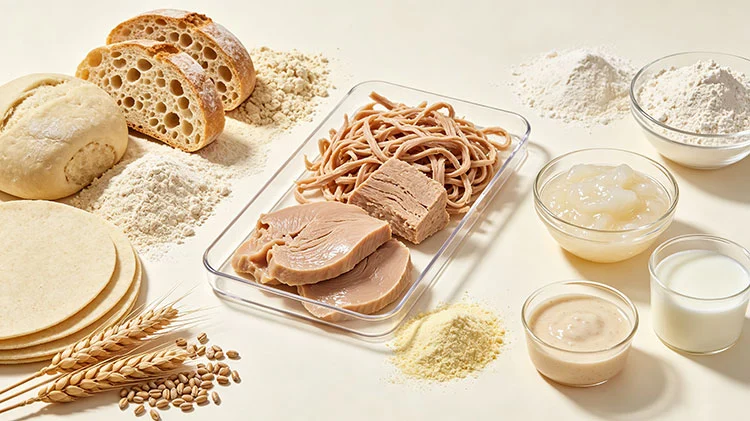
Formulation Techniques, Dosage Factors, and Processing Guidelines
Optimization of Inclusion Levels: The common practice in industrial baking formulations is to use wheat protein from 1% to 5% based on flour weight, and in the texturized meat analog, between 20% to 50% combined with secondary vegetable protein has been used.
Hydration and Mixing Parameters: To get maximum functionality from wheat protein, the water titration and the mechanical shear generation must be done to the right degree, whereas the whey protein is easily soluble in ambient or warm aqueous solutions and doesn't need extensive mechanical shear generation.
Synergistic Ingredient Blending: Wheat protein is often combined with other complementary protein plant sources, e.g., pea protein isolate, soy protein isolate, for amino acid balance and to enhance the crispness of extruded snack pellets and bakery products.
Stability, Shelf-Life Management, and Storage Protocols
Moisture and Humidity Control: Both raw materials require a cool, dry, and well-ventilated facility with tightly controlled humidity levels to ensure that moisture and microbial growth will not occur in dry-blend inventories and that moisture will not migrate to inedible parts of the product.
Thermal Degradation Prevention: Wheat protein is structurally stable at temperatures above the standard thermal limits, and at excessive thermal exposure and time, it may undergo over-crosslinking resulting in undesirable firmness under moisture conditions that are not well managed.
In the commercial grade, the requirements call for periodic evaluation of moisture, ash content, particle size distribution, and nitrogen-to-protein conversion factors (N * 6.25), to guarantee consistency of production from one batch to the next in large-scale supply chains.
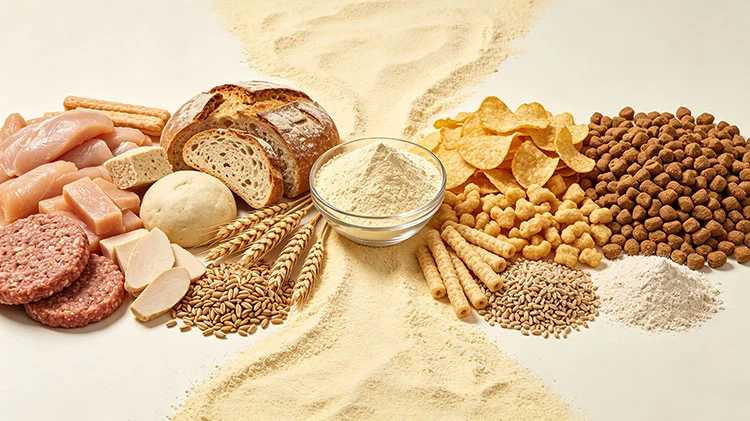
Commercial Applications Across Global Industrial Sectors
Wheat proteins are used in commercial vegetarian chicken strips, seafood substitutes, and burger patties by food manufacturers that want to imitate the bite, chew, and moisture retention of traditional meat and seafood.
Vital wheat gluten is an essential ingredient in specialty bakery products, such as industrial bakeries, where it helps to upgrade low-protein grain flours, create high-fiber hearth breads, and form crispy direct-expansion snack pellets.
In large-scale animal feed production, wheat protein is used as a highly digestible protein binder in extruded kibbles and aquafeed to provide a cheap and economical source that keeps the pellets from falling apart in the water.
You can either call us, email us at info@ scigroundbio.com, or you can just fill in your needs on the form. Our business team is here to react quickly and provide a customized solution, competitive deals, and reliable supply to satisfy your business needs.
Is wheat protein different from whey protein?
Finally, wheat protein and whey protein are both highly functional, high-quality protein ingredients in the industrial sector, but have significantly different macromolecular properties, which result in very different applications: Whey protein has specialty applications such as soluble beverage production and dairy systems, whereas wheat protein is used in structural baking and plant-based meat texturization.
FAQ
What is the primary difference between wheat protein and whey protein in food processing?
Cereal-derived, insoluble wheat protein is used in the formulation of dough strengtheners and also makes up texturised meat analogues, while globular whey protein is soluble, derived from dairy, and used mainly in emulsion stability and beverage fortification.
Can wheat protein powder be used interchangeably with whey protein in industrial baking?
No, they do different things – wheat protein increases the elasticity, gas retention, and volume of doughs, and whey protein is used primarily as a foaming agent or soft improver in batters and cakes.
What is the typical protein concentration found in commercial wheat protein powder?
The usual commercial vital wheat gluten (VWG) contains 75% to 80% protein on a dry-matter basis, with native cereal starch fractions.
How does wheat protein contribute to plant-based meat manufacturing?
In high-moisture extrusion, wheat protein creates directional disulfide bonds and beta-sheet structures that are able to maintain the fibrous texture and chew of meat.
References
1. Manildra Group. (2026). Wheat Protein Isolate vs. Concentrate: A Formulator Guide to Industrial Applications. Technical Bulletin and Processing Whitepaper, 1–8.
2. Wheat Protein Association. (2026). Functional Properties and Industrial Applications of Vital Wheat Gluten in Modern Food Systems. Industry Technical Review, 45–52.
3. Gong, Z., et al. (2023). Effect of Wheat Gluten and Plant Protein Ratios on Moisture Distribution and Textural Properties in Extruded Food Systems. Foods, 12(8), 1696.
4. American Society of Baking. (2025). Comparative Analysis of Cereal-Derived Proteins and Dairy Proteins in Commercial Baking Formulations. ASBE Technical Journal, 112(3), 34–41.
You may like