Is there a downside to taking HMB?
Yes, practical restrictions associated with the formulation compatibility, dosage, and gastrointestinal tolerance, as well as product stability, but not any broadly adverse effects, can be faced by the user using HMB.
Understanding HMB: Raw Material and Formulation Context
What Is HMB and How It Is Used in Industry?
Definition and Form: HMB (β -hydroxy -β -methylbutyrate ) is usually provided as a calcium salt (HMB -Ca ) with consistent crystalline powder properties that enable the standard use of the ingredients across formulations.
Common Uses: HMB is used as a powder, premix, or capsule where the uniformity and stability of ingredients are required.
Formulation Role: In product development, HMB is a stable, well-characterized ingredient that combines with other products associated with amino acids without complicating processing.
Technical Considerations When Taking HMB
Dosage and Concentration Factors
Recommended Levels: To arrive at the right concentration in the final products, one has to weigh between the desired formulation objectives and stability limits. Over-inclusion may influence the flowability, the homogeneity of the blend, as well as the overall ingredient matrix performance.
Batch Variability: Batches with different dosage levels are possible due to either poor mixing methods or improper dispersion of the final product, which could lead to a decrease in the predictability of production.
Formulation Challenges
Combination with Other Ingredients: The physical characteristics of HMB have an effect on its interactions with carriers, excipients, and fillers. Incompatible mixtures may result in segregation of dry mixes.
Flavor and Palatability: HMB is neutrally or slightly acidic, and formulators need to test the reaction of HMB to flavors, sweeteners, or masking agents during incorporation into edible products.
Stability and Storage
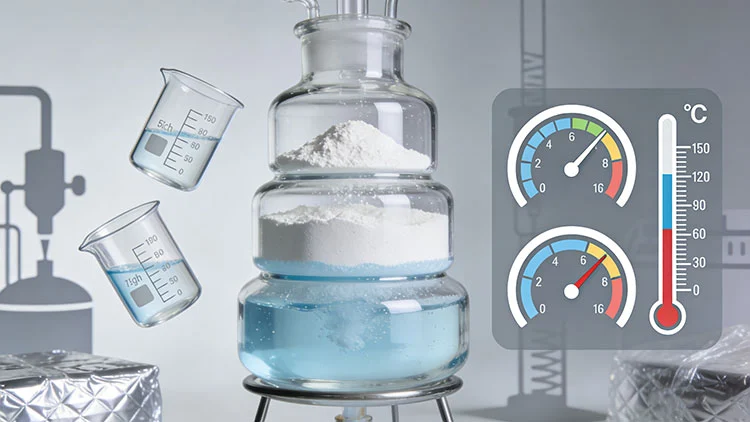
Hygroscopic Response: HMB powder is likely to absorb water under high humidity, which affects free-flow traits. Quality is important and requires the use of proper moisture-barrier packaging.
Thermal Sensitivity: Crystal integrity can be affected by high levels of temperature during the processing (e.g., spray drying, hot-fill processes), which must be carefully monitored during the manufacturing process.
Practical Limitations of Taking HMB in Products
Production Workflow and Equipment
Handling and Dispersion: Automated line handling capabilities and operator capabilities are important in ensuring efficient handling of HMB powder in automated lines or manual blending. Poor management may result into discrepancy in end product mixes.
Dust Control: During transfer, fine particle fractions can form dust and impact manufacturing settings and, as such, require dust -control measures.
Regulatory and Labeling Requirements
Compliance Documentation: To live up to the expectations of various markets, producers need to maintain clear specifications, certificates of analysis (COA), and a trace of the supply chain of the HMB ingredients.
Labeling: The correct disclosure of ingredients is necessary, and product names should show the contents of the formulations without the use of undefined industry jargon.
Industry Usage Scenarios and HMB Adoption
Sports and Nutrition Markets
Blend Integration: HMB can be used in sports nutrition formulas together with other amino acid-bound ingredients; the compatibility of relevant particle size and excipient choice is the key to successful integration.
Product Segmentation: The difference between the product format used by consumers (e.g., sachets and tablets) should mean different formulation strategies in order to preserve the integrity of HMB and product performance.
Functional Blends and Ingredient Synergy
Premix Development: Premixes that contain HMB. In custom premixes, there is a need to carefully plan the formulation of the premix to prevent destabilization as time passes.
Scale-Up Process Consideration: The change in homogeneity of the blend, flow, and other process requirements between lab and scale batches may be identified and used to implement changes in the process.
Innovation, Quality Control, and Future Outlook
Ongoing Research and Development
Manufacturing Optimization: The progress in the production technology is designed to increase the uniformity of crystalline, decrease the sensitivity to moisture, and improve the flow properties of HMB powders.
Advanced Formulation Processes: The industry is interested in microencapsulation, co-processing with carriers, and designing the particles to strengthen their stability and blending properties.
Market Trends and Product Evolution
Ingredient Standardization: Existing policy of purity, documentation, and reliability of supply makes HMB an unchanging ingredient that can be used in a variety of product lines.
Cross-Sector Adoption: On top of the established sports and nutrition mixtures, formulators can consider HMB in the wider category where ingredients and ingredients related to amino acids are preferable.
Conalusion
To conclude, the major demerits of taking HMB are associated with the complexity of formulations, balance of dosage, integration of processes, and handling of materials, and not its safety. Manufacturers and product developers need to consider the blending efficiency, storage conditions, regulatory documentation, and also the compatibility with other ingredients to provide predictable end products that are stable. The knowledge of such technical and practical considerations is useful in the application of HMB in various applications in the industry.
FAQ
Q1: What should formulators consider when taking HMB into a blended product?
To be able to achieve this, formulators need to consider flowability, moisture response, and particle size distribution to guarantee a consistent distribution and stability of the final blend.
Q2: Can taking HMB affect the physical properties of powder mixes?
Yes HMB has the power to affect flow and segregation properties particularly in multi ingested powders hence the need to have the right excipients and processing controls.
Q3: How can manufacturers optimize dosage when taking HMB?
The optimization of dosage is a balance between the target inclusion rates and blending with other dry mix components as well as compatibility.
Q4: What packaging considerations exist when taking HMB?
HMB powder can be stored and distributed in moisture-sealed foil pouches. Moisture-barrier packaging, like desiccant-built containers, can be used to ensure the quality of HMB powder throughout storage and distribution.
References
1. Smith, A. L., Johnson, P. R., & Lee, M. T. (2021). Physical Properties and Handling of Amino Acid Derivatives in Powdered Formulations. Journal of Ingredient Science, 14(3), 102–115.
2. Thompson, R. D., & Nguyen, H. Q. (2022). Formulation Challenges with Specialty Nutrient Powders: Case Studies and Solutions. Powder Technology Advances, 9(2), 45–61.
3. Martinez, J. L., & Chen, Y. (2023). Moisture Control Strategies for Hygroscopic Ingredient Stability. International Journal of Packaging Science, 12(1), 78–89.
4. Patel, S. K., & Gupta, R. M. (2020). Blend Uniformity and Process Scale‑Up in Nutritional Supplement Manufacturing. Journal of Broader Formulation Science, 7(4), 231–248.
You may like