Is rice protein better than pea protein?
Rice Protein can be compared to commercial sources of plant protein, and it is not necessarily better than pea protein; it has a different, complementary nutritional and functional profile in terms of higher sulfur amino acid content, superior thermal stability, and a highly neutral taste.
Nutritional Profiles: Rice Protein Powder vs Pea Protein Isolate
To compare the high-purity rice protein powder against commercial pea protein isolate, it is crucial to consider the two different amino acid spectra, metabolic profile, and digestibility profile of the two. Both are excellent hypoallergenic bases for contemporary lines of plant-based products, although their structural differences will dictate formulation considerations.
Amino Acid Distribution: Organic rice protein powder contains very high levels of sulfur-containing amino acids (cysteine and methionine), and pea protein concentrate has a naturally high concentration of lysine and branched-chain amino acids (BCAAs).
Organoleptic Quality: The Rice Protein Isolate is exceptionally neutral and bland, while the Yellow Pea Protein may have a characteristic earthy/leguminous taste that may need to be masked by sensory agents in certain foods, especially the more sensitive beverage matrices.
Digestibility Kinetics: Micronized bulk rice protein powder is of low molecular weight, which means it has a smooth and gentle digestive passage and is an ideal hypoallergenic base for sensitive demographic groups.
Non-GMO Rice Protein Powder has an extremely low risk of cross-reactivity or being sensitive to food and is a suitable protein source for strict clean-label certifications in all consumer jurisdictions around the world.
Formulating with Organic Rice Protein Powder: Synergistic Blending and Ratios
Organic rice protein powder is often combined with complementary legume bases to create a complete plant protein matrix, which is similar to the PDCAAS of traditional dairy ingredients, and is sought after by commercial product developers.
Optimal Blending Proportions: The industry standard proportions for plant-based sports nutrition are a mixture of 60% rice protein powder and 40% pea protein isolate, or 70% rice and 30% pea protein isolate, eliminating any single-source amino acid limitation.
Flavor Profile Balancing: Fine-mesh rice protein powder blended with high-dose protein products smooths out the bean-like attributes from legume protein bases, thus significantly reducing the demand for raw materials for artificial protein correctors.
Rice protein concentrate and pea protein gelation together provide an ideal viscosity curve for ready-to-mix (RTM) beverage systems: the moderate water-binding capacity of RPIC and the gelation capacity of PPC.
In performance nutrition lines, formulators carefully engineer the amount of bulk rice protein powder to include to ensure at least 2.5 grams of natural leucine per serving, which is known to trigger optimal muscle protein synthesis (MPS).
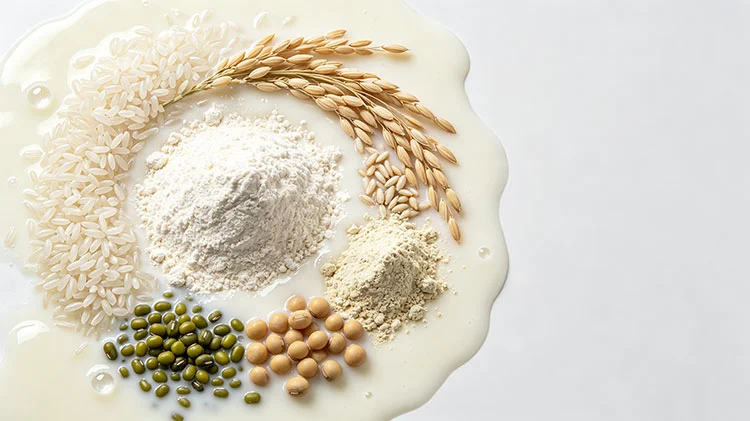
Thermal Resistance and Rheological Properties of Rice Protein Isolate
Rice protein isolate is physically stable during severe thermal, mechanical, and acidic processing and is therefore an essential component for enterprise food engineers and OEM/ODM contract manufacturers.
Ultra-High Temperature (UHT) Stability: High-purity rice protein powder is stable under the high-temperature, short-time UHT pasteurization process, and it is not easy to coagulate when heated in the high-temperature and short-time pasteurization process of the commercial liquid beverage plant, which can prevent the protein from premature coagulation.
Commercial rice protein isolate disperses and maintains viscosity in acidic environments, which do not affect the viscosity of many pulse protein isolates. Commercial rice protein isolate disperses and produces the same viscosity in a wide range of pH (3.0-7.5) compared to many pulse protein isolates, which precipitate or curdle at acidic pH.
When using organic rice protein powder in high-moisture extrusion processing for meat alternatives, it is used as a structural modifier providing a fibrous, yet less elastic structure.
The amphiphilic molecular structure of Rice protein concentrate enables it to stabilize oil-in-water emulsions, which improves the water and lipid holding capacity of the plant-based baked goods and nutrition bar cores in high-fat formulations.
Industrial Applications of Bulk Rice Protein Powder Across Global Sectors
Non-GMO bulk rice protein powder can be utilised in a wide variety of finished consumer packaged goods, making it a versatile functional ingredient for B2B manufacturers to use with its sustainable raw material.
Ready-To-Drink (RTD) Performance Beverages: Micronized bulk rice protein powder (mesh 200+) is used by beverage developers to make ultra-smooth liquid drinks that do not settle in ambient retail conditions.
Pure rice protein isolate is hypoallergenic, has a low allergen risk, and is a good base for specialized infant cereals and pediatric nutritional drinks.
High-Protein Bakery and Snack Systems: Organic rice protein powder used as a functional dough conditioner can be used to enhance the protein content of gluten-free breads, biscuits, and extruded snack crisps without affecting the crumb structure.
Fine-mesh rice protein powder is a good and natural carrier matrix for micro-encapsulating lipid-soluble vitamins such as A, D, E, K, and F, as well as active botanical extracts in dietary supplements.
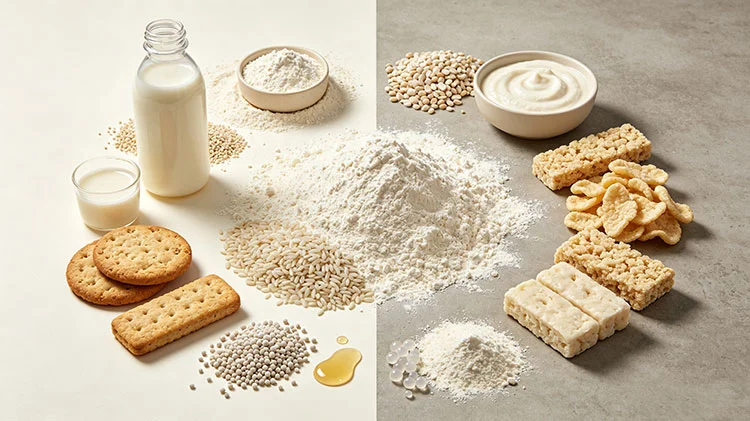
Strategic Technical Selection of Rice Protein Isolate
The choice between pure rice protein powder and pea protein isolate will ultimately rely on the predetermined specifications for a product, the sensory attributes of the product, and constraints in the functional processing steps. Pea protein is a strong protein gelator with a high lysine content, while high-purity rice protein isolate has a high density of sulfur amino acids, high thermal processing resistance, and neutral organoleptic properties. Incorporating the right blend ratios and precision dosage strategies, enterprise product developers can blend both ingredients or use bulk rice protein powder alone for the perfect balance of clean-label marketability, processing efficiency, and full nutritional density in today's commercial food pipeline.
To place your order or to get more information, you are welcome to email us at info@scigroundbio.com or leave your demand in the form, and our staff will come to your rescue in a short time.
FAQ
Is rice protein powder better for taste-sensitive beverage formulations than pea protein?
Yes. Organic rice protein powder typically has a very soft, neutral taste, while the pea protein isolate has a strong, earthy legume taste that needs more flavour-masking ingredients to be included in ready-to-mix liquid formulations.
Why do commercial food scientists blend rice protein isolate with pea protein?
Rice protein isolate is naturally complementary to pea protein isolate, so they are combined to make rice protein isolate. Rice protein is high in Cys and Met, but low in Lys, and pea protein is high in Lys but low in Met; a combination of them results in a good balanced plant protein profile, with a PDCAAS score close to 1.0.
How does bulk rice protein powder perform during thermal UHT pasteurization?
The bulk rice protein powder has high purity and excellent heat stability in the UHT process and pasteurization processes. It does not denature or thermally gel as easily as many animal or pulse proteins, resulting in less sediment accumulation in processing equipment and good liquid suspension in RTD.
Does organic rice protein powder offer hypoallergenic safety for clean-label products?
Yes. Organic rice protein powder naturally contains no large food allergens such as milk, lactose, soy, gluten, wheat, or tree nuts. This makes it a perfect raw material for Enterprise brands that cater to an audience that is sensitive to the product, and also for clean labeling and non-GMO claims.
References
1. Gorissen, S. H. M., Crombag, J. J. R., Senden, J. M. G., Waterval, W. A. H., Bierau, J., Verdijk, L. B., & van Loon, L. J. C. (2018). Protein content and amino acid composition of commercially available plant-based protein isolates. Amino Acids, 50(12), 1685–1695.
2. Kalman, D. S. (2014). Amino acid composition of an organic brown rice protein concentrate and isolate compared to soy and whey concentrates and isolates. Foods, 3(3), 394–402.
3. Joy, J. M., Lowery, R. P., Wilson, J. M., Purpura, M., DeSouza, E. O., Wilson, S. M., Kalman, D. S., & Jäger, R. (2013). The effects of 8 weeks of whey or rice protein supplement on body composition and exercise performance. Nutrition Journal, 12, Article 86.
4. Babault, N., Païzis, C., Deley, G., Guérin-Deremaux, L., Saniez, M. H., Lefranc-Millot, C., & Allaert, F. A. (2015). Pea proteins oral supplementation promotes muscle thickness gains during resistance training: a double-blind, randomized, Placebo-controlled clinical trial vs. Whey protein. Journal of the International Society of Sports Nutrition, 12(1), Article 3.
You may like