Is it okay to drink pea protein every day?
Of course, it is perfectly fine to use High-Protein Pea Powder in a daily diet, as long as the recommended daily dosage is followed and the manufacturer's product formulation recommendations are adhered to.
With growing consumer demand for sustainable, plant-based nutrition around the globe, commercial food, beverage, and nutraceutical producers often consider whether they want bulk pea protein powder to be a daily staple in their products' formulations. High-quality pea protein powder can be used as a superb functional raw material for daily fortification of food and other nutritional products that are derived from non-GMO yellow field peas (Pisum sativum). For B2B formulators and product developers, knowledge of the dosage parameters, stability of raw materials, technological formulation methods, and guidelines for industrial applications are vital for formulating safe, highly palatable, and stable consumer products in all markets.
1. Daily Dosage Parameters and Nutritional Integration in Formulations
Recommended Daily Intake Levels: Standard formulation values for commercial end products that provide protein to be consumed daily are generally in the range from 20 to 30 grams of protein per serving, with the amounts of protein chosen to be as high as possible and not exceeding the general dietary levels of nitrogen intake.
Macronutrient Balance in Matrix Design: Industrial food engineers need to design overall product macronutrient profiles for the daily serving size, which is achieved by using products of high-purity isolate grades (80% to 85% protein content) to reduce unwanted carbohydrates and increase the functional density of their product.
Serving Size Standardization: By ensuring consistent doses in different product versions, it allows customers to always receive the same nutritional benefits, boosting product reliability and trust in the brand in competitive retail settings.
2. Formulation Techniques and Solubility Optimization for Daily Use
Importance of Viscosity and Mouthfeel Management: Sensory acceptance is key for regular daily consumption, and formulators use very specific particle size reduction and mechanical homogenization to avoid grittiness and make the ready-to-drink (RTD) beverage smooth and uniform.
Emulsification and Textural Stability: Pea protein powder with high quality also has a great emulsifying capacity, which allows the formulation to produce stable plant-based milk alternatives, nutrition shakes, and meal replacement bars that remain homogeneously suspended throughout their shelf life.
Dispersion and Reconstitution Enhancements: Industrial processing can also involve methods of instantisation, e.g., surface agglomeration, for easy and complete dispersion from the cold liquid without any aggregation of particles during normal use by the end user.
3. Stability Factors and Thermal Processing in Industrial Manufacturing
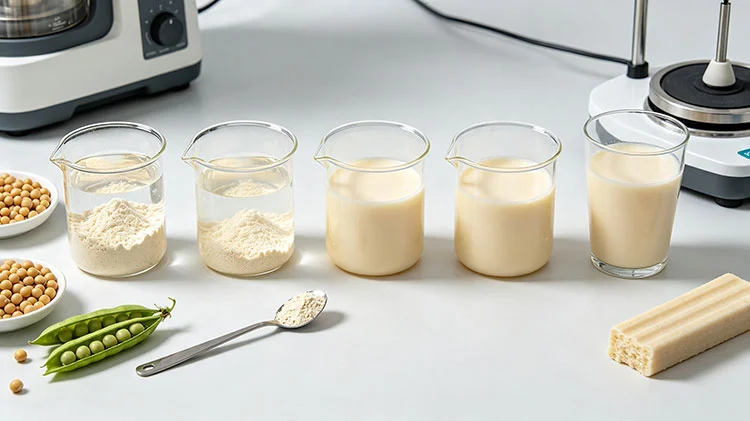
pH Adaptation and Ionic Strength – For large-scale manufacturing, the commercial production of pea protein isolate needs to be carefully monitored to avoid protein aggregation, sedimentation, or gelation in the high-temperature pasteurization process, which must be carried out under specific pH and mineral salt conditions.
Enzymatic Modification Methods: In some cases, manufacturers use mild enzymatic hydrolysis to reduce the viscosity of the structure and make beverages more fluid for easy consumption over an extended period of time during cold storage.
Thermal Resistance during Processing: High-quality pea protein raw materials are able to withstand the typical industrial processing temperatures, including ultra-high temperature (UHT), without compromising core protein quality or microbial safety.
4. Broad Industry Applications Across Daily Consumer Segments
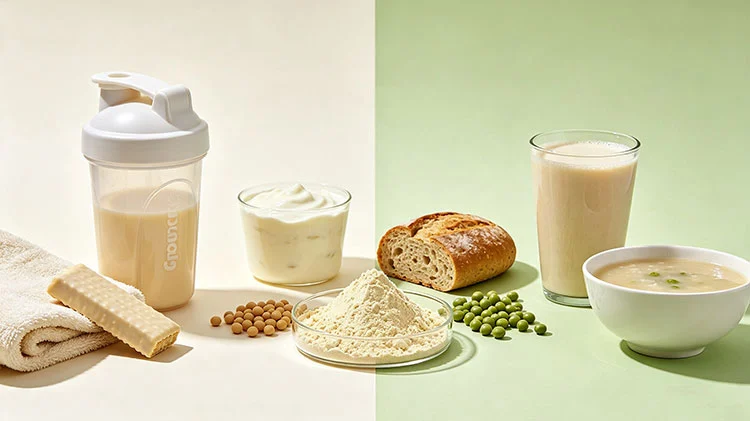
Sports Nutrition and Active Lifestyles: Bulk pea protein powder is commonly used in fitness daily shakes, post-workout, and protein bars that are used to help maintain daily protein consumption for active populations.
Plant-Based Dairy and Everyday Foods: Commercially available products make use of high-quality pea protein in food items that are commonly consumed in everyday life, including plant-based yogurts, baked goods, and savory soups, offering consumers a familiar and allergen-safe source of dietary diversification.
Nutrient-rich, plant-based, ready-to-drink nutritional beverages consumed on a daily basis by busy professionals in search of an easy and convenient way to get their nutrients—in a clean sensory profile.
5. Quality Assurance and Clean-Label Compliance Standards
Such products from industrial suppliers are guaranteed to be free of major allergens, dairy, soy, and gluten, and are accompanied by detailed documentation such as Certificates of Analysis (COA) and heavy metal screening.
Regulatory Compliance and Transparency: Commercial product developers have to be sure that technical performance, nutritional supplementation, and sustainability are communicated as part of the marketing message, while refraining from using any unapproved health claims or medicinal language.
Consistency of Supply Chain: By sourcing high-quality yellow field peas, the manufacturing partners will have a reliable supply that will help them to keep their manufacturing process on track and provide consistent product performance for all their commercial production.
When you are in need of good-quality products that are reliable in nature, then you get no better deal than ours. You can reach out to us directly at info@scigroundbio.com or fill in the form at the end of the page, and our prompt team will get in touch with you with product information, pricing details, and help you with order placement to fulfill your business goals.
Is it okay to drink pea protein every day?
To conclude, formulations with high-quality pea protein powder can be consumed on a regular basis and are technically viable with precise dosing from industry, advanced stabilisation, and strict quality manufacturing standards.
FAQ
Q: Is it safe to consume products containing pea protein powder on a daily basis?
A: Yes, it is safe to use high-quality pea protein powder in formulations that can be used daily within recommended dietary intake and the recommended serving size.
Q: How do food manufacturers maintain stability in daily-use pea protein beverages?
A: Formulators use different quality grades of isolate, advanced hydrocolloid stabilizers, and the latest pH control system to prevent sedimenting and ensure smooth texturing in ready-to-drink products.
Q: What is the ideal protein concentration of bulk pea protein for daily nutritional products?
For industrial applications, the more common grades of pea protein isolate are those with 80% to 85% protein to provide high nutritional efficacy and low carbohydrate interference, while maintaining a clean flavor.
Q: Can wholesale pea protein powder be customized for specific everyday food and beverage lines?
Yes, suppliers can provide custom parameters, such as specific particle sizing, immediate enzyme modification for dispersion in cold water, and mild enzymatic modifications to satisfy exact brand requirements.
References
1. Tomé, D. (2021). Criteria and evaluation of protein quality of plant-based foods entering the food supply chain. Nutrients, 13(1), 166.
2. Gorissen, S. H. M., et al. (2020). Protein content and amino acid composition of commercially available plant-based protein isolates. Amino Acids, 52(12), 1613–1625.
3. Kim, H. W., et al. (2022). Technological functionality and structural modifications of legume proteins in modern food systems. Food Hydrocolloids, 124, 107245.
4. Joye, I. J. (2019/2020 update). Enhancing the functionality of plant proteins in food products through processing and formulation strategies. Current Opinion in Food Science, 31, 25–31.
You may like