Is corn a good source of protein?
Pure Corn Protein Powder is a highly concentrated plant-based botanical, rich in macronutrients, which is an excellent raw material for commercial protein enrichment for industrial formulations, making maize a valuable raw material for industrial use.
Understanding the Biochemical Profile of Corn Protein Extract
Industrial evaluation shows that processed maize fractions have a good amino acid spectrum with high levels of hydrophobic amino acids and nitrogen. The biochemical parameters are analysed by the enterprise's R&D teams to set up reliable baseline parameters for large-scale production. Commercial corn protein isolates are advanced wet-milling products that are separated and refined to isolate a high concentration of protein. Whole kernel corn is not milled to a protein isolate like the commercial product; rather, the commercial product is milled to a high-protein isolate. This technical enhancement guarantees the product is both pure and has an optimal N-to-protein conversion ratio, and is consistent and uniform in each batch across the entire manufacturing supply chain worldwide that meets the high commercial standards.
Industrial Usage Methods and Processing Integration
Using this special raw material in the formulation process demands carefully setting up the formulation parameters so that its functional properties can be fully leveraged in industrial production processes. The balanced thermal tolerance and natural binding properties of the powder are ideal for commercial production lines for introducing the powder in the dry-blending or pre-conditioning stages. As it has positive moisture management and stable pH behavior, the ingredient can be added to any industrial equipment, specifically high-temperature extrusion systems, like aquatic feed pellets or technical biopolymers, reducing thermal degradation, scorching, or undesired viscosity changes of the product.
Advanced Formulation Techniques and Optimization Tips
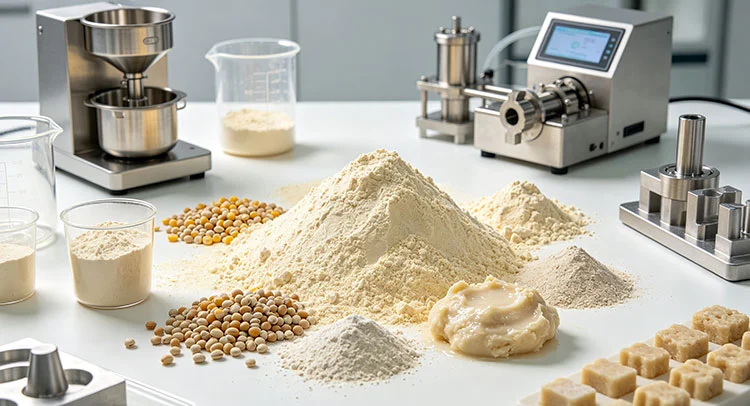
When using vegetable protein concentrates, strategic choice of co-ingredient(s) and management of the rheology of the product are essential for successful product development. Corn protein powder is often supplemented with other plant proteins or mineral blends to improve amino acid balances and/or the structural integrity of the product. For mixing in complex multi-ingredient matrices, clumping and homogeneous distribution, use of high-shear mixing equipment is recommended. Moreover, by controlling the wetting rate during the first wetting stage, it is possible to fine-tune the water uptake of the powder, allowing a smooth integration of the texture in the end product when extruded or molded.
Dosage Factors and Industrial Application Parameters
The level of inclusion needs to be optimized for the different industrial sectors and performance targets for end uses before implementation. Generally, the rate of inclusion is between 15% and 40% of the overall dry weight matrix and is a function of desired dietary density and buoyancy requirements, as in specialized livestock nutrition and high-performance floating aquafeeds. Dosage can be modified depending on the technical application (e.g., bio-based industrial adhesives, specific film-forming matrix, etc.), and can vary according to the desired tensile strength and degree of reactivity of the adhesive. Regulatory and operational tolerances aligned to inclusion rates are achieved using standardised technical data sheets in commercial procurement.
Enhancing Stability and Shelf-Life in Commercial Storage
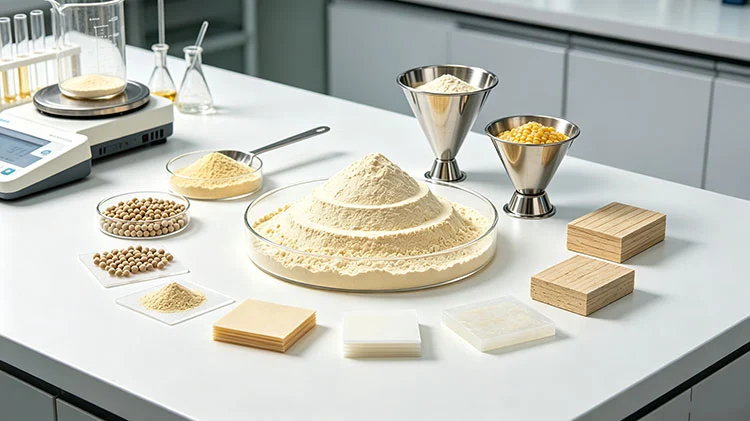
The preservation of the functional integrity of raw materials is important during storage and processing and requires physicochemical stability. It's important to store Pure Corn Protein Powder in a cool, dry place out of direct sunlight and moisture to avoid exposure to microbes and moisture absorption. The protein matrix is very well refined and has low moisture content and ash content, which allows for excellent stability in sealed multi-wall paper bags or in lined fiber drums for shelf life or for transportation. A regular check of water activity will ensure that the powder will not change its physical properties (free-flowing) and chemical reactivity during extended storage periods.
Please obtain free samples and professional service directly via the bottom of this webpage or by emailing info@scigroundbio.com
Is corn a good source of protein?
With the ever-growing demand from enterprises for sustainable and allergen-free agricultural inputs, Pure Corn Protein Powder has proven to be an incredibly reliable, scalable, and nutritionally rich good that can make maize a leading industrial plant protein source.
FAQ
Q: Is corn considered an efficient botanical source of protein for industrial manufacturing?
A: Yes. Through the advanced wet milling process and refining, maize is concentrated into Pure Corn Protein Powder, which can be used as a high-quality botanical raw material for businesses involved in B2B operations worldwide.
Q: What are the recommended dosage parameters when formulating with corn protein powder?
A: In addition, usual inclusion levels are 15-40% of the total dry weight matrix in special commercial applications such as aquafeeds and livestock feeds, depending on the specific technical requirements.
Q: How does high-temperature processing affect the stability of corn protein ingredients?
A: The ingredient is extremely heat-tolerant and has excellent pH stability, enabling industrial formulators to extrude the material with high-temperature extrusion systems without affecting its structure.
Q: What storage practices ensure maximum shelf-life stability for bulk corn protein shipments?
A: The powder should be kept in a cool and dry place, kept away from high humidity and direct sunlight, and strictly controlled to make sure that it is free-flowing and has long-term physicochemical stability.
References
1. Johnson, L. A., White, P. J., & Galloway, R. (2020). Corn: Chemistry and Technology (3rd ed.). American Association of Cereal Chemists.
2. Singh, N., Singh, J., Kaur, L., Singh, N., & Gill, B. S. (2021). Morphological, thermal and rheological properties of starches and protein fractions separated from field corn. Food Hydrocolloids, 112, 106312.
3. FAO. (2022). By-products of maize wet-milling: Nutritional evaluation and industrial utilization in animal feed and technical applications. Food and Agriculture Organization of the United Organization, Technical Bulletin No. 45.
4. Martinez, K. R., & Henderson, D. W. (2023). Plant-derived protein isolates in industrial biopolymers: Processing stability, functional attributes, and commercial scalability. Industrial Crops and Products, 194, 116345.
You may like