Is corn a complete protein?
Pure Corn Protein Powder is not a complete protein in human nutrition, but is a very functional, concentrated botanical raw material that can be used in a variety of B2B industrial applications.
Understanding the Amino Acid Profile of Pure Corn Protein Powder
The amino acid distribution of commercial protein isolates from corn is unique in that it contains an increased proportion of nonpolar residues and a decreased proportion of essential amino acids, lysine and tryptophan. These same analytical parameters, which are also recognised by enterprise R&D teams when designing industrial formulations, are the reason raw fractions of maize are missing some well-balanced amino acids but have the highest nitrogen, making them ideal to use in non-human applications, such as animal husbandry or technical biopolymers. Moreover, advanced analytical profiling enables the molecular weight distribution of these polypeptides from corn to be used to formulate stable cross-linking behaviors that are utilized by industrial chemists to ensure performance consistency in multi-component material systems while maintaining a consistent molecular weight in the material for high-speed commercial production runs without inducing rheological anomalies or unpredictability.
Industrial Usage Methods and Processing Integration
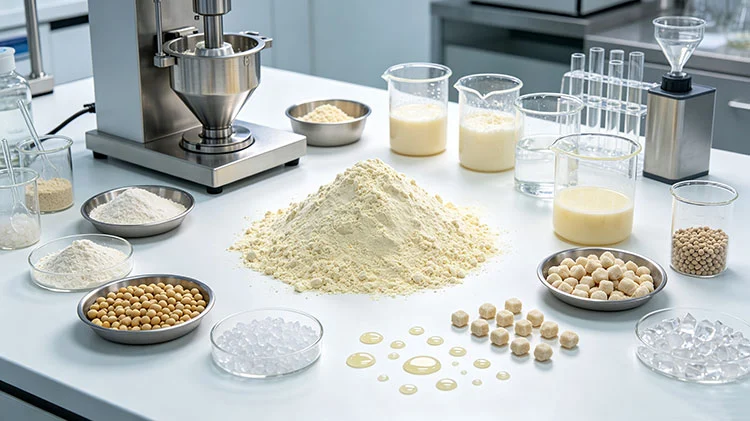
This botanical powder needs to be handled with care in large-scale manufacturing to ensure that the exact operating parameters and physical behaviour are maintained. Pure Corn Protein Powder is also usually fed to commercial formulators at the initial stages of dry mixing / pre-conditioning, owing to its well-balanced thermal stability and natural cohesive properties. The dry and low-ash refined matrix can be easily introduced into high-temperature processing lines without any equipment blockages or unwanted viscosity changes. Also, with a controlled shear rate during initial hydration stages, pre-hydration of the powder is uniform, thus avoiding localized agglomeration and ensuring uniform particle suspension in the large industrial vats.
Formulation Techniques and Co-Ingredient Balancing
Optimizing complex industrial formulations requires pairing of co-ingredients and more advanced control of the rheological properties of the formulation by using protein extracts from corn. Pure Corn Protein Powder is often used in combination with other plant proteins (e.g., legume or rice products or ingredients) to provide a complete amino acid profile in specific animal feeds. For large-scale batches, it is recommended to adopt high-shear mixing equipment for hydration, with the intention of improving the structural integrity of the powder, since it can absorb water. Furthermore, the ionic strength and buffering agents included in the formulation matrix help to maintain the protein dispersion stability in the pH range to guarantee that the final commercial product has optimal viscosity, textural uniformity, and structural resistance under different environmental exposure.
Dosage Factors and Quantitative Inclusion Parameters
It is important to set the proper inclusion level to meet desired performance standards in various commercial applications. Generally, the range of inclusion in specialized livestock nutrition and floating aquafeed manufacturing of Pure Corn Protein Powder is between 15 and 45% of the total dry weight matrix, based on the need for buoyancy and the desired dietary density. The dosage is flexible for technical applications, such as bio-based adhesives, depending on the tensile strength/typical cross-linking efficiency that is specified by the industrial buyer. These quantitative parameters can be optimized to ensure that the production facilities are as efficient as possible in using the raw material, without oversaturating the system, ensuring strict control of costs and mechanical performance in each commercial batch produced.
Enhancing Thermal Stability and Shelf-Life Storage
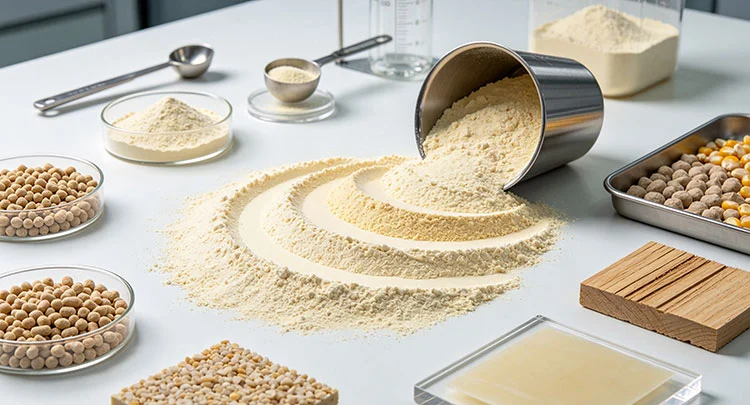
By maintaining the physicochemical stability during distribution and storage, the functional reactivity of botanicals is maintained. Pure Corn Protein Powder needs to be stored in a cool, dry, and moisture-free area out of direct sunlight to keep it free-flowing and prevent it from absorbing moisture. The low residual moisture content of the refined protein fraction gives the product a great shelf-life, allowing it to be packed in multi-wall paper bags so that there is good consistency of product batches for the world's procurement crews. Strict warehouse environmental management measures such as lifting pallets and continuous monitoring and warning of relative humidity below the critical point provide additional protection to the powder, ensuring that the powder does not cake or become susceptible to microbial attack until it reaches the factory in foreign countries.
Please obtain free samples and professional service directly via the bottom of this webpage or by emailing info@scigroundbio.com
Is corn a complete protein?
Since 1996, the global manufacturing world has been growing in its use of sustainable agriculture products as inputs, and understanding the biochemical composition of Pure Corn Protein Powder enables enterprise partners to fully leverage this concentrated product from a botanical source in a variety of manufacturing processes.
FAQ
Q: Is corn considered a complete protein in commercial manufacturing applications?
A: Our Pure Corn Protein Powder is highly concentrated, stripped of some of the necessary amino acids found in unprocessed corn, but a favorite among industrial formulators for its high nitrogen density, extremely high thermal stability, and functional ability for specialty applications outside the human field of nutrition.
Q: What are the standard dosage parameters for incorporating corn protein powder into industrial feeds?
A: A15 to 45 % of the total dry weight matrix is a typical range for inclusion levels in specialized aquafeeds and livestock feeds by commercial nutritionists, depending on the desired nutritional and/or physical buoyancy objectives of the feed.
Q: How does high-temperature processing affect Pure Corn Protein Powder?
A: The refined ingredient shows excellent thermal tolerance and pH stability and thus can be fed to high-temperature extrusion systems without structural degradation during the process, according to industrial operators.
Q: What storage conditions are necessary to maintain the shelf-life of bulk corn protein shipments?
A: Pure Corn Protein Powder is long-term stable in terms of physicochemical stability and maintains free-flowing powder properties when stored in a cool and dry place that is not exposed to excess humidity and direct sunlight.
References
1. Wu, G. (2020). Dietary protein intake and human health: A review of amino acid profiles and plant-based protein sources. Food & Function, 11(3), 2050-2068.
2. Wang, Y., & Johnson, L. A. (2021). Wet-milling coproducts of maize: Processing technology, biochemical characterization, and industrial utilization. Industrial Crops and Products, 162, 113289.
3. FAO. (2022). Nutritional evaluation and industrial utilization of cereal protein concentrates in animal feeding systems. Food and Agriculture Organization, Technical Paper Series No. 58.
4. Henderson, R. M., & Martinez, K. L. (2023). Thermal behavior and functional properties of plant-derived protein isolates in high-moisture extrusion processing. Journal of Cereal Science, 109, 103612.
You may like