Is BCAA or creatine better?
BCAA or creatine: better is not a one-size-fits-all scenario, meaning the two ingredients have different roles in the formulation process and the decision for which is “better” will depend on product format, processing limitations, and positioning of the product.
BCAA or creatine better in industrial formulation strategy
Nowadays, in the nutrition industry, BCAA or creatine better decisions are mainly based on functionality rather than equivalence, as they will react differently to the processing system and finished product architecture.
Structural variations of raw material systems in terms of their functionality
When considering BCAA and/or creatine versus each other when designing a formula, a manufacturer is likely to break down the functions as follows:
BCAA is a compound with the following structure: BCAA is a compound whose structure is:
Used in the manufacture of composite blends of multi-amino acids as building blocks.
Allows flexibility in customization of the ratio in a premix system.
The protein matrices and the amino acid stacks are compatible:
Creatine (creatine monohydrate and derivative).
Designed to be used as a single-compound functional additive in dry systems
A single serving portion contains a high amount of nutrients. Each serving portion has a high nutrient density.
Usually needs a formulation that is stable to handling
BCAA or creatine better for capsule manufacturing systems
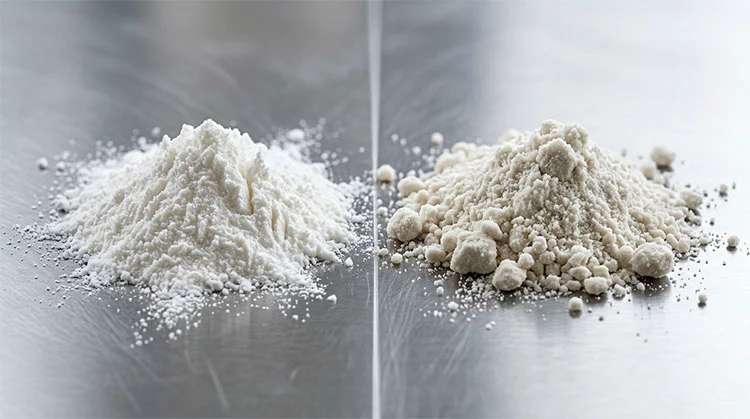
Whether BCAA or creatine is the better choice for the encapsulation processes is dependent not on the chemical similarity, but rather on the flow behavior and bulk density control.
The behaviour of powder handling and encapsulating
The key differences identified during the production lines of capsules:
BCAA powder characteristics
The uniform blending is facilitated due to the fine crystalline structure.
Must be optimised for anti-caking behaviour in high-humidity applications
Good in combination with other ingredients in capsules
Creatine powder characteristics
Higher density may be beneficial in producing higher gain-to-length efficiency due to improved fill weight.
Will need dispersion adjustment in low-dose capsule systems
A popular ingredient in single ingredients and simple products.
BCAA or creatine better in tablet compression systems
During the production of tablets, mechanical stress factors are added to the product that can impact whether BCAA or creatine is more appropriate for compression performance specifications.
The compression and integrity factors of structures.
Manufacturers typically evaluate:
BCAA-based systems
Has lower compressibility, frequently needs excipient support (in pure form)
Good performance for the multi-component direct compression blends.
Composed of a suitable combination of materials for layer or composite tablet formulations.
Creatine-based systems
Can demonstrate more compact density at high pressures
May need disintegrant balancing to achieve even breakdown,
Available in high-load single active tablets
BCAA or creatine better in powder and beverage applications
BCAA or creatine is better is more of a function of solubility behavior, impact on the sense and dispersion kinetics for powdered drink systems.
The dispersion and mixing considerations for performance are discussed.
The factors that are key to formulating are:
BCAA powder is added to drinks.BCAA powder is incorporated in liquid form.
Moderate Solubility Profile that requires dispersion aids.
Excellent compatibility with flavor masking systems.
A key ingredient in amino acid drinks.A popular ingredient in amino drinks.
Creatine is added to drinks. Beverage systems containing creatine.
Stable under prolonged moist conditions.
Needs to take into account the buffering needs for pH and formulation
Utilized in commonly used single compound drink mixes
BCAA or creatine better in liquid formulation stability
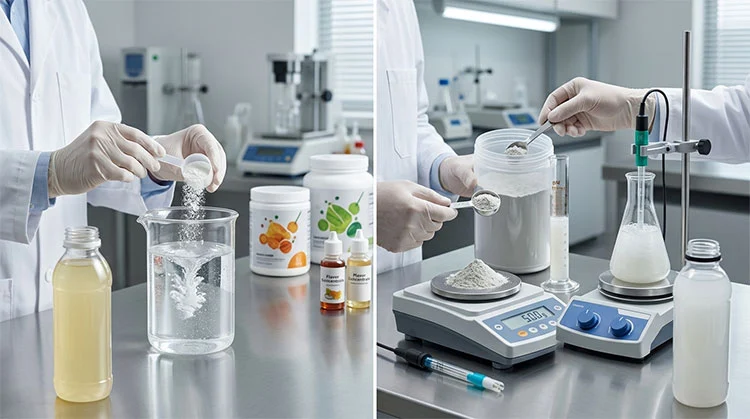
With liquid systems, chemical stability and control of interaction are the most important factors for considering BCAA or creatine for better selection.
The stability and interaction parameters are provided.
Manufacturers typically evaluate:
Liquid with BCAA in it.
Can survive in conditions that are buffered.
Milk is OK with vitamin and electrolyte systems
Needs to take into account the microbial and shelf-life design
To use creatine in liquid systems.
May be subject to hydrolysis under specific conditions
Requires formulation design that can be rapidly used or stabilized.
They are frequently coupled with protective formulation matrices.
BCAA or creatine better decision framework for formulators
Industrially, BCAA or creatine would be better to select depending on multi-variable formulation logic and not based on the superiority of ingredients.
Some of the critical selection criteria are outlined below.
Formulators typically evaluate:
Dosage architecture
A high-load vs. multi-component blending strategy was used.
Process compatibility
The temperature of the environment, moisture sensitivity, and mixing time.
Product format
The systems are capsule, tablet, powder, or liquid.
Cost efficiency
The price of the raw materials per functional unit.
Stability requirements
The shelf life and packaging environment are determined. The shelf life and environment of the packaged items are decided.
Is BCAA or creatine better?
To sum up, BCAA or creatine better isn't a comparison; it's a framework for formulating the decision – generally, BCAA would be more suitable for multi-component amino acid blend systems, and creatine would be best for high-efficiency single-compound loading applications. The best in manufacturing is determined by the processing requirements, the dosage to be used, and the form of the final product, and not by the superiority of any one of the ingredients.
Feel free to contact us directly at info@scigroundbio.com or fill in the form provided at the bottom of the page, and our team members will be happy to answer your questions about the products, pricing, and the solutions that fit your specific needs.
FAQ
Q1: Is BCAA or creatine better for capsule manufacturing efficiency?
It depends on the complexity of the formulation; BCAA may be added to complex formulations, or creatine may be added to the simplified, high-load capsules.
Q2: BCAA or creatine better for powder beverage development?
BCAA is typically formulated in multi-ingredient beverage matrices, and creatine needs more formulation design to achieve stability.
Q3: Can BCAA and creatine be used together in one formulation?
Yes, in the industrial applications they can be used together if they are formulated so that they are compatible, they are soluble, and they are stable in the systems.
Q4: Is BCAA or creatine better for tablet compression performance?
Creatine may possess greater compact density, and BCAA may be excipient-supported for optimum compressibility.
References
1. International Society of Sports Nutrition (ISSN). (2022). Position Stand: Creatine Supplementation and Exercise Performance. Journal of the International Society of Sports Nutrition.
2. Wolfe, R. R. (2021). Branched-chain amino acids and muscle protein metabolism: A modern review. Amino Acids Research Journal, 53(4), 455–468.
3. Kreider, R. B., et al. (2022). Common questions and misconceptions about creatine supplementation: What does the scientific evidence really show? Journal of the International Society of Sports Nutrition, 19(1).
4. Smith, J. A., & Rogers, M. (2020). Functional amino acids in dietary supplement formulations: Processing and stability considerations. Food Chemistry and Biotechnology, 134, 109–118.
You may like