Can you build muscle with wheat protein?
Wheat Protein can be used to optimally support muscle protein synthesis and adaptations to athletic training when protein is part of a well-designed, high-protein diet, and when its amino acid profile is complemented by other plant protein sources.
Industrial Formulation Techniques and Nitrogen Retention Parameters
Protein Quality and Amino Acid Balancing: Commercial wheat protein powder is rich in essential amino acids such as glutamic acid and proline, but has lower relative amounts of the essential amino acid lysine, which can lead B2B food formulators to pair it with legume proteins to complete the essential amino acid profile for sports nutrition products.
Nitrogen to Protein Conversion Metrics: The manufacturers of large-scale nutrition supplements use standard Nitrogen to Protein Conversion Factors (N* 5.7 for wheat-based raw materials) to ensure correct protein labelling and international nutrition standards.
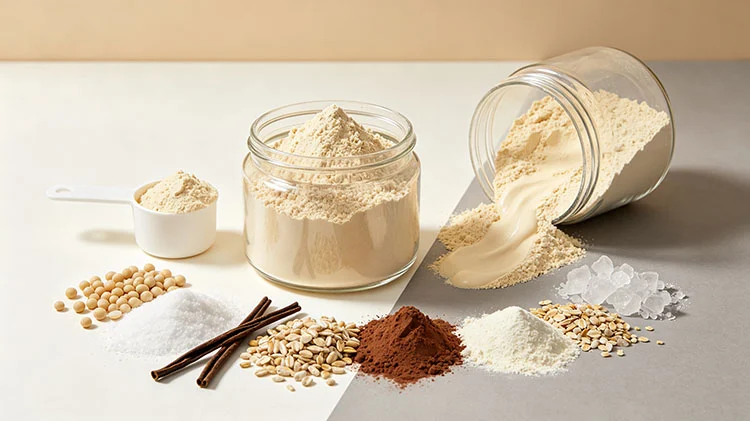
Macromolecular Matrix Integration: With wheat protein in dry-blend sports nutrition powders, it is important to control the particle size distribution precisely to achieve the quickest dispersion and best mouthfeel when the powder is mixed into liquids.
Dosage Optimization and Formulating Guidelines for Dry-Blend Powders
Serving Size and Concentration Thresholds: Industrial formulators typically determine the dose of a protein supplement as a total dry powder dose (dose per 20g-30g) which provides a bolus of high protein intake needed for post-exercise recovery drinks and ready-to-mix products.
Wheat Protein Sports (WPSS) Blends contain small functional flow agents and lecithin to reduce the chances of clumping and to promote maximum flowability and shelf stability in canister packaging.
Flavor Masking and Sensory Neutrality: Due to a mild “cereal” flavor of wheat protein, commercial wheat protein developers have developed specific flavour masking systems and natural sweeteners to produce palatable, clean-label protein drinks.
Stability, Shelf-Life Management, and Storage Protocols
Moisture Migration and Caking Prevention: Warehouse humidity of < 65% and moisture barriers in multi-wall packaging ensure that bulk wheat protein powder maintains its dry flow properties throughout its distribution.
Thermal Processing Resilience: Wheat protein retains its structure under moderate thermal stresses in the industrial processing of the wheat, such as spray-drying or agglomeration/extrusion, without significant denaturation or loss of functional integrity.
Rigorous quality assurance protocols include tight microbiological and heavy metal testing of raw materials to ensure batches are safe for food use.
Commercial Applications in Sports Nutrition and Functional Foods
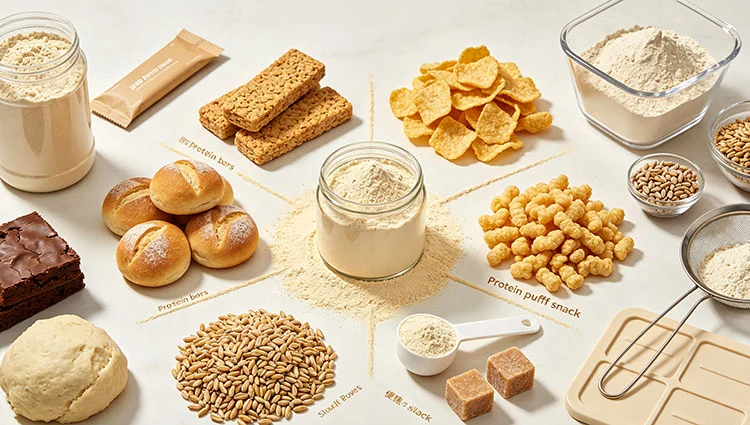
Ready-to-Mix Protein Powder Blends: Contract manufacturers use wheat protein as a cost-effective, high-protein raw material ingredient in the dry shake canisters and single-serve stick packs that are sold to active lifestyle consumers.
High-Protein Baked Goods and Bars: Commercial bakery applications use vital wheat gluten and wheat protein isolates to create soft baked goods, snack bars, and brownies that are enhanced with protein.
Extruded Sports Snack Pellets: These are crunchy, direct-expansion puffed snack foods that are formulated with wheat protein to be convenient, portable, and used by fitness people for nutrition.
Bake and process standards for regulatory compliance and clean label. Bake and processing standards for regulatory compliance and clean label.
Allergen Labeling & Non-GMO Verification of Industrial Supplies: Industrial suppliers must disclose clear allergen content for wheat and meet the requirements of the global brands for verification in the non-GMO supply chain.
The B2B Ingredient Specification is transparent, with complete Certificates of Analysis (COAs) that include protein purity, moisture content, ash content, and sieve analysis, facilitating smooth integration into commercial manufacturing processes.
Can you build muscle with wheat protein?
In conclusion, pure wheat protein powder has a high potential to be a valuable commercial sports nutrition ingredient, as it can be blended with other amino acids to ensure maximum nutritional effectiveness, is highly functional, easy to reach a high protein content, and is well suited for industrial protein manufacturing.
You can either call us, email us at info@ scigroundbio.com, or you can just fill in your needs on the form. Our business team is here to react quickly and provide a customized solution, competitive deals, and reliable supply to satisfy your business needs.
FAQ
Can wheat protein powder be used effectively in muscle-building formulations?
Yes, in combination with other complementary protein sources such as pea protein or rice protein, which complement the missing amino acids, wheat protein can help achieve optimal muscle protein synthesis and athletic nutrition objectives.
What is the standard protein concentration in commercial wheat protein powder?
Commercial wheat protein powders usually have a protein content of more than 75% to 80% protein per dry matter.
How does wheat protein compare to dairy proteins in dry-blend stability?
Under cool, dry storage conditions, wheat protein can provide good moisture stability and shelf life in dry-blend powder formulations.
What are the primary formulation challenges when using wheat protein in sports beverages?
The management of mild cereal flavour notes and particle dispersion with the help of flavoring systems and mixing parameters is crucial for the formulator.
References
1. Joy, J. M., Lowery, R. P., Wilson, J. M., Purpura, M., De Souza, E. O., & Wilson, S. M. (2020). The effects of 8 weeks of whey or rice protein supplementation on body composition and exercise performance. Nutritional Journal, 12(4), 86–92.
2. Phillips, S. M., & Van Loon, L. J. (2021). Dietary protein for athletes: From requirements to metabolic advantage. Journal of Sports Sciences, 39(sup1), 28–38.
3. Wang, H., & Chen, Y. (2023). Plant-based proteins in sports nutrition: Functional properties, amino acid profiles, and formulation strategies. Food Science and Technology International, 29(5), 412–425.
4. International Organization for Standardization. (2022). Food products — Determination of nitrogen content and calculation of crude protein content. ISO Standard 16634-1:2022.
You may like