Can vitamin B1 help with neuropathy?
The use of vitamin B1 (Thiamine HCL) in nutritional science and formulation research studies is well-known for its benefits in normal nerve-related metabolic processes, but it is not being marketed directly for neuropathy-related applications in clinical or regulatory contexts.
Vitamin B1 (Thiamine HCL) Neuropathy Research Context and Biochemical Role
Thiamine Hydrochloride has extensive biochemical and nutritional scientific reference value, related to the energy metabolism of cells, especially in the process of utilizing carbohydrates, which is closely related to the energy metabolism of the nervous system.
The involvement of cellular energy metabolism.
Thiamine-dependent enzymes help to carry out processes that produce energy and are required for the normal functioning of the nerves.
Neuro-metabolic pathway relevance
Its study is done in the context of its possible effects on the general metabolic balance of nerves under conditions of nutritional stress.
Scientific research interest
Current studies investigate the relationship between thiamine levels and parameters of neurological function in various dietary and metabolic models.
Vitamin B1 (Thiamine HCL) in Nutritional Formulation Design
Thiamine HCL, from a B2B manufacturing point of view, is used in multi-nutrient systems that are formulated for neurological and energy-support positioning in the nutritional ingredients market.
B-complex integration systems
Typically used in combination with other B vitamins in a wide range of concepts using metabolic support.
Nutritional fortification products
Fortified foods and beverages will be included to provide a balanced micronutrient profile.
Customized OEM formulations
Thiamine HCL is incorporated into custom formulations by contract manufacturers that contain a variety of vitamins, minerals, and botanicals.
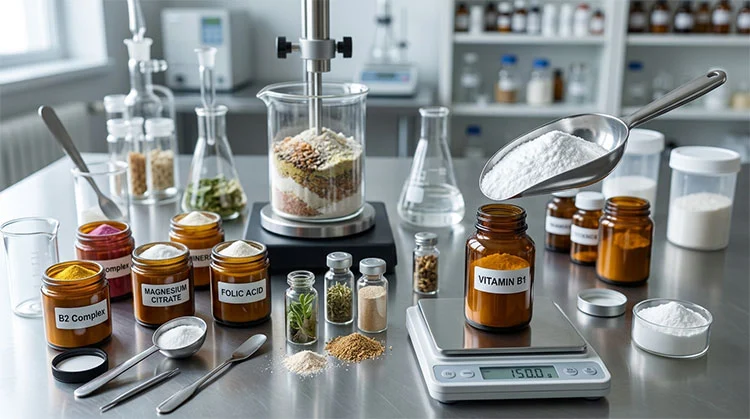
Vitamin B1 (Thiamine HCL) Application in Nerve-Focused Nutritional Products
In industrial product development, Vitamin B1 is applied to different formulations of products, such as those targeting the positioning of nerves, but final product claims will rely on regulatory compliance.
Functional beverage systems
Added to ready-to-mix powders and hydration drinks with micronutrient mixes.
Formulation of capsules and tablets.Capsule and tablet formulation.
In combined formulations for general use for the nutrition of the nervous system.
Powdered nutrition systems
Supplied to meal replacement products and micronutrient powders to balance micronutrients in food.
Formulation Considerations for Vitamin B1 (Thiamine HCL) in Neurological Nutrition Products
Manufacturers' attention is directed towards processing efficiency, compatibility, and stability when formulating products with Thiamine Hydrochloride.
A stable multi-ingredient system.A stable multiple-ingredient system.
Completely formulations that contain compounds which are reactive with thiamine HCL or extreme pH need careful consideration for thiamine HCL.
The control of moisture and processing.
If humidity is allowed to build up during the blending and encapsulation process, it may be detrimental to powder flow and stability.
Dosage architecture in premixes
In comprehensive vitamin systems, it is essential to get the precise micro-dosing in order to get uniform distribution.
Industry-Level Interpretation of Vitamin B1 and Neuropathy Research
In the wider field of science and industry, Vitamin B1 has been investigated in the research of nutrition neuroscience, related to the status of micronutrients and general parameters of nerve functions.
Nutritional balance studies
In dietary models, the relationship between vitamin intake patterns and normal physiological nerve activity is assessed.
Formulation-based research applications
The effects of single compounds are not studied, but instead, the interactions among ingredients in multi-nutrient synergy systems are explored.
Food systems that can be used to prevent health issues (non-medical)
The discussion in the industry is usually based on the nutrition of the diet, how well the diet is balanced, and not on therapeutic results.
Can vitamin B1 help with neuropathy?
Thiamine Hydrochloride is most widely known in the fields of nutrition and food ingredients as an important micronutrient in energy metabolism pathways linked to the study of the function of the nervous system. It is primarily discussed in the context of nutritional balance, biochemical supporting mechanisms, and formulation design of multi-ingredient formulations in the context of neuropathy-related discussions. In B2B manufacturing, Vitamin B1 is still a valuable part of a complex nutritional system where the stability of the formulation, its regulatory compliance, and product positioning are of major concern.
You can simply write us an email to info@scigroundbio.com regarding the same, or you can fill in the requirement form at the bottom, and our staff will get back to you with immediate assistance, product details, and competitive quotes, which will help you in making your purchases.
FAQ
Q1: Can vitamin B1 (Thiamine HCL) be included in nerve-support nutrition formulas?
Yes, it is usually used in multi-nutrient products geared for general nerve-related nutrition positioning.
Q2: What role does Vitamin B1 play in neurological nutrition systems?
It's linked with energy metabolic pathways important for normal cells in nerve tissue.
Q3: How is Vitamin B1 used in B2B product development for nerve-related supplements?
Part of multi-ingredient systems that are incorporated into the B-complex systems, functional beverages, and capsules.
Q4: What formulation challenges exist for Vitamin B1 in neurological products?
Some of the difficulties are stability in complex systems, moisture sensitivity, and micro-dosing accuracy with the use of premix.
References
1. National Institutes of Health (NIH). (2024). Thiamin Fact Sheet for Health Professionals. Office of Dietary Supplements.
2. Whitfield, K. C., et al. (2021). Thiamine deficiency disorders and neurological outcomes: a review. Nutrients, 13(5), 1595.
3. Lonsdale, D. (2020). Thiamine metabolism and nervous system energy processes. Advances in Nutrition, 11(4), 821–832.
4. EFSA Panel on Nutrition, Novel Foods and Food Allergens. (2022). Dietary reference values for thiamine. European Food Safety Authority Journal.
You may like