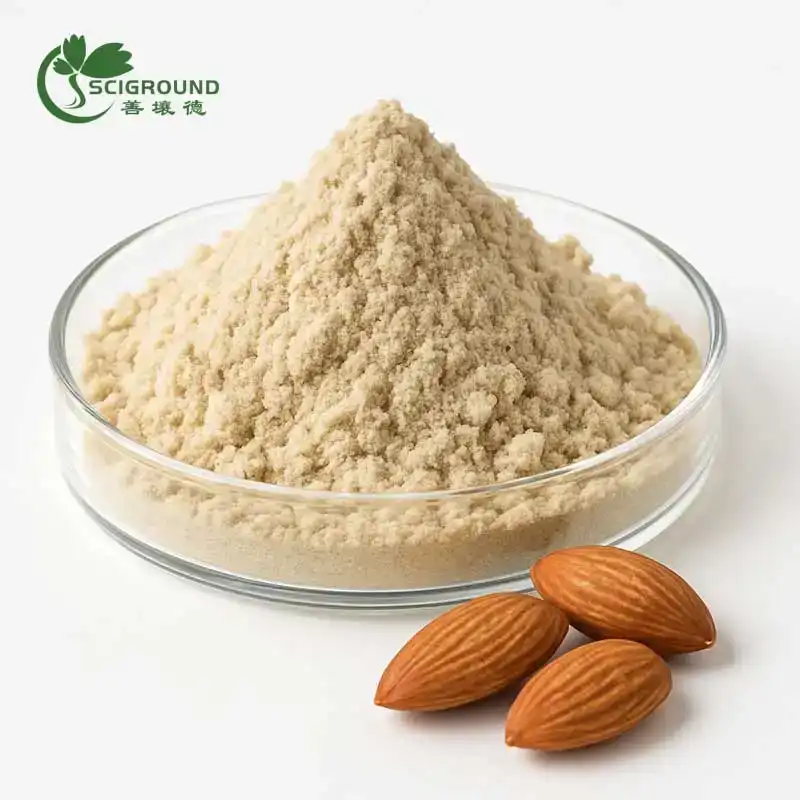
Almond-based Protein Powder
Latin Name: Prunus amygdalus var. dulcis
Specification: ≥50% Protein (Dry Basis), Non-GMO, 100% Natural
Appearance: Light beige fine powder
Delivery: 1–2 working days
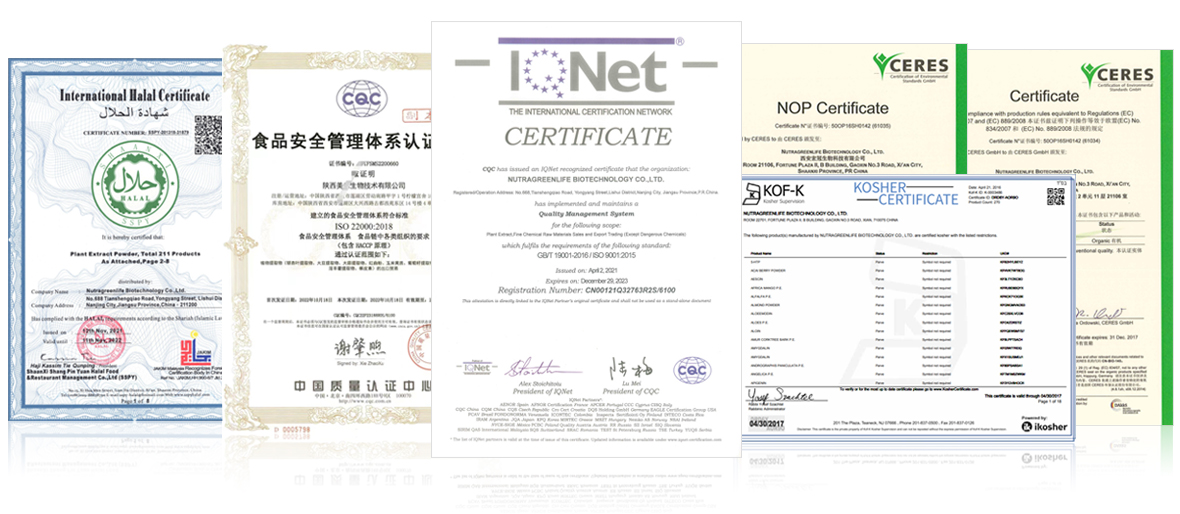
Certification: SC, ISO9001, IS22000, HALAL, KOSHER
Package: 1–10kg (aluminum foil); 25kg (paper drum)
Sample: Free Sample Available
MOQ: 1–5kg Support
15 years of experience in the nutritional supplements industry
Product Description
What is Almond-based Protein Powder?
Almond-based Protein Powder is a plant-based, functional, industry-standard protein powder made from premium, advanced cold-pressed, natural oils extracted from Prunus dulcis almond kernels, followed by precision milling of the kernels into a fine, highly stable, and homogeneous powder for commercial protein powder manufacturing, food processing, and wholesale formulation. This raw material, which is found in a clean label and contains a standardized protein content (usually 50% to 60% on a dry weight basis), naturally retains all the important amino acids, positive dietary fibers, natural minerals and beneficial residual plant fats without any chemical additives. Gluten-free, non-GMO, and allergen-free, it is highly valued by many around the world in many supply chains as a nutty-tasting ingredient with an off-white to light cream colour and excellent dispersibility, ideal for commercial brands looking to substitute or complement traditional dairy, soy and pea protein resource chains. Companies use this versatile raw material for a variety of high-growth industries such as sports nutrition supplements, pre-packaged dry functional mixes, ready-to-drink (RTD) meal replacement beverages, nutritional bars, commercial baking formulations, confectionery and plant-based dairy alternatives. The large-scale production allows industrial food and beverage manufacturers to easily scale up the clean-label, plant-based food production line to meet today's high standards for processing, improve texture and moisture, and meet the growing commercial market demand for sustainable, transparent, and nutrient-dense ingredients.
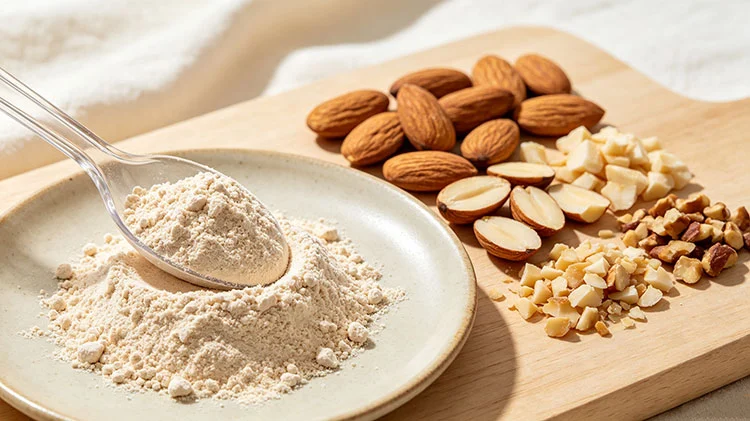
Analysis
| Item | Specification | Result |
| Product Name | Almond-based Protein Powder | Almond-based Protein Powder |
| Botanical Source | Prunus dulcis | Prunus dulcis |
| Appearance | Fine, uniform powder | Complies |
| Color | Cream to light beige | Complies |
| Odor & Taste | Characteristic of almond, mild, free from off-odor | Complies |
| Protein (Dry Basis) | ≥ 50.0% | 52.60% |
| Moisture | ≤ 8.0% | 5.12% |
| Ash | ≤ 7.0% | 4.83% |
| Fat | ≤ 15.0% | 10.70% |
| Crude Fiber | ≤ 8.0% | 4.36% |
| Particle Size | 95% pass 80 mesh | Complies |
| pH (10% Suspension) | 6.0–7.5 | 672.00% |
| Bulk Density | 0.35–0.65 g/mL | 0.48 g/mL |
| Total Plate Count | ≤ 10,000 CFU/g | 1,200 CFU/g |
| Yeast & Mold | ≤ 500 CFU/g | 80 CFU/g |
| Coliforms | ≤ 100 CFU/g | <10 CFU/g |
| E. coli | Negative/10 g | Negative |
| Salmonella | Negative/25 g | Negative |
| Staphylococcus aureus | Negative/25 g | Negative |
| Lead (Pb) | ≤ 1.0 ppm | 0.18 ppm |
| Arsenic (As) | ≤ 0.5 ppm | 0.09 ppm |
| Cadmium (Cd) | ≤ 0.5 ppm | 0.06 ppm |
| Mercury (Hg) | ≤ 0.1 ppm | <0.01 ppm |
| Aflatoxin B1 | ≤ 5.0 ppb | <1.0 ppb |
| Total Aflatoxins | ≤ 10.0 ppb | <2.0 ppb |
| Allergen | Contains almond (tree nut) | Complies |
| GMO Status | Non-GMO | Complies |
| Irradiation | Not Irradiated | Complies |
Market Trends
Almond Protein Powder is growing steadily in the global market, driven by macro-level trends such as sustainable agriculture, environmentally friendly supply chains, and plant-based diet preferences in all world food and beverage industries. With an increasing trend toward clean label, transparency, and less processed raw materials in commercial foods, industrial food processors are eager to turn to higher-quality nut-based ingredients instead of animal fats and common allergens. Today's modern consumers demand clear, more sustainable, and allergen-free nutritional products, and brand owners and product developers are keen to reformulate their older product lines using specialty botanical proteins that meet high standards for the environment and ethical concerns. This macro change is supported by technological advances in cold-pressing and optimization of agricultural yields, which provide stable and traceable raw biomass of high grade for worldwide distribution. As a result, wholesalers in the functional food, beverage, and sports nutrition industries consider almond protein a valuable asset they can use to win high-dollar segments and position their company's product line for feeding into a new and rapidly changing global retail landscape while maintaining ecological responsibility for future generations.
Why choose Almond Protein Powder?
1. Clean-Label Transparency & Natural Processing:
It is produced without any chemicals using mechanical cold pressing and precision milling, meeting the increasing demand in the industry for clear and minimally processed ingredients. As it is naturally allergy-friendly and gluten-free, it's a safe, non-GMO option for brands developing clean-label consumer products.
2. Nutritional Density & Macronutrient Profile:
It provides a consistent plant protein source, rich in amino acids, dietary fibre, and healthy residual fats, supported by nutritional science. It can be incorporated into formulations to aid in nutrient delivery and macronutrient and nutrient balance in commercial foods daily.
3. Sensory Appeal & Flavor Versatility:
It has a mild, pleasant, nutty flavor and is off-white in color; it doesn't have the strong beany and bitter taste of other plant proteins. Formulators can preserve the desired taste and texture in complex food and beverage formulations with this neutral sensory profile.
4. Functional Versatility Across Formulations:
It has impressive dispersibility, moisture retention, and structural binding qualities, making it a great addition to the viscosity and mouthfeel of a variety of industrial uses. It is used efficiently by manufacturers in all areas of sports nutrition, baked goods, snacks, and plant-based dairy alternatives, while maintaining stability of the product.
5. Sustainable Supply & Ethical Sourcing:
Unsweetened Almond Protein Powder is also produced in a responsible manner and follows eco-conscious supply chains, which align with global corporate sustainability goals. This will offer companies a reliable, traceable, and eco-friendly raw material for their business, which is in line with today's regulations and market demands.
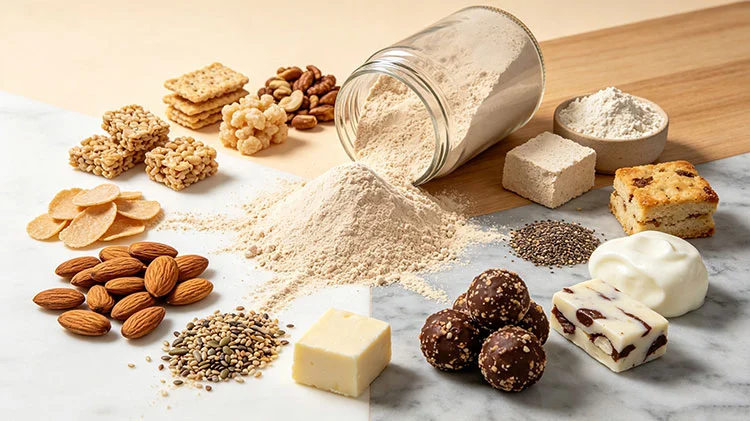
Product Direction
1. Upcycled Plant-Based Snack Clusters & Crisps:
Almond Pro Protein Powder is a good choice for manufacturers to make nutritious, extruded snack bites and savory puffed crisps. The protein is used as a structural binder and for enrichment of grain-free snack lines.
2. Specialty Keto & Low-Carb Baking Premixes:
The ingredient is also utilized in ready-to-use commercial flour mixes for ketogenic and grain-free diets, as it has a low carbohydrate content, is a natural ingredient that contains moisture, and is able to help foster crumb structure in the bakery.
3. Fermented Plant-Based Cheese Matrices:
The natural fat-protein interaction is ideal for developing artisanal fermented cheese-like products using milk, offering a functional base for these products and authenticity of the firm-to-spreadable texture with microbial culturing.
4. Targeted Botanical & Nut Synergy Blends:
The brand owners add certain complementary functional dry powders from the seed mix and botanicals to their almond protein, and produce a proprietary whole food-based dry powder base for private label distribution.
5. Gourmet Plant-Based Confectionery Inclusions:
Confectionery companies are using the ingredient in high-protein fillings and nougats for chocolate, as well as in the centres of energy truffles, where it is a clean label texturizer that does not overpower the premium taste of the product.
FAQ
Q: What is the standard protein purity of bulk Almond-Based Protein Powder for procurement?
A: For large-scale commercial products, our industrial-grade almond protein powder is normally between 50-60% protein on a dry weight basis, which makes it an ideal protein for use as a wholesale botanical ingredient.
Q: How is industrial almond protein powder manufactured for commercial food processing?
A: It is made using mechanical cold-pressing of high-quality defatted almond kernels (Prunus dulcis), from which the natural oils are extracted and subsequently subjected to the process of precision milling into a fine, homogeneous, and chemical solvent-free powder.
Q: Is this bulk plant-based protein compliant with clean-label and allergen-free requirements?
A: Yes, the product is 100% non-GMO, gluten-free, and allergy-friendly, and is free of artificial additives and meets high international standards of transparency for food and supplement manufacturers.
Q: What are the primary sensory characteristics of wholesale almond protein in food matrices?
A: It has a pleasant nutty taste, an off-white to light cream colour, and is very well dispersible, which enables the formulators to incorporate it in the formulation without any objectionable beany taste or bitterness.
Q: Which sectors and innovative product lines utilize wholesale almond-based protein?
A: Baking, confectionery, snacking, and gourmet food products use this functional ingredient in a variety of product applications, including upcycled snack clusters, keto baking premixes, fermented plant-based cheese matrices, botanical synergy blends, and gourmet confectionery fillings.
Where to buy Almond Protein Powder?
Do it yourself by email at info@scigroundbio.com or just fill in the form given below. We are able to provide a dependable supply, competitive prices, customized product to fit your needs.
Our Certificate
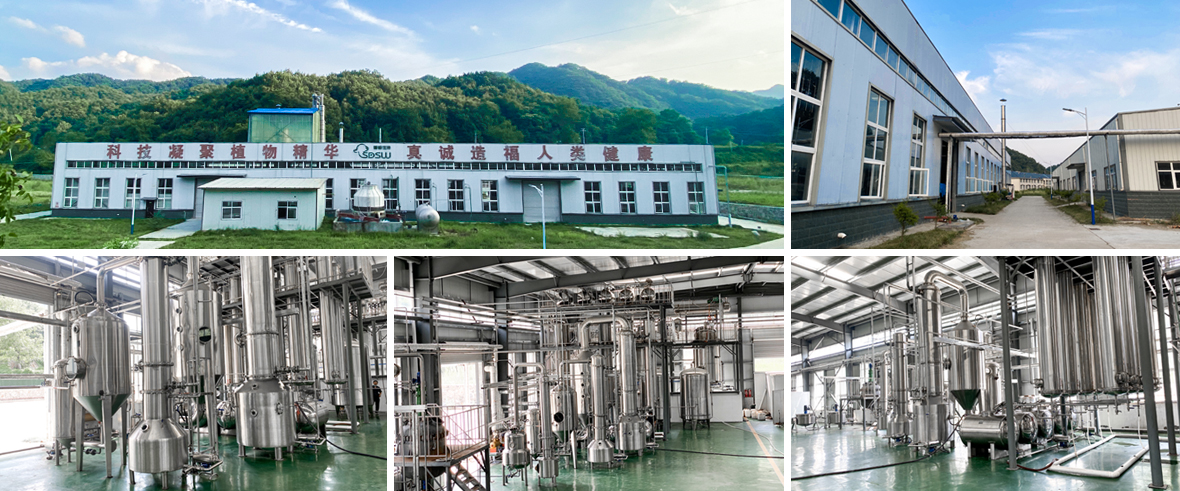
Our Factory
Send Inquiry
You may like